
Search results for: “nidec”

  • Japanese education system is most similar to UK in relying on “on the job training”

    Japanese education system is most similar to UK in relying on “on the job training”

    It’s well known in Japan that entry to good universities is fiercely competitive, and then students mess around for four years, sleeping in lectures, putting more effort into club activities than study. As a consequence, the large employers who recruit hundreds of graduates every year mainly assess applicants on character and potential, and treat new hires as “trainees” to be developed, rather than contributors.

    Those graduate recruits then mostly follow a generalist career track, being switched around various businesses, functions and locations.  As you may have noted from other blog posts on the Nikkei Business series “Wake Up Japan”, many Japanese business people feel this system no longer works. So Nikkei Business took a look at the Japanese education and recruitment system, comparing it to the UK, China, France, Germany, South Korea and the USA. It concluded that the only other country out of those six that had a similar university education system to Japan was the UK.

    Will the younger generations prefer more applied university degrees?

    Initially I was surprised by that conclusion, but then I reflected on the discussions I’ve been having with my son, who is dithering over which university and what courses to apply for, if at all. I admit my prejudice is towards him doing a generalist degree in the social sciences at a good university, and then, once he has a better idea of what he wants to do, doing a more applied post graduate qualification.  There are applied, practice oriented degrees in the UK, but we snobbily assume they are second rate and will not lead to elite careers.

    My son and others of his generation may well be rebelling against the idea of a generalist liberal arts degree at a top university, requiring eye wateringly high exam grades at 18 to enter.  He is more tempted by a digital media degree at Leeds University.  I was surprised that such a degree was offered at Leeds, which is one of the top, so-called Russell Group universities in the UK. But actually the curriculum looks fascinating, and is not just about learning coding.  Unsurprisingly, the post graduate employment rate is close to 100%.

    Specialist training provided by UK companies, vs generalist track in Japanese companies

    The post graduate career outcomes are different between Japan and the UK, however, the Nikkei points out. Whereas Japanese companies expect graduate recruits to stay in the company, receiving generalist “on the job training”, with the result that after 10 years, 44.5% of graduate recruits are still working at that company, the rate is only 31.6% in the UK. British companies train their recruits in more specialist skills, which are transferable to other companies. It’s not mentioned in the Nikkei article, but as I often point out, the UK also has many chartered institutes for various professions, requiring annual professional development, offering exams and qualifications.

    French, Swedish and German university degrees are more specialist, teaching applied skills that can be immediately put to use in a company.  I recently spoke with two Spanish AI researchers at a Japanese company in the UK and they confirmed that the Spanish system is also to do an applied, practice oriented first degree, then if you want to explore more general theoretical aspects, to do this as a post graduate degree.The US has both types – applied degrees but also liberal arts degrees that are more generalist. Unsurprisingly, Chinese universities are focused on providing education which fits with the national strategy. They limit university entrance to 1 million people per 1% of GDP growth, so currently with 6% GDP growth, they are admitting 6 million to 7 million students a year.  Korean universities are not well evaluated, so companies look at other grades and experience, such as English language ability tests.

    Impact on youth unemployment

    There are some downsides to the French system however – Nikkei Business points to how the French youth unemployment rate is still around 20%, compared to 3% in Japan. They speculate that the cause of this is French companies preferring to hire experienced, skilled people, offering little in the way of internal training to support graduate recruits.

    Nikkei Business concludes that there are disadvantages and merits in all the systems, and it is not obvious what changes Japan should make. If they are to follow the British path, then more professional development institutes offering training might be one strategy to follow.


  • The good and bad of no longer being “Japan owned”

    The good and bad of no longer being “Japan owned”

    I’ve been wondering for a while whether Japanese employees of companies such as Sharp or Takata have been feeling any change in corporate culture since being acquired by Taiwanese or Chinese companies and whether those companies could still be considered to be “Japanese”.

    Nikkei Business has inteviewed employees from Sharp, Toshiba memory division and also from the laptop division of NEC (now owned by Lenovo) and come up with  13 aspects that have caused difficulties for Japanese employees who have been “bought” (as the Nikkei puts it) and 7 positive effects.

    Difficulties:

    1. Having to work much harder than before – due to increasing focus on short term profitability – even longer hours than is the norm in Japan.

    2. Loss of right to evaluate staff – a sense that Taiwan HQ is now in charge of career development

    3. Increase in employees who have a “Taiwan First” mindset

    “If you don’t like doing things the Hon Hai way, then start your own business, or go and work for Nidec or Panasonic. If you can’t do that, then suck it up, seems to be their attitude” says one employee.

    4. Rigid management by numbers

    5. English skills are now compulsory

    6. Nemawashi (stakeholder management/consensus) no longer works

    7. Large cuts in salary

    8. Reduction in autonomy

    9. Sudden changes in supplier relationships

    10. Reduction in  management positions

    11. Being posted to unwelcome locations

    12. Collapse of succession planning

    13. Low capability managers being seconded to your company

    Some of the above could happen to any acquired company in any country, but I guess 1, 4, 5, and 6 are particularly acutely felt for Japanese companies acquired by foreign companies.

    Some employees saw an upside however:

    1. Structural problems are removed

    2. Disappearance of bullying bosses

    3. Job becomes more fulfilling

    4. “Rags to riches” when previously your career history or educational record counted against you

    5. Increased salary

    6. Improved credit rating

    7. More opportunities for promotion

    Again many of these are the result of issues arising from having worked for a failing company, and now being owned by a more successful one – but I can see that for many Japanese who were stuck – with their careers blocked by bullying bosses, or considered lower status because of not being a lifetime employee since graduation or not coming from a top university –  it is refreshing to be evaluated and promoted purely on ability.

  • Over half of Top 30 Japanese companies have their European HQ in the UK in 2016

    Over half of Top 30 Japanese companies have their European HQ in the UK in 2016

    A regularly cited statistic in the current EU referendum is that 60% of non-European companies have their European HQ in the UK.  I have just revised our Top 30 Japanese companies in Europe and found that 16 out of the 30 biggest Japanese employers in the region (some companies cover Africa, Turkey, Middle East, Russia from their European HQ) have their regional headquarters in the UK – which is 53%, so slightly under the overall average.  Together they directly employ nearly 420,000 people in the region.

    I added Yazaki (a privately held, relatively unknown but huge automotive components supplier) – straight in at number 2.  Their European HQ is in Germany, covering Europe and factories in Africa.  The factories do of course bulk out the total of 45,200 employees in the Europe and Africa region.

    If Brexit does happen, the UK could still cite historical and Commonwealth ties as a case for locating a Europe & Africa or EMEA (Europe, Middle East and Africa) HQ in London, but clearly for the automotive industry this is not a significant factor.  Only Honda has their European headquarters in the UK, and automotive parts suppliers tend to follow their customers.

    Most of the brand name electronics companies have based their European headquarters in the UK.  The financial companies do not have such large numbers of employees, so whilst nearly all of them have their headquarters in London, they are not in the Top 30.

    Adding Yazaki has pushed out electric motor manufacturer Nidec – but I suspect Nidec will soon be back in, given how acquisition hungry it seems to be.

    For reports, profiles and other research on the Top 30 largest Japanese companies in Europe, Middle East and Africa please contact us.


  • Japanese boards in Europe should reflect their customers, employees and community

    Japanese boards in Europe should reflect their customers, employees and community

    I have just completed the first phase of research into how diverse the European subsidiary boards of the biggest Japanese companies in Europe are, both in terms of the nationality mix of Japanese and European directors, and also the number of women on the board.

    More boards in Japan had women on them than in Europe, which is surprising if you were expecting boards to reflect the employee mix – particularly the pipeline of managers coming through the ranks of an organisation – as there are without doubt more women employees and proportionally more women managers in Japanese companies in Europe than there are in Japan.

    The proportion of directors with European nationalities on the board of Japanese subsidiaries varied wildly from none in the case of Toshiba, Sharp and Fast Retailing (the Uniqlo subsidiary in the UK), through to 100% in the case of Asahi Glass, Bridgestone, Canon and Nidec. So national diversity does not seem to be influenced by which industry the company is in. This also means that what to me is the most compelling case for a diverse board, that it should reflect the customers it is serving, is not the key factor I thought it would be.

    20 years’ ago, becoming less reliant on Japanese customers abroad as well as in Japan, was the driving force for many Japanese companies embarking on “kokusaika” (“internationalization”). Canon was a pioneer then in appointing Europeans to senior positions in overseas subsidiaries and does as a consequence appear to have fared better than other companies in the consumer electronics sector, both in Japan and in Europe.

    The current favoured path to globalization for Japanese companies is through M&A rather than growing international businesses and executives internally, and the major acquisitions of the past decades account for the diverse boards of Asahi Glass (who acquired Glaverbel) and other companies that still have a high proportion of European directors such as Fujitsu (International Computers Ltd), Nomura (Lehman Brothers) and NSG (Pilkington).

    There is some sectoral influence. For example, the financial services industry is under intense scrutiny by European regulators who have the power to approve board appointments. They expect directors to have deep understanding and experience of local markets – something which not many Japanese executives can claim.

    Both Fujitsu and Hitachi have substantial public sector oriented businesses in the UK (government services, nuclear power and rail) which means that they not only need to meet the diversity requirements of government purchasing but also gain acceptance of the communities in which they operate. For example, the board of a Japan-owned UK utility recently advertised for a director, with a requirement that applicants be a customer of that utility.

    For smaller Japanese companies, or those which are just starting in Europe, it is tempting to stick with a small board with just a couple of non-resident Japanese directors, but as boards come under pressure to have greater transparency and better governance in Europe, appointing local directors from the start should lead to better relations with regulators, customers and employees.

    (This article first appeared in Japanese in the Teikoku Databank News in December 2015 and also appears in Pernille Rudlin’s new book  “Shinrai: Japanese Corporate Integrity in a Disintegrating Europe”  – available as a paperback and Kindle ebook on  Amazon.)

  • Octopus balls to Tokyo – why it matters where your company is from in Japan

    Octopus balls to Tokyo – why it matters where your company is from in Japan

    Most countries have rival cities – usually the official capital city versus other cities which consider themselves to be the real business, historical or cultural heart of the country – think London versus Manchester or Birmingham, Berlin versus Dusseldorf or Frankfurt, Rome versus Milan, Madrid versus Barcelona.  Japan is no exception and the rivalries go way back into history.

    Kyoto used to be the capital of Japan, before Tokyo (or Edo as it was then) began to usurp it in the 17th century.  If you ask Japanese people today about Kyoto, they joke that Kyotoites still think Kyoto is the real capital of Japan, and the Emperor is just temporarily visiting Tokyo (he moved there in 1868, when Tokyo became the official capital) – and will return one day.

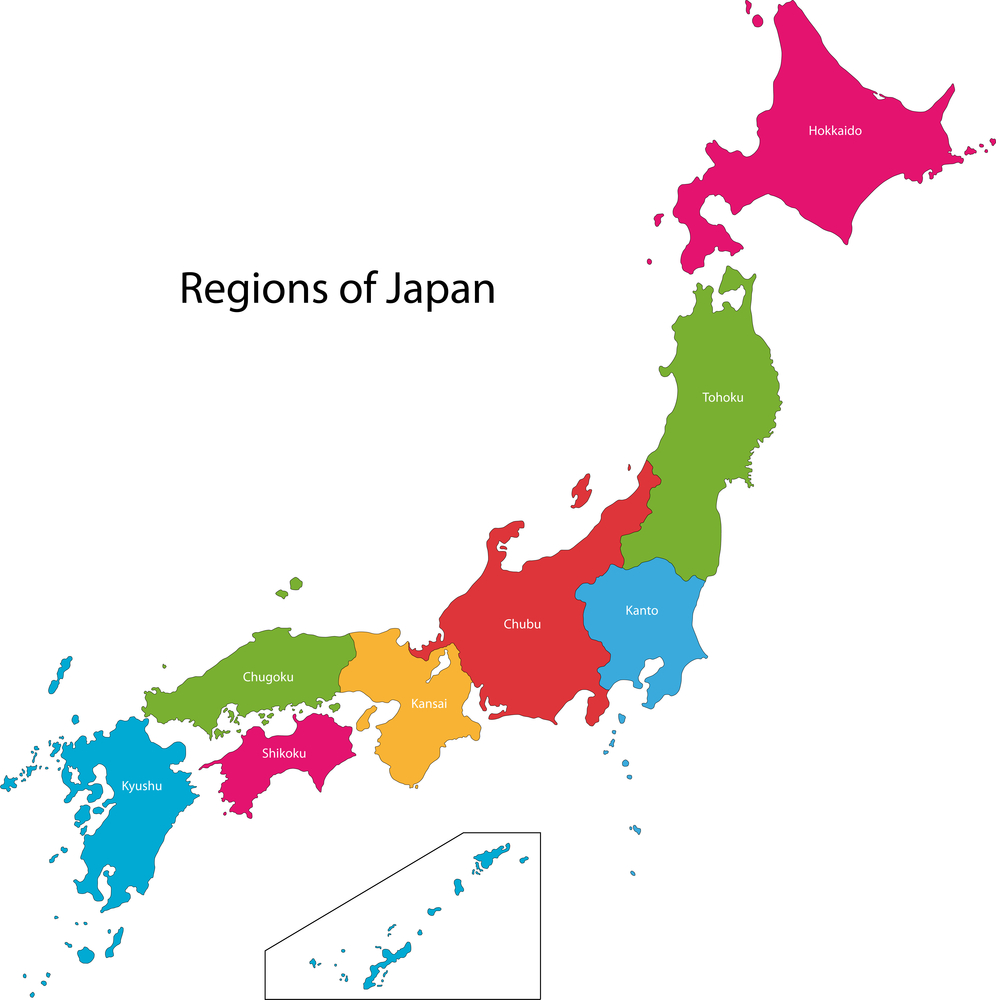
    Tokyo literally means the Eastern Capital and is part of the Kanto region, where the ruling feudal Tokugawa shogunate was based from the 17th century.  Kanto means East of the Barrier (usually considered to be the Hakone checkpoint) and Kansai – the region where Osaka, Kobe and Kyoto are based – means the West of the Barrier (originally the Osaka Tollgate).

    Before Kyoto’s reign as capital for a 1000 years, Nara (also in the Kansai region) was the capital and seat of the Emperor but is now a quiet backwater, more visited by tourists than business people.  Kobe is the other main city in the Kansai region – a port with a strongly cosmopolitan feel and very close to Osaka geographically.  Whilst Kyoto remains aloof and quietly superior (and has some very successful high tech companies of its own such as Kyocera and Nidec), the real battle now in business culture is between Osaka and Tokyo.

    Osakans see Tokyo as standardizing, dull and full of bureaucrats and view Osaka (which historically had very few samurai but plenty of merchants) as the real money maker, with vastly superior food.  Many of Japan’s celebrities, comedians and musicians come from the Kansai region too.

    So what does this mean for corporate cultures?  Osaka companies often have merchant roots – the joke goes, when you meet an Osakan, you don’t ask “how are you” (ogenki desuka) but “how’s business” (moukarimakka).  To which the correct response is “bochi bochi denna” – a wonderfully vague way of giving nothing away, like saying “plodding along nicely thank you”.  Osaka companies are brash, tough negotiators and mean with the money.  “They’d skin the fleece off a gnat” said one British engineer to me, describing his colleagues in the Osaka HQ of a consumer electronics company.

    Tokyo companies are gentlemanly but at the same time highly political.  You need to have a good understanding of their organisation, the factions and the individual relationships to understand how to get things done.  Mitsui and Mitsubishi, both Tokyo based corporate groups, are distinguished by the saying “Mitsui  is people – Mitsubishi is the organisation”.  It’s hard sometimes to understand how exactly this is different, but it seems to boil down to the idea that if an individual is powerful enough at a Mitsui group company, they can get things done, whereas at a Mitsubishi group company, the whole organisation has to support an action.

    The other main corporate groups, Sumitomo and Itochu, are Kansai based companies.  Both have strong “mercantile” roots – Sumitomo in metals trading, hard-nut, conservative and domestically focused and Itochu – strong in fashion and consumer goods, and seen as the more maverick, progressive and international in outlook.  The regional cultural differences don’t seem to have been that strong between Sumitomo and Mitsui as various mergers have taken place between their respective member companies, particularly in financial services.   However regional cultural differences have definitely had an impact on Astellas Pharma, the product of a merger between Yamanouchi (Tokyo) and Fujisawa (Osaka).  Apparently many Fujisawa employees were horrified that Yamanouchi was going to be the dominant partner in the merger.  Fujisawa had a strong tradition of innovation and had regarded Yamanouchi as “Mane-nouchi” (Mane = imitation) – a bunch of play-safe Tokyo bureaucrats.

    Those who know Japan well will have spotted that there is an important region missing from this analysis – Chubu.  Literally and metaphorically this is the midlands of Japan.  Just like the Midlands in the UK it is the historic heart of the car industry.  Nagoya is the main city, and teased just as Birmingham in the UK is for being ugly and soullessly modern.  The area has the last laugh though, as it is the most wealthy in Japan – thanks to the enduring success of Toyota (so mighty their home town was renamed Toyota City) and its corporate group of suppliers such as Denso.

    So, where are the top 30 Japanese companies in Europe from?

    Kanto/Tokyo based companies:

    • Asahi Glass
    • Astellas (but Fujisawa originally Osaka)
    • Canon
    • Daiichi Sankyoshutterstock_36509791
    • Fujifilm
    • Fujitsu
    • Hitachi
    • Honda
    • Kao Corporation
    • Mitsubishi group
    • Mitsui group
    • Nissan
    • Nomura (but was Osaka originally)
    • NTT group
    • NYK group
    • Olympus
    • Ricoh
    • Sony
    • Toshiba

    Kansai based companies:
    • Horiba (Kyoto)
    • Nidec (Kyoto)
    • Nippon Sheet Glass (Sumitomo Group)
    • Omron (Kyoto)
    • Panasonic (Osaka)
    • Sharp (Osaka)
    • Sumitomo group (Osaka)
    • Takeda Pharma (Osaka)

    Chubu based companies:
    • Denso
    • Seiko Epson
    • Toyota

    Chugoku (Hiroshima etc) based companies:

    • Fast Retailing/Uniqlo


    [download_after_email id=”6107″]

  • “Japanese managers have been brainwashed by the West” and should aim to be ‘virtuous companies’ instead

    “Japanese managers have been brainwashed by the West” and should aim to be ‘virtuous companies’ instead

    An interview with George Hara, currently Chairman of Alliance Forum and former board member of various Silicon Valley start ups as a venture capitalist kicks off Nikkei Business’s attempt at finding a new standard for evaluating Japanese companies, beyond the shareholder capitalism model.

    Instead of “Good/Best company”or “Great Place to Work” and all the other awards you can get, the Nikkei proposes ‘Yoi‘, which can be translated as ‘good’ but is probably better translated as ‘virtuous’.  They even deliberately write the headline ‘Yoi kaisha‘ (‘Virtuous company’) in Japanese brush stroke calligraphy.

    Hara doesn’t think the term ‘stakeholder capitalism’ quite covers what  he and the Nikkei are getting at, even though he says the company should be  measured on the benefit to employees, customers, partners and regional society as well as shareholders.  He prefers ‘shachu‘ (which my dictionary translates as clique or troupe) or public benefit capitalism – meaning that all the concerned parties have a common objective.

    He particularly criticises the way companies in the US – the home of full blooded shareholder capitalism – such as Hewlett Packard or Dupont find that putting shareholder interests first means firing people even when there are record breaking profits, or not being able to invest in long term projects to develop technologies which will benefit society.

    Japanese corporate leaders used to be much more inclined to public benefit capitalism, and the cause is not lost yet, says Hara – citing that when he showed the great and the good of the IMF around Tokyo’s underground system recently they were full of praise for how clean, orderly and busy a city supposedly suffering from a 20 year recession was.  Japan should be setting its own standard for the rest of the world, he feels.

    Following on from this, Nikkei Business have come up with a Yoi company metric, based on profit, changes in employee numbers, corporate tax contribution and share price over the past 10 quarters for 3841 Tokyo stock exchange listed companies and the top 10 are:

    1. Softbank
    2. Fast Retailing* (Uniqlo) (Yanai, the founder and also board member of Softbank is quick to throw this back in the face of those who have termed Fast Retailing a “black company”)
    3. Keyence
    4. Fanuc (the current target of shareholder activist Daniel Loeb)
    5. Yahoo
    6. Aeon Mall
    7. Rakuten
    8. Mani (medical devices)
    9. Japan Tobacco
    10. Takeda Pharma *
    11. Central Japan Railway
    12. KDDI
    13. ABC-MART
    14. Sumitomo Real Estate
    15. USS (car auctions)
    16. Astellas Pharma*
    17. Toyota*
    18. SMC (automatic control equipment)
    19. Nakanishi (motor spindles, micro grinders)
    20. Trend Micro (security solutions, founded in the USA, HQ in Japan)
    21. Sysmex (healthcare)
    22. Hisamitsu Pharma
    23. Komatsu*
    24. Terumo
    25. Canon*
    26. Honda*
    27. Makita
    28. Nitori Holdings (furniture)
    29. Shimano
    30. J Trust

    Other of our Top 30 Japanese companies in Europe* in the top 100

    • Bridgestone #41
    • Denso #46
    • Sumitomo Electric Group #51

    In our Top 30 in Europe but not in the Top 100 Yoi companies:

    Fujitsu, Ricoh, Sony, Asahi Glass, NSG, Toshiba, Hitachi, Panasonic, NTT Data, NYK, Fujifilm, Olympus, Mitsubishi Chemical Holding, Nomura, Nidec, Sharp, Daiichi Sankyo, Kao, Seiko Epson