
About Pernille Rudlin

Pernille Rudlin was brought up partly in Japan and partly in the UK. She is fluent in Japanese, and lived in Japan for 9 years.

She spent nearly a decade at Mitsubishi Corporation working in their London operations and Tokyo headquarters in sales and marketing and corporate planning and also including a stint in their International Human Resource Development Office.

More recently she had a global senior role as Director of External Relations, International Business, at Fujitsu, the leading Japanese information and communication technology company and the biggest Japanese employer in the UK, focusing on ensuring the company’s corporate messages in Japan reach the world outside.

Pernille Rudlin holds a B.A. with honours from Oxford University in Modern History and Economics and an M.B.A. from INSEAD and she is the author of several books and articles on cross cultural communications and business.

Since starting Japan Intercultural Consulting’s operations in Europe in 2004, Pernille has conducted seminars for Japanese and European companies in Belgium, Germany, Italy, Japan, the Netherlands, Switzerland, UAE, the UK and the USA, on Japanese cultural topics, post merger integration and on working with different European cultures.

Pernille is a non-executive director of Japan House London, an Associate of the Centre for Japanese Studies at the University of East Anglia and she is also a trustee of the Japan Society of the UK.

Find more about me on:

Here are my most recent posts

Pernille Rudlin - Rudlin Consulting - Page 31

Author: Pernille Rudlin

  • The fourth industrial revolution should not be mercantilized

    The fourth industrial revolution should not be mercantilized

    UK is the birthplace of innovation and will not sink, despite Brexit, says Toru Sugawara, the deputy editor of the Nikkei Business magazine – Japan’s equivalent of The Economist (only with more business, less economy).


    He acknowledges that Brexit is casting a shadow on the world economy, and that the problems will not end just with an extension, as the negotiations will drag on, unless the result of the referendum is reversed.

    He points to how employment remains buoyant in the UK, despite GDP growth being the lowest in 6 years, and says that this could be because immigration from the EU is decreasing – which was one of the reasons people voted to leave. He does not mention that net immigration has not dropped, as more people are coming from non-EU countries.  So unless you believe that EU immigrants only have jobs which UK natives could do, and non-EU immigrants only do jobs that UK natives couldn’t do…

    He believes the UK’s resilience derives from an inner strength which helped it to lead the industrial revolution as the “birthplace of innovation.” Because the UK has worldclass universities  “UK research levels are extremely high. Even if they leave the EU, there are researchers who want to learn from the UK” – according to  an engineer from a major Japanese electronics company.

    The UK is similar to Japan, Sugawara notes, in that neither was able to match Silicon Valley in terms of being able to turn innovations into world changing businesses.  He thinks the UK is changing, however, dating from when the British Business Bank launched in 2014, bringing together various funds for startups and small businesses and also the introduction of the regulatory sandbox, to allow new kinds of financial services to test their products.

    Venture capital funding in the UK in 2018 was $7.9bn, double that of Germany or France (although what he doesn’t say is that this was down from a high of $8.1bn the previous year, and that Germany and France seem to be catching up) . Dr Yuri Okina of the Japan Research Institute points out that the UK’s strength is that as well as having the world’s financial centre, there is a rich source of accountants, lawyers, consultants and other specialists who support an ecosystem for new business.

    If this network could be boosted further, then the UK could lead the 4th wave of the industrial revolution, asserts Sugawara. He warns that Japan, who puts its funds into propping up zombie companies, with regulatory systems that impede new industries from growing, will get left behind. “That’s the bigger worry” he concludes.

    So he seems to be turning an encouraging pat on the back for the UK into a kick up the backside for Japan.  What he says is not going to be news to many Japanese companies, who have reacted to the difficulties they face in Japan by investing in the UK (and elsewhere in Europe). Sugawara mentions SoftBank‘s acquisition of the UK’s ARM, but there have been plenty of other less spectacular investments. Much of it has to do with CASE (Connected, Autonomous, Shared, Electric) in the automotive industry –  Sony Innovation has invested in What3Words (a geocoding system) – also invested in by Daimler. Itochu has invested in Hiyacar and I realise now that its acquisition of UK car repair chain KwikFit probably also fits into this automotive services play. Similarly Sumitomo Corporation has invested in the Nordic parking company Q-Park and Sweden’s car sharing service Aimo.  Japan’s Park24 acquiring National Car Parks in the UK is probably also looking to a CASE future. Panasonic acquired Spanish automotive systems and parts company Ficosa in 2017.

    So really, it’s not about any one country leading the fourth industrial revolution – it will be collaborative and global by its very nature. Both Japan and the UK need to keep their doors as wide open as possible to let everyone get on the ride.

    For more content like this, subscribe to the free Rudlin Consulting Newsletter. 最新の在欧日系企業の状況については無料の月刊Rudlin Consulting ニューズレターにご登録ください。

    Share Button
  • Japanese acquisitions in the European recruitment industry

    Japanese acquisitions in the European recruitment industry

    The two newest entrants in the rankings that my company compiles of the biggest Japanese employers in the UK are both recruitment agencies – Trust Tech and Outsourcing.  Both companies have acquired several recruitment agencies in the UK – as well as in Germany, Netherlands and Poland – over the past 4 years.

    This is bringing back memories for me of 13 years’ ago when I acted as consultant to another Japanese recruitment agency, who had acquired several companies in the UK and Eastern Europe. They asked me to find ways in which these companies could cooperate and collaborate with each other, to enable a more integrated structure and strategy in Europe.

    I quickly found, however, that each recruitment market in Europe was very local, with their own customs, laws and regulations.  The Japanese company ultimately withdrew from Europe, as it had itself been acquired by a bigger Japanese recruitment company and its strategic focus became much more domestic oriented.

    It is not clear what the strategic intention of the Japanese recruitment companies in expanding in Europe is this time, beyond growth in turnover. They mention providing manufacturing and IT staff to Japanese customers who have operations overseas, but I’m guessing this is more likely to be in Asia than Europe.

    Japanese manufacturing in Europe is moving eastwards, so having a presence in Poland, Czech Republic or Slovakia may well be useful in assisting Japanese companies there.

    As for the UK, there is a shortage of people with engineering and IT skills and this looks set to worsen, thanks to Brexit potentially restricting rights of EU citizens to live and work in the UK. The number of people coming to the UK from the EU has already fallen dramatically, causing labour shortages in healthcare, construction and food processing sectors.

    Apart from the impact of Brexit, the main change in the UK recruitment sector in the past decade is the increase in regulation and compliance. The reason that Japanese recruitment companies suddenly find themselves amongst the biggest Japanese employers in the UK is that temporary workers are now considered under law as employees of the staffing agency, and have rights accordingly to pensions and other benefits.  Staffing agencies must therefore comply with UK legislation such as reporting on the gender pay gap and complying with the EU’s General Data Protection Regulation.

    Industry experts say that recruitment in Europe is no longer about just sourcing candidates and placing them.  Labour shortages and pressures to hire people with more diverse backgrounds mean that recruiters have to be more innovative and better at gaining insights from data, to help their customers revise job roles, benefits and salaries to make themselves more attractive.

    This means being as close as possible to the customer and the local pool of potential recruits.  I am not sure therefore, how Japanese companies can add value to this sector in Europe, or indeed learn from it.  So maybe their acquisitions are just about growing revenue, after all.

    The original version of this article was published in Japanese in the Teikoku Databank News and can be found in  “Shinrai: Japanese Corporate Integrity in a Disintegrating Europe” available as a paperback and Kindle ebook on  Amazon.

    For more content like this, subscribe to the free Rudlin Consulting Newsletter. 最新の在欧日系企業の状況については無料の月刊Rudlin Consulting ニューズレターにご登録ください。

    Share Button
  • Five elements of building trust between Japanese and European business cultures

    Five elements of building trust between Japanese and European business cultures

    If I were to capture what I try to do in my work in one phrase, it would be “build trust between Japanese and European business cultures.” This of course leads to questions of how trust is defined, and therefore how it is built.

    The title of my new book, Shinrai, is the Japanese word for “trust”. It is composed of two characters, shin, meaning “believe”, and rai, which means “to request”. In other words, if you trust someone, you believe they will do what you request. The character for shin can be broken down further into components which mean “person” and “word” and the character for rai can be broken down into “bundle” and “leaves or pages”. It implies communication between people is a fundamental part of building trust, but also getting things done and pulling together.

    Analysing the work I have done with clients over the past fifteen years, I would say there are five components of building trust in multinational companies. In sequential order they are communication, mutual interests, processes and regulations, reliability and accountability and vision and values – and then back to communication again in a virtuous circle.

    1. Communication

    Having a common language is critical – this is why any initiative to help immigrants integrate into a society usually starts with language lessons. The problem for Japan is that for native speakers of European languages, Japanese is one of the most difficult languages to learn and Japanese feel similarly about English. Japanese companies can do more to help Westerners learn Japanese – an intensive course in Japan is one of the most effective ways to do this. Japanese companies can also communicate better than they do in English – it’s not enough to make English the common language or force a minimum English level on employees, management needs to communicate vision, strategy and plans in English more effectively than it currently does.

     2. Mutual interests

    The Economic Partnership Agreement between Japan and the EU is a classic example of common interests helping to build trust. People have differing degrees of interests, but finding mutual interests means that there is a stable basis for negotiation. Japan wants to sell more cars in Europe, European consumers are happy to have cheaper, good quality Japanese cars. Europe wants to sell more food and drink to Japan, Japanese consumers are happy to have cheaper, good quality European wine and cheese. On a micro level, this is why I always encourage Japanese expatriates in Europe to engage in small talk with their European colleagues – it’s a way of discovering mutual interests, which means mutual understanding, compromises and agreements are more easily gained.

     3. Processes and regulations

    Once you have discovered your mutual interests, you can come to an agreement, but it needs mutually recognised standards to work well. What are the quality and safety standards expected of a car, or a cheese in your respective countries?

    When there is a low level of trust, laws, regulations and processes are needed as a fall back. However, both Japanese companies and the European Union are sometimes guilty of becoming bogged down in bureaucracy and process. You have to show you are obeying regulations and following processes in order to be trusted, but ultimately, this is not sufficient. How you do something in terms of your intentions and behaviour towards others is as important as carrying out the process correctly and obeying the law.

     4. Reliability & accountability

    When you trust someone, it is not only because you believe they will obey the law, but also that they will do what they say they will do. For Japanese companies, this can be hard to define, as the culture is often a family style one, where everyone’s roles are vague, with no job descriptions and rely on a seniority-based hierarchy. It’s assumed everyone will do whatever necessary, in the best interests of the family. Rules can be bent for family members but this vagueness does not work well in more diverse organisations.

    The current fight between Carlos Ghosn and Nissan is focused on processes and regulations. Nissan will try to prove Ghosn flouted Japanese law, but will have to answer questions about its own internal rules. Ghosn will try to prove that he followed both internal and external regulations. But what really seems to be at stake is a loss of mutual trust between Saikawa and other Japanese executives and Ghosn. If you are an insider in a Japanese company, you are trusted as a family member to act in the best interests of the family, and rules can be bent accordingly. But once you are seen as an outsider and acting in your own interests, possibly harming the company, then the rules are applied rigidly – just as the UK is finding out as it negotiates to leave the EU.

     5. Vision & Values

    This is why you need a clear vision of where the company is going and how you want it to be seen. The vision and values have to be discussed with and shared with employees so they feel they belong. The values will guide them as to how they should behave in order to achieve that vision. If the vision is simply to hit various targets, within the boundaries of rigid rules and processes, without employees engaged with the company values, then the kinds of corporate scandals we have seen in both Japanese and European companies will continue, with catastrophic consequences for trust across societies and cultures.

    This article is in the introduction of “Shinrai: Japanese Corporate Integrity in a Disintegrating Europe” by Pernille Rudlin, available on Amazon as a paperback and ebook.

    For more content like this, subscribe to the free Rudlin Consulting Newsletter. 最新の在欧日系企業の状況については無料の月刊Rudlin Consulting ニューズレターにご登録ください。

    Share Button
  • Acquire or be acquired – predictions on the future of Japanese mergers and acquisitions

    Acquire or be acquired – predictions on the future of Japanese mergers and acquisitions

    Japanese companies used to be seen as very reluctant to acquire and merge with other companies, but the record breaking £46bn acquisition, finalised in January 2019, of Irish pharmaceuticals company Shire by Japan’s Takeda may not even be the peak of what has been at least 10 years’ of an overseas spending spree by Japanese companies.  Faced with a declining, ageing domestic market, Nikkei Business magazine expects Japanese companies to continue their spending spree in 2019, even if there is not a big ticket purchase like Takeda/Shire.
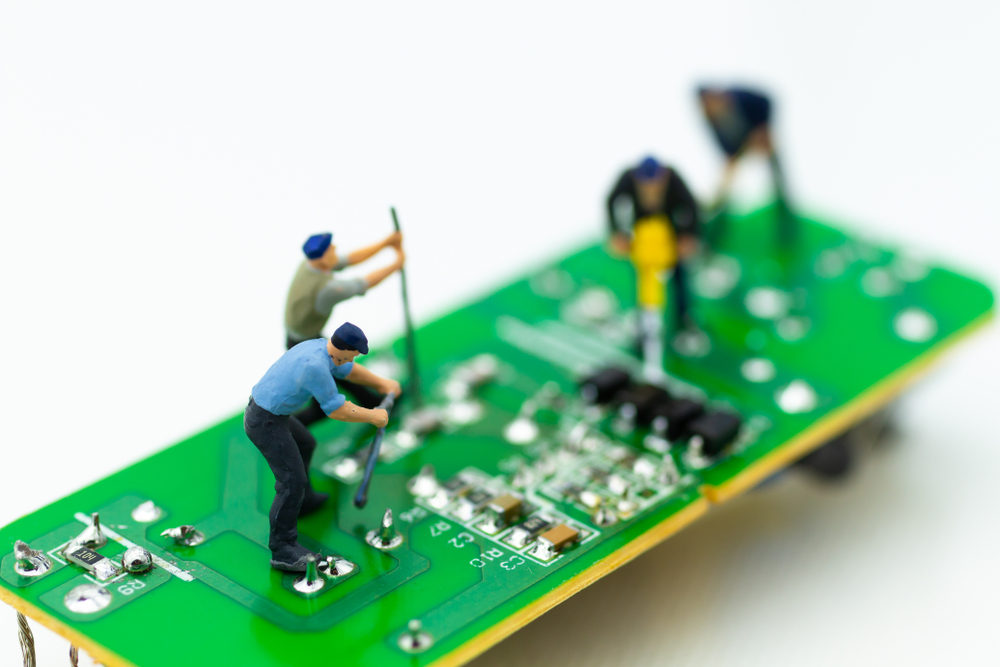
    Autonomous vehicles, Internet of Things and other new technologies are likely to be the focus of future M&A.  For example Japan’s tyre maker Bridgestone has acquired the telematics business of Dutch company TomTom. “Tyre companies are also entering the era of CASE (Connected, Autonomous, Sharing Electric)” says Bridgestone’s CEO Masaaki Tsuya. Sensors can be placed in tyres to understand driving conditions, for example.

    In the IT sector, NEC has acquired the UK company Northgate Public Services in January 2019 and in December of the previous year acquired Denmark’s KMD Holding and is looking to acquire a stake in India’s Mindtree.

    Food and drink companies are also active – Mizkan, Ajinomoto and Asahi Beer have all made acquisitions recently in Europe.

    In the financial sector, Nikkei Business speculates that a Japanese company like SMFG or Orix might be interested in acquiring GE’s aircraft leasing business GECAS, headquartered in Ireland – although GE has since denied GECAS is for sale.  MUFG might be interested in the US Bank of the West.

    Most of the acquisitions of Japanese companies have been by Chinese companies, but Nikkei Business also wonders whether some of the big Western automotive suppliers such as Bosch, Continental, ZF, or Magna might not be interested in acquiring Japanese automotive suppliers.

    Declutter and dispose

    M&A is also an opportunity for Japan’s keiretsus (conglomerates and company groupings) to do a bit of tidying up. The trendsetter in this has been Hitachi, who have been pursuing a rigorous policy of “selection and focus” in rearranging their business portfolio. Over the past 10 years or so they have sold off Hitachi Global Storage Technologies to Western Digital, Hitachi Logistics to SG Holdings, sold a 27% share in Hitachi Capital to MUFG, sold Hitachi Power Tools and Hitachi Kokusai Electric to KKR and Clarion to Faurecia.

    Japanese investors and banks are keeping a watch on Hitachi High Technologies, Hitachi Chemical, Hitachi Automotive Systems, Hitachi Construction Machinery and Hitachi Metals as the next possible candidates.  Hitachi Chemical and Hitachi Metals were supposed to be two of the “Three Branches” of Hitachi along with Hitachi Cable, so the idea that they could be sold off would be heresy to some Hitachi old timers.  As the Nikkei Business magazine says, Hitachi is trying to compete as a global company, so any business that has no synergy with its “social innovation” vision is likely to be dropped.

    Panasonic already sold off its security camera business and foreign funds are eyeing up Panasonic Avionics – an inflight entertainment company – as a likely next candidate. “It has nothing to do with Panasonic’s main business”, one investor commented.

    Takeda seems to be preparing to dispose of its consumer healthcare business to help fund its acquisition of Shire, as it has spun off its vitamin drinks and other products into a separate company.

    Fujitsu has also been disposing of its hardware businesses – mobile phones, car electronics and PCs and Sony‘s mobile phone business is still struggling, and rumours that it could be sold continue.

    Spark surprise

    Nikkei Business concludes with some surprise predictions from the experts it spoke to:

    • Astellas and Daiichi Sankyo merging
    • Pioneer and JVCKenwood merging
    • SoftBank acquiring NEC
    • Fast Retailing acquiring Gap
    • Google acquiring Recruit
    • Amazon acquiring 7&i (7-11 convenience store chain)

    Unsettling though it may be for the employees concerned, if clarity in the focus and business of Japan’s iconic companies results from these M&As, ultimately it should make for a more confident Japan Inc.


    For more content like this, subscribe to the free Rudlin Consulting Newsletter. 最新の在欧日系企業の状況については無料の月刊Rudlin Consulting ニューズレターにご登録ください。

    Share Button
  • Lessons from the decline of Japanese electronics manufacturing in the UK for the automotive industry

    Lessons from the decline of Japanese electronics manufacturing in the UK for the automotive industry

    Although around 10,000 manufacturing jobs in Japanese electronics companies in  the UK were lost in the 1990s-2000s, about the same number have been added, either created by Hitachi Rail or in the automotive or air conditioning sectors. Japanese electronics companies such as Sony, Fujitsu, Panasonic, NEC, Mitsubishi Electric and Hitachi still all employ thousands of people in the UK.


    It is a story of how industrial policy cannot ultimately stop product obsolescence, shifts of manufacturing to cheaper locations or the transformation from mass manufacturing of products to supply chain ecosystems providing solutions and services. Recent investment from Japan in the UK is in services and infrastructure, for the domestic UK market, and at least for now, the EU. But this has meant fewer jobs in the areas that voted Brexit.

    Bunging £10s of millions at Nissan to compensate for tariffs was not going to stop these shifts. Over 10% of the 7,000 Nissan employ in the UK are working in design centres, not on the factory floor. Being a gateway to the EU now, even in manufacturing, needs regulatory alignment and free movement of people so suppliers can visit and base themselves at client sites and provide services and ship prototypes around the region.

    The shift to electric vehicles means the car companies have to cooperate more than ever with ICT and electronics companies. Many of these ICT and electronics companies have joint European HQs spread across the UK, Netherlands or Germany, with senior management and teams scattered across the region, working virtually or at customer and partner sites. They have also integrated back office and technical support into cheaper locations such as Portugal or Poland.

    Some examples of the history of Japanese electronics companies in the UK over the past 30 years:

    Fujitsu

    Fujitsu is the biggest Japanese employer in the UK with over 8,000 employees, 2,000 down on a few years ago, as it grows delivery and support centres in Portugal, South Africa and India and downsizes in the UK. It acquired 80% of UK’s ICL in 1990 (increasing to 100% 1998). ICL had 2,000 UK employees, 26,000 worldwide, with mainframe and PC factories in Letchworth, Manchester and the Midlands.  ICL was born out of 1960s industrial policy – the British government had a 10% stake in it for a while. To this day, Fujitsu provides a lot of  government IT infrastructure and services. Its last computer factory in Europe, in Augsburg in Germany, will shut down in 2019, retaining manufacturing in Japan only.

    Hitachi

    Hitachi used to employ around 1,000 people in its factory in Aberdare, Wales, making cathode ray TVs, video recorders and microwave ovens. It was shut in 2001, blaming low price competition from Asia. Hitachi has since shifted away from consumer products to infrastructure. In the UK it acquired the now stalled Horizon Nuclear Power projects in Wylfa and Oldbury and set up Hitachi Rail in the UK as the global headquarters with a new factory in Newton Aycliffe, employing nearly 2,000 people.

    Hitachi employs another 4,000 people in the UK services sector – for example credit and loans company Hitachi Capital, IT consultants Hitachi Vantara and Hitachi Consulting and Vantec, providing logistics for Nissan.

    Sony

    Sony came to the UK in 1973, and had 2 plants in Pencoed making cathode ray TVs, employing 1,800 by the 1990s. As these started to shut down, Pencoed transformed itself into an innovation centre, developing and producing broadcast and professional equipment, employing 500-600 people.

    Sony has been restructuring across Europe recently, consolidating back office functions into cheaper regions. It was still manufacturing DVDs in Enfield in the UK but this was shifted to Austria in 2017/8, reducing capital in UK by over £250m. It still employs nearly 2,000 in its music, home entertainment and interactive businesses in the UK.

    Ricoh

    Ricoh still has a factory in Telford (and two other plants in UK), employing the same number of people in 2018 as in 1991 – around 700 – but the product range has shifted from faxes to printers and consumables.

    Mitsubishi Electric

    Mitsubishi Electric acquired Apricot Computers in 1990, with a plant in Glenrothes and R&D in Birmingham, employing 442 in 1991. Glenrothes was shut in 1999, blaming cheap competition in Asia. It still has manufacturing in the UK, employing nearly 1,000 people (many of whom are non-UK EU citizens) in Livingston, at its airconditioning plant.

    Panasonic

    Panasonic, formerly known as Matsushita, had many plants in UK from 1970s to 1990s, employing 1,621 in Cardiff (TVs, microwaves), 469 in Gwent (electric typewriters, carphones), 160 in Port Talbot (components for TVs, video recorders, microwaves) and 63 in Reading (fax machines).  Most Matsushita/Panasonic plants in UK shut down in early 2000s, with production shifting to Eastern Europe. 1 plant remains in Wales, employing 400 people, manufacturing microwave ovens but also conducting R&D into fuel cell technology.  Panasonic has acquired Belgian IT company Zetes and Spanish automotive supplier Ficosa recently.

    NEC

    NEC is also shifting into IT services via European acquisitions. It used to have a semiconductor plant in Livingston (Silicon Glen, remember that?) which employed 1200 by 2001, when it shut down. NEC UK employees now number over 1000 again thanks to the acquisition of Northgate Public Services, in 2018.

    Others

    Oki Electric were relatively late in shutting down their Cumbernauld printer plant in 2018 – and now all production is in Asia.  JVCKenwood shut down their East Kilbride TV/CD player factory in 2008 and shifted production to Poland. Pioneer closed its CD player/TV factory in Wakefield in 2009. Toshiba had a factory in Plymouth, which used to make TVs, video recorders, but is now owned by a US company and makes air conditioners. Sharp (now owned by a Taiwanese company) still has a factory in Wrexham as does Brother.


    For more content like this, subscribe to the free Rudlin Consulting Newsletter. 最新の在欧日系企業の状況については無料の月刊Rudlin Consulting ニューズレターにご登録ください。

    Share Button
  • The end of Swindon is also part of the end game for Honda President Hachigo

    The end of Swindon is also part of the end game for Honda President Hachigo

    Shutting down the Swindon UK factory was not the only announcement Honda made in February 2019.  They are ceasing production of Civics in Turkey, merging their motorbike production in Brazil, bringing R&D for motorbikes in-house and also making some unusual appointments at the executive level.

    Diamond magazine says this is Honda entering the final “mop up” phase now that Takahiro Hachigo is entering his fifth year as President. Japanese Presidents usually stay in post for six years, so this is Hachigo’s end game for revising the global expansion strategy of his predecessor, Takanobu Ito. In particular he  has been focusing on removing excess production capacity, trying to improve profitability and putting a strategy in place for a “post Hachigo” structure, which will enable Honda to survive in an era of huge change for the car industry.

    The uncertain future brought about by Brexit was one factor, Diamond magazine says, but more than that, it was the poor performance of the European business within Honda’s “6 region global structure”.  Honda only has 1% or less of the European market share. The Japan-EU EPA in force from February gave further impetus to the decision.

    From 6 to 3

    Honda started engine production in the UK in 1985, whole cars from 1992 and then in 2001, designated as the European production base, production capacity was increased to 250,000 vehicles a year.  However production in 2018 was only 160,000 vehicles, of which 55% was for the US market.  The gap between capacity and demand in Europe meant profitability was weakening.

    It seems that Honda is looking to change course, to a tripartite structure of manufacturing in North America, China and Japan as it enters the electric vehicle era.  Takanobu Ito had been aiming for sales of 6 million cars globally, but was hit by quality problems, having to recall the Fit model and the Takata airbags issue, leading to a drop in sales and excess production capacity.

    Hachigo began a review of the global production structure in October 2017, deciding to close the Seyama factory in Japan by 2021.  Hachigo says that this review will mean that the current global capacity of 5.4 million vehicles, at 97% utilization will by 2021 become 5.1 million vehicle capacity, at over 100% utilization.  It is expected that Honda’s annual results will show an increase in earnings but a decrease in profit. The operating profit for 4 wheel vehicles is stuck at around 4% and recent results have shown that the profitability of motorbike sales are propping up the company.

    Motorbikes and personnel changes too

    This is why Honda has announced that from April, instead of sales, production, development and purchasing for 2 wheeler business all being independent from each other, they will be brought together. In particular, Honda’s unusual structure, dating back to Honda’s founder, Soichiro Honda, of having R&D as a separate company, will cease for the motorcycle side.

    To speed up the return to profitability for the 4 wheel business, COO and EVP Seiji Kuraishi will be appointed as head of 4 wheel vehicles, which will be reorganised from the 6 region global structure to a “Number 1” Sales division (North America, Europe, China) and a “Number 2” sales division (South America, Asia, Australasia, Africa, Middle East).

    A new Mobility Service business unit and Connected business unit will be set up, to respond to “MaaS” (Mobility as a Service). Honda’s power products business will look at how to add value in “mobility” and “lifestyle” and be renamed as the “Life Creation” unit. Honda R&D will focus on new technology development to support these new units.

    On the personnel front, senior managing director Toshiaki Mikoshiba will become chair of the Japan Automobile Manufacturers’ Association, senior managing director Yoshiyuki Matsumoto will step down as head of Honda R&D, with EVP Toshihiro Mibe expected to take over.   Diamond magazine hints that Mibe’s rise in the “post Hachigo” era is worth noting.

    Advice to Honda UK

    I’ve been asked to give some advice  by BBC Radio Wiltshire (Wiltshire being where the Honda UK factory is based) this coming Monday morning (25th February 2019) to a delegation from Honda UK who are going to Japan to make their case.  This may be a “grandmother egg sucking” situation, but my advice will be:

    1. Communication

    If possible, get any documentation you are going to present translated into Japanese.  If not (and in any case) put as much of it in a visual, graphical format as possible. Send material in advance, to give Honda Japan time to read, digest and discuss.  Otherwise you will just be politely received, but no outcome.

    2. Know Japan HQ’s interests

    Contact as many people as you can in Honda Japan, informally, to get their advice and input, and steer you towards what Honda Japan’s interests might be.  I hope this blog post helps, and there are a couple of other blog posts I have written that might be useful.

    Try not to focus too much on guilt-tripping about the jobs being lost, or proving how manufacturing Civics in the UK could be profitable. That ship has already sailed, and with Brexit outcomes no clearer, and trust destroyed in anything British politicians might promise, it won’t be credible.

    3. A process might be an outcome

    There needs to be a process to rebuild trust in the UK – the best you might be able to get is a timeline and mechanism for reviewing the situation over the coming years, as Brexit unfolds, and Honda itself develops new technology.  Even then, automotive manufacturing for the European market has been moving eastwards, and also to North Africa. UK Honda workers may need to offer to be open to relocating to any new factory.

    There might be a story about developing and manufacturing new electric vehicle models for the European market.  Hachigo has said that he sees Europe as the heart of global car culture.  The future for Swindon might be rather like Sony in Pencoed – moving away from mass market production to high end, high value add – it won’t employ as many people, but at least some jobs could be saved.

    For more content like this, subscribe to the free Rudlin Consulting Newsletter. 最新の在欧日系企業の状況については無料の月刊Rudlin Consulting ニューズレターにご登録ください。

    Share Button
  • Forth Bridge Brexit

    Forth Bridge Brexit

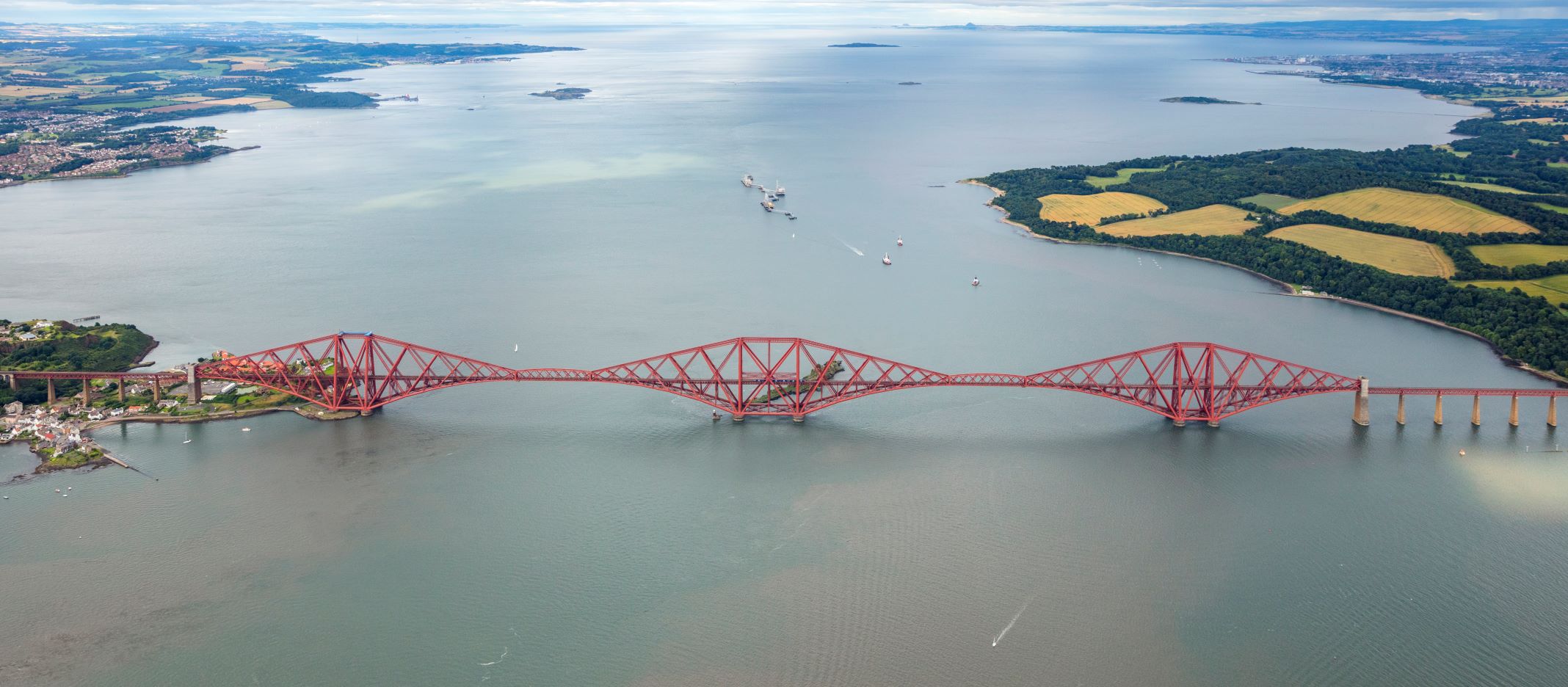
    The British have a saying for when a job is never finished – “painting the Forth Bridge”. The Forth Bridge is a nineteenth century railway bridge, nearly 2.5km long, near Edinburgh. It has a very distinctive cantilevered design, painted in red. Supposedly when you have finished repainting it, it is time to start again at the other end.

    Brexit looks like a Forth Bridge for UK based businesses – just when you think you have made preparations for whatever deal is done, a fresh round of negotiations and possible outcomes appear.

    My database of all the Japanese companies in the UK is another Forth Bridge.  Every time I think I have the definitive picture, I find more data to add.  There is a free online government database, Companies House, to which all companies incorporated in the UK must submit their annual reports.  If they are above a certain size, they must also give an account of the risks they face and what they are doing to mitigate them.

    By reading these reports, I can cross check other records of employee numbers, turnover and capital. I can therefore say with some confidence that there are over 1000 Japan originated entities in the UK (including branches) and they employ over 160,000 people, with total turnover of around £100bn.  I can also see what steps Japanese companies have taken to prepare for Brexit.

    Much of this has been in the news already. Those companies who are physically moving products – whether in the automotive supply chain, or pharmaceuticals or electronics – have stockpiled, expanded their warehousing and reviewed their logistics. Those companies who are in regulated sectors such as finance or pharmaceuticals have strengthened their EU bases and made the necessary applications to EU authorities for approval for their services or products.

    There have also been structural changes.  Plenty of the larger Japanese companies were already in a holding company structure across Europe, with holding companies mostly in the UK, Netherlands or Germany. Electronics and trading companies are turning their UK companies into branches of EU holding companies, or turning their UK companies into “commission agents” so that the principal in a sales contract is in the EU.  Some have reduced the capital they have in the UK.

    This has not caused an immediate or dramatic negative impact on jobs, but in the long run I worry about the loss of influence and budget that this may have for UK business.

    The mood at the Japanese Chamber of Commerce & Industry in the UK’s New Year party was very positive, however. The message of the speeches was that Japan and the UK have so many common interests, they need to stick together. Membership of the Chamber is at a record high as new Japanese companies continue to invest in the UK, largely in domestic oriented businesses such as food, retail or public sector outsourcing, symbolised by the stunning flower arrangement provided by Aoyama Flower Market, who opened their first UK branch in London in 2018.

    This article was originally published in Japanese in the Teikoku Databank News. It can also be found in  “Shinrai: Japanese Corporate Integrity in a Disintegrating Europe” available as a paperback and Kindle ebook on  Amazon.

    For more content like this, subscribe to the free Rudlin Consulting Newsletter. 最新の在欧日系企業の状況については無料の月刊Rudlin Consulting ニューズレターにご登録ください。

    Share Button
  • Service sector dominates Japanese investments in the UK

    Service sector dominates Japanese investments in the UK

    Although most people think of car manufacturers such as Nissan, Honda and Toyota when they think of Japanese investment in the UK, our Top 30 Japanese employers in the UK very much reflects the way the UK economy itself has shifted from manufacturing to services.

    The three car groups are still in the Top 30 – in the Top 10 in fact – employing over 18,000 people – although many hundreds of them are not actually working on the factory floor, and are design engineers or in sales and marketing.

    There are over 200 companies in the Top 30 employers (each consolidated group is counted as one employer) and 15-20% are manufacturers. They employ over 33,000 (36%) of the 92,000 or so people employed by the Top 30. This reflects why countries want to retain manufacturing – manufacturers are relatively larger employers, providing decent jobs in often deprived areas, creating a ripple effect of suppliers and further jobs.

    Comparing these numbers with Roger Strange’s 1991 figures given in his “Japanese Manufacturing Investment in Europe” shows that while Nissan has grown from 2,500 employees to over 8,000, Honda from 400 to over 7,000 and Toyota from 1,900 to over 3,000, some have shrunk. Sony used to employ 1,800 in Pencoed, making TVs – it is now a technical centre manufacturing high end audio visual products and employing around 500-600 people

    Other companies have changed their product mix – Hitachi used to employ around 1,000 people in Aberdare, making TVs, video recorders and microwave ovens and another 500 at Maxell in Telford making audio tapes and floppy disks. Now most of its manufacturing employees are working at Hitachi Rail and there are around 85 employees at Maxell, making plastic moulded products for the food, pharmaceutical and automotive industries and another 100 or so in Horwich making engine control systems.

    Some have stayed the same – Ricoh had 650 employees in Telford in 1991 making fax machines and photocopiers, and still has 650 employees there 27 years’ on, making printing devices.

    Brother is in the Top 30 not because it grew its manufacturing operations in Wrexham (in fact there are only 164 people there compared to 634 in 1991) but through the other big Japan-UK investment story – acquisition. It now owns Domino Printing Sciences, who develop and manufacture printing systems in Cambridge.

    Also growing through acquisition is NEC. A couple of years’ ago it seemed like it was fading out of the UK and focusing on developing markets. It was no longer manufacturing – for obvious reasons – video recorders, car telephones, TVs and faxes in Telford. But in 2018 it acquired Northgate Public Services and through its acquisition of JAE in Japan, their UK operation and now it has over 2000 employees in the UK. Other big acquisitions have been SoftBank acquiring ARM, Dentsu acquiring multiple marketing agencies, Sumitomo Rubber acquiring tyre dealer Micheldever and Outsourcing acquiring various recruitment and debt collection agencies. The reason Fujitsu is still at the top of the ranking – just – dates back to its acquisition of ICL in 1990. All, notably, service sector companies.

    A final thought on the current hot Brexit topic of location of regional HQ. It’s becoming increasingly difficult to identify one country location as the sole European headquarters – I’ve left the HQ column in the chart below, largely on the basis of where the historic HQ was and where most of the key regional people are based – but many companies are moving to a more virtual, dispersed structure, with Brexit and Japanese tax haven laws providing added incentive to do so.

    [download_after_email id=”5729″]

    For more content like this, subscribe to the free Rudlin Consulting Newsletter. 最新の在欧日系企業の状況については無料の月刊Rudlin Consulting ニューズレターにご登録ください。

    Share Button
  • How will Hitachi weather the storms of Brexit and industry turmoil, not just in nuclear energy but also rail?

    How will Hitachi weather the storms of Brexit and industry turmoil, not just in nuclear energy but also rail?

    The Japanese business media is asking the question I’ve been wondering about too – what might the impact be on Hitachi Rail’s global HQ in the UK, now that Hitachi have shown they can take the tough decision to suspend their Wylfa nuclear power project, amid the continuing uncertainty of how Brexit will play out?

    Toyo Keizai’s Naoki Osaka details the history of how Hitachi’s first step into the UK rail market was as a preferred bidder for the UK HS1 in 2004, supplying 174 carriages, which were built in Japan. Hitachi then won the IEP bid in 2012, for 866 carriages and a contract for First Great Western. They then invested £82m in the Newton Aycliffe factory i 2015, which is now making around 40 carriages a month for IEP and Abellio Scotrail. Not all parts are made in the UK. The 700 employees mostly do not have any rail manufacturing experience but are learning fast, according to Osaka. The 25 expatriate Japanese have been reduced to 6. Including the maintenance operations, there are now 7 sites in the UK, expecting to expand to 13 by 2020, employing around 2000 people.

    Osaka was told when he visited the factory last December that there were plenty of future projects to bid for, so no worries for the future. However Diamond magazine says their Hitachi contact told them that since Hitachi lost the London deep tube bid last year and also lost their attempt to overturn the decision, they only have an order book through to the end of 2019, and no orders beyond that, as yet. Diamond describes the formerly warm relationship between Hitachi and the UK government as “frosty” as a result of both this and the failure of the government and Hitachi to agree on how to move forward on the finances for the Wylfa nuclear power project.

    If there is a no deal Brexit, customs inspections will be significant for carriage manufacturing, says Osaka. 70% of the parts are made within 40 miles of the factory. So although there are fewer logistical concerns, there will be plenty of issues around rules of origin that are likely to cause supply chain problems for suppliers to Hitachi.

    Furthermore, the Italian factory which Hitachi acquired in 2015 is improving productivity beyond expectations and will no doubt play an important role in developing Hitachi’s rail business in Continental Europe.

    Hitachi is also keeping an eye on the Siemens/Alstom rail business merger. It may well be blocked by the EU, and as Alistair Dormer, CEO of Hitachi Rail predicted, Alstom is offering to sell of some of its businesses to avoid this, for which Hitachi could be a buyer. Hitachi was hoping to become one of the Big Three of the global rail business, with a target of Y1trn turnover – Siemens and Alstom’s merger will produce a Y2trn business. Now it has turned its back on nuclear business, can Hitachi become a global player in the rail business, in the face of storms caused by Brexit and industry restructuring?

    For more content like this, subscribe to the free Rudlin Consulting Newsletter. 最新の在欧日系企業の状況については無料の月刊Rudlin Consulting ニューズレターにご登録ください。

    Share Button
  • Is “chutzpah” in Israel the same as “not reading the air” in Japan?

    Is “chutzpah” in Israel the same as “not reading the air” in Japan?

    Japanese investment in Israel has shot up the past five years.  According to JETRO there are 66 Japanese companies based in Israel as of 2017, 16% up on the previous year.  Nikkei Business estimates the total of investment asY130bn (around $1.1bn) – the main contributor being Mitsubishi Tanabe Pharma’s acquisiton of Neuroderm for $1.1bn in 2017.

    PM Abe’s visit to Israel in 2015 brought about many further visits from Japanese business people. The attraction is, unsurprisingly, Israel’s expertise in IoT, AI, cyber security and other technologies.  But the big obstacle, certainly according to many people I have spoken to about this, is the big cultural communication gap.

    According to Shintaro Hirado, who has set up a business support company in Israel, it can be seen as a positive, that Israelis are very straight with you, and once you get over the shock of that, then you can build good trusting relationships.

    Japanese expatriates in Israel compare “Chutzpah” (cheek, nerve, audacity) to the KY (Kuuki Yomenai) phenomenon in Japan of a few years ago, when younger Japanese were accused of not being able to “read the air” (usually of disapproval).

    Israeli owners of companies acquired by Japanese companies such as Rakuten have asked for earn outs before the final agreement was signed, or left due diligence meetings days before they were over, not out of anger, but just “I’ve said all I need to say.”

    Japan Intercultural Consulting – whom Rudlin Consulting represents in Europe, Middle East & Africa – has just started a partnership with Charis Intercultural Consulting, who have a presence in Israel, so this communication gap could be a business opportunity for us too.

    For more content like this, subscribe to the free Rudlin Consulting Newsletter. 最新の在欧日系企業の状況については無料の月刊Rudlin Consulting ニューズレターにご登録ください。

    Share Button