
Author: Pernille Rudlin

  • Third Culture Kid

    Third Culture Kid

    I don’t think my parents quite realised what an impact their decision to move to Japan when I was six years old would have on my life, even into adulthood. Now that I consult on cross cultural matters as a profession, I increasingly appreciate how influential such childhood experiences are. There is of course some disagreement amongst experts, but many psychologists and anthropologists would agree that the formative years are from around five or six years old through to eleven or twelve years old, when the personality and cultural values of the future adult are shaped.

    It was precisely during those years that we lived first in Sendai (a city in the north of Japan) and then Kobe (a port in the south of Japan). The Sendai experience was particularly intense. There weren’t many foreigners in Sendai in the 1970s – just some missionaries and a few academic families like mine. As there was no international school, I ended up being the first foreign pupil at the local girls’ Catholic school – blonde haired, blue eyed but wearing the same traditional sailor top, skirt and hat as all the other Japanese schoolgirls.

    For the first few weeks I was in tears most days, and pupils from throughout the school would come to stare at me in the break times, touch my hair and stare into my blue eyes. When my father or mother came to pick me up from school a riot would almost break out. But children at that age are amazingly adaptable and sponge like, and also bore easily. Within six months I was speaking reasonably fluent Japanese and had made friends who accepted me as basically the same as them, just a bit odd looking. I even got the top mark in Japanese composition once. I thought that was nothing special, and couldn’t understand why my parents made such a fuss about it.

    Kobe was a lot easier – a cosmopolitan port city with several international schools. At the school I went to, there were many children like me, mongrels of various nationalities and cultures. I later realised that they, like me, are what are known as TCKs – Third Culture Kids. Third Culture Kids were brought up in a country different to their country of nationality and consequently do not feel totally at home either in their country of birth or their adopted country. They instead create a “third culture” where they attempt to mix the best of both countries, and hang out with other TCKs who understand their hybrid identity. They also tend to have “itchy feet” and want to move somewhere else every few years. When they do settle, it is usually in communities where there are many other TCKs, such as London, or Brussels or Switzerland.

    Perhaps many of you reading this article are TCKs yourself. If you are the parent of a TCK you might worry from time to time that your life choices have had such an indelible impact on your children. But on balance I would like my son to be a TCK too. So far though, he’s very English.

    This article by Pernille Rudlin originally appeared in Japanese in the August 6th 2009 edition of Eikoku News Digest.

     

  • The freedom of a foreign life

    The freedom of a foreign life

    In my previous article I described how I am, thanks to my upbringing in Japan, a Third Culture Kid – a child who was brought up in a different country to that of their birth. There are more and more of us in this increasingly globalising world, and I wonder if other TCKs, like me, find it hard to answer any questions about whether we love or hate the two countries we semi-belong to. For me, Japan and the UK are just a part of my life, like brushing my teeth. I tried to escape the influence of Japan on my career once or twice, but it didn’t work, both because it is the subject that I am most passionate about, and also because, frankly, it is this expertise that people are most willing to pay me for.

    A more interesting question is what leads people who are not TCKs to choose to settle in another country. My parents and I stayed in Japan for five years initially. Then, when I was eighteen, they decided to move back to Japan again, to Hiroshima and then Tokyo, staying for a total of twenty years. If you were to ask my mother what caused them to leave the UK again, she would probably half jokingly say “British Rail”. At that time the trains were even more unreliable than they are now and my mother was commuting every day to London to quite a high powered job, chairing various meetings, so if she was late, the meetings did not happen. She became ill, and the stress of the daily commute was making it worse.

    Japan is, of course, a country where things work – trains run on time and people are punctual, reliable and polite. This is a big attraction for many of the foreigners who choose to live there permanently and they get a terrible shock when they return to their home country where things don’t work, people are rude and the streets are littered. After a long time away you feel like a foreigner in your home country. My parents actually look like foreigners in the UK now – they are too well dressed!

    I know Japanese people who have lived abroad for a long time no longer feel like they belong in Japan. But I do find it puzzling that they chose to live in the UK, with its terrible customer service, bad weather and unreliable transport system. Some Japanese acquaintances have said that they like the freedom and tolerance they find in the UK. I would argue that this is not unique to the UK – anyone living in a foreign country can feel liberated by being out of the reach of the expectations and judgements of their society of birth. Believe it or not, foreigners living in Japan feel that way too.[playht_player width=”100%” height=”175″ voice=”Lily”]

  • The san-thing

    The san-thing

    Almost without fail someone will ask me during my training seminars “are we going to deal with the –san thing?” When I get to the point where I deal with Japanese business etiquette in the session, I try to emphasise that it is really not that complicated. Surname plus san will almost always work.

    Except that it is of course much more complicated than that. It’s true that most Japanese men feel uncomfortable being called by their first name, and often their first name is rather long and difficult to pronounce for Westerners. But Japanese women, whose names are usually shorter and easier to pronounce, are happier about being on first name terms.

    When “surname-san” is not necessary

    I also talk about how some Japanese men, particularly those that have lived in the US, might have adopted a nickname, either a shortened version of their own name, such as Masa, or Tets, or they may have taken a Western name that starts with the same letter as their own name, which (causing added hilarity for the Brits), may well be a very American name, such as Hank, or Duke, or Tex.

    In this case, it is not necessary to put “–san” on the end. In fact one of our Japanese client contacts specifically asked me to let his European colleagues know that “Keith” rather than “Keith-san” was his preference. If I reverse the situation, I can see how he feels. Some Japanese colleagues did try to call me “Miss Pernille” when I worked in Japan, and I found it irritating. It overemphasised the cultural difference, and the added politeness put too much distance between us. I was trying to blend in with the Japanese corporate environment, and being addressed by rather quaint forms like “Miss Pernille” just made me stick out more.

    What’s with “-chan” and “-kun”?

    Sometimes Japanese bosses called me “Pernille-chan”, (“chan” being a dimunitive, usually used for little girls), which was just about acceptable when I was in my twenties but I presume that as I have reached “obasan” (auntie) status in terms of years, most Japanese people would not dream of calling me that now. In fact, one Japanese female participant in one of my seminars, expatriated to Belgium from the Japan headquarters of a major Japanese electronics company, told me that “-chan” and “-kun” (dimunitive for boys) have been banned from the Japanese offices, as they are deemed to be “power harassment”.

    In contradiction to that, some very senior European executives at a financial institution recently acquired by a Japanese company told me that their Japanese counterparts had advised them to call their Japanese male subordinates “surname-kun”. I felt I couldn’t overrule such advice, but warned them that this would constitute a very strong power statement.

    Maybe just ask, or tell

    Ultimately it might help if we either ask the other person how they like to be addressed, or volunteer that information about ourselves, right at the beginning of the relationship, or later on when we feel more comfortable with each other. Or if we’re not so comfortable with over-familiarity, as one of my American friends used to say “That’s Mr. Mr. Fleming to you”!

    For more on Japanese etiquette, subscribe to the Japan Intercultural Consulting monthly newsletter giving you access to further Japan Intercultural Consulting online resources on Japanese etiquette and other aspects of Japanese business here.

  • Cool Biz

    Cool Biz

    I am not in the slightest bit surprised by this research showing that Japan’s Cool Biz policy – a government “recommendation” since 2005 that companies don’t switch on the air conditioning until temperatures reach 28 degrees centigrade, in order to reduce carbon emissions – reduces productivity. I still remember with a shudder one all day conference I sweated through in Tokyo a couple of summers ago (and I’m sure my colleagues Rochelle and Misako remember it as well!), although fortunately many companies at least air condition their guest meeting rooms.

    There seems to be a mindset across many cultures that unless it hurts, it’s not doing any good, when actually the net effect of the suffering is minor compared to the gains that could be made from more fundamental changes.

    We had a heat wave (really!) in the UK in June of this year, and I quickly discovered how inadequate traditional British houses are for coping with the heat. I longed for Japanese sudare (bamboo blinds) for my office window, which would allow precious breezes through but block out the hot sunlight. Solid blinds, curtains and double glazing, carpets, brick walls and cavity wall insulation are great for the cold, damp British winters, but simply retain the heat in a hot summer. Then when I was on holiday in France this month, I reacquainted myself with Mediterranean logic of staying cool – wooden shutters across the windows during the day, tiled or stone floors and thick cool stone walls.

    Whereas older Japanese residential houses are built for the summer, with wooden sliding doors and walls so you can adjust the gaps to allow “kaze toushi” (breezes to pass through), modern Japanese office buildings are designed to be air conditioned sealed units. Turning the air conditioning or heat off, when the fundamental design of the building remains unchanged is just counterproductive. If global warming is really going to affect the UK and Japan significantly then we have to rethink our office building design rather than mess about with thermostats.

  • The complex art of Japanese gift giving

    The complex art of Japanese gift giving

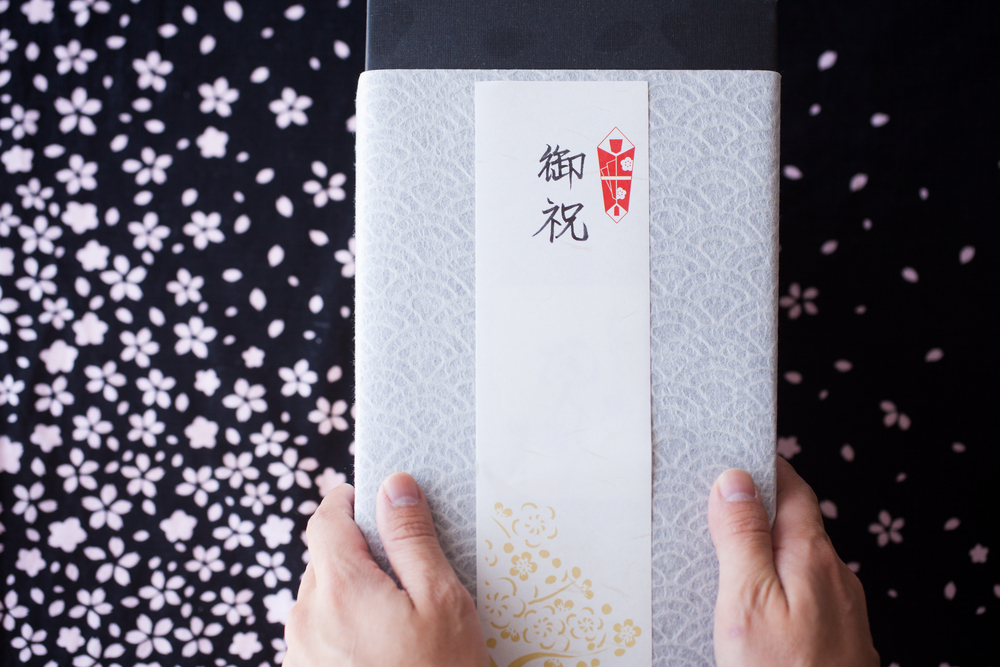
    I asked the chief executive of a British firm that had recently been acquired by a Japanese company how the relationship was developing between her and the senior management at the Japanese headquarters. It was great to hear that she felt trust had been established and that she had reached the point where she felt she could say no, and as long as she gave good reasons, her view would be accepted. The real clincher for me was when she mentioned that one of the Japanese directors had brought a present for her when he visited the U.K.

    Gift giving is one of the trickiest parts of Japanese business

    Or maybe I’m reading too much into this. I find gift giving one of the trickiest parts of Japanese business life. It is an integral part of Japanese non-verbal communication, so the meaning is often not at all clear to non-Japanese. Sometimes, there is not much meaning at all – it’s just an automatic gesture. Yet anyone who does business in Japan knows gift giving is part of the giri obligation/debt reciprocation culture.

    When a senior Japanese executive of a company to which I act as a consultant gave me a beautiful scarf last month, I wasn’t sure what to make of it, as we had never met before. Neither of the other two (male) consultants from other companies was given a gift. So maybe it was just gallantry. Or it could mean he was hoping for my best efforts and advice to his company over the long term. One of his colleagues told me “he just wanted to show off the products of our company.”

    Once a gift is given to you, you have to reciprocate

    Once a gift is given to you, you do of course have to reciprocate. I dithered for a while about the scarf, and in the end I decided to be British and write a nice thank you card.

    Gift giving is more straightforward between employees of the same Japanese company. Whenever I visited my Japanese headquarters from the London office, I would line the bottom of my suitcase with boxes of tea from Fortnum & Mason. “Divisible, edible, local” was my mantra, with a gift for each team I was to meet and some to spare, just in case. My London colleagues were not as big fans as I was of the adzuki bean paste cakes we would get from HQ visitors in return. But as I said to the European staff in a company recently acquired under rather tense circumstances by a Japanese firm: “Once the shortbread and rice crackers start flowing back and forth across the oceans, you know relations have improved.”

    The personal touch

    Even so, it is difficult to know how to deal with big personal debts inside Japanese companies when the routine box of cookies just won’t cut it. To say thank you for a recommendation he wrote for me, l once gave a couple of bottles of vintage champagne to one of my most important mentors in my Japanese company. But this turned out
    to hit entirely the wrong note, not least because he didn’t really like champagne. My (much cheaper) present the next year of a paperback book on a topic I knew he was interested in was far more warmly received.

    This article by Pernille Rudlin originally appeared in the Nikkei Weekly.  This and other articles are available as an e-book “Omoiyari: 6 Steps to Getting it Right with Japanese Customers”.  For more on Japanese etiquette, subscribe to the Japan Intercultural Consulting monthly newsletter giving you access to further Japan Intercultural Consulting online resources on Japanese etiquette and other aspects of Japanese business here.

  • When telepathy is not enough

    When telepathy is not enough

    It seems that the only opportunity for new business at the moment, for those of us who supply services to Japanese companies, is the continuing wave of Japanese acquisitions. Faced with a saturated, aging market at home and good companies going cheaply overseas, it’s no wonder Japanese companies see acquisitions abroad as a way to revitalize and grow.

    Western companies are in the mood to accept new Asian owners, too. Weary of the destruction brought about by Anglo-Saxon capitalism, there is plenty of debate going on in Western business circles as to whether it might not be time for a more long-term, stakeholder-oriented – rather than short-term, shareholder-oriented – way of running companies.

    We have been here before with Japan

    We have, of course, been here before. Japan’s economic success in the 1980s was attributed to Japanese values – lifetime employment, group orientation, taking the long-term view, striving for growth rather than profit and so on. But then in the 1990s those same values were blamed for Japan’s economic failure. The debate as to whether an alternative to the current form of capitalism is truly needed – and whether Confucian capitalism is the best alternative – will no doubt continue.

    While the discussion rumbles on, Japanese companies that have acquired overseas companies face the question of how or how not to adapt their distinctive corporate values and cultures.

    The missing vital tool of internal communications

    Regardless of what path is chosen, many Japanese companies have failed to use a vital tool – internal communications. Case in point: A participant at a seminar I gave at a British company that had been acquired two months earlier by a Japanese company carne up to me afterwards, on the verge of tears, to say thank you.

    Apparently I was the first person to talk to her team since the acquisition who was able to explain at a deeper level what was going on. The team members felt they had been left in the dark.

    Another participant at a different company mentioned to me that the local operation had only found out a vital piece of news about their company through a U.K. trade magazine.

    I have lost count of the number of times Europeans working for Japanese companies have complained to me about information being withheld. When I ask them if they had asked Japanese colleagues for this information, it often transpires that they had not, that they expected to be told.

    Many Japanese companies do not have internal communications departments. One director of corporate affairs told me that he could find no counterpart at the new owner’s Japan headquarters.

    Japan’s deliberately vague corporate cultures

    There is an assumption that Japanese employees will pick up corporate strategy and culture through time-honored methods such as ishin denshin, or telepathy. While this assumption cannot, of course, be made for employees who do not work in Japan or who do not speak Japanese, there nevertheless seems to be a fear that translating even innocuous internal documents into English will cause vital secrets to be leaked.

    Deliberately leaving it up to employees to work out values and strategies for themselves is itself a corporate value. Once I got used to this, I rather liked it, as it means employees are treated as mature adults. Paradoxically, however, if Japanese companies want to preserve this value as they globalize, it has to be explicitly communicated.

    This article by Pernille Rudlin originally appeared in the Nikkei Weekly and appears in Pernille Rudlin’s latest book “Shinrai: Japanese Corporate Integrity in a Disintegrating Europe” available as a paperback and Kindle ebook on Amazon.

  • Three tips to get Japanese people to read and respond to your emails

    Three tips to get Japanese people to read and respond to your emails

    A British participant in one of my recent training sessions asked me why her Japanese colleagues so often start their e-mails with “Hoping this finds you well”. She found it quaintly polite. I explained that in the days before e-mail, when business correspondence was more formal, it was standard practice to begin letters in Japanese with comments regarding the seasons, gratitude for the continued custom, and solicitous remarks regarding the recipient’s health and fortune. Perhaps, therefore, her colleagues were trying to carry on that tradition.

    A Japanese acquaintance has added a second explanation. I mentioned to him that one of the major frustrations for Europeans working in or with Japanese companies is the lack of response to e-mails sent to Japanese counterparts in the company headquarters. He said that often if the e-mail is very short, with no opening remarks, his colleagues assume it is not an urgent request and just an informal comment. Also, if the e-mail does not have “Dear X-san” at the start, they think they are just being copied on a message, and therefore no reaction is required.

    Although I do often recommend a “personal touch” to start an e-mail to Japanese people, it does seem to contradict my other recommendation, which is to keep e-mails as short as possible. I know I have an allergic reaction to long e-mails in Japanese, resisting reading them until I’ve had at least one cup of coffee, and you can be sure that many Japanese have an equally allergic reaction to densely written English.

    If the e-mail is too long, particularly with big chunky paragraphs of English, and the action point is buried near the bottom, the recipient may not read it all, and therefore miss what response was required. Chopping long paragraphs up into numbered bullet points is one tactic that many Japanese have told me they appreciate. The action point or conclusion should be brought up to the top of the e-mail, or if the logical flow does not allow for this, highlighting it in bold, and in a different color, will help the English-phobic spot what is required of them.

    The third recommendation for getting a quicker response does not have so much to do with the format as with the personal relationship. The plain fact is that e-mails written in English are going to get a lower priority than e-mails written in Japanese because most Japanese companies still prioritize domestic sales and domestic customers over foreign ones. If the e-mail is in English, the chances are it is about a foreign customer. In fact I have found in the past that some Japanese companies’ spam filters throw almost everything in English into the junk-mail folder.

    The only way to overcome the mental spam filter is to have met your counterparts and established a good relationship with them. Then, when they see your English e-mail in a sea of other Japanese e-mails, instead of putting it off to another day, they will spot your name and take a quick look to see what you are asking because they feel personally obligated to you. A gentle reminder of the personal relationship in your opening remarks will reinforce this – another explanation as to why Japanese sometimes put “hoping this finds you well” in their e-mails.

    This article by Pernille Rudlin, European Representative of Japan Intercultural Consulting, originally appeared in the 23rd February 2009 edition of the Nikkei Weekly

  • Sumo or Judo: how Japanese firms embrace or exclude diverse staff

    Sumo or Judo: how Japanese firms embrace or exclude diverse staff

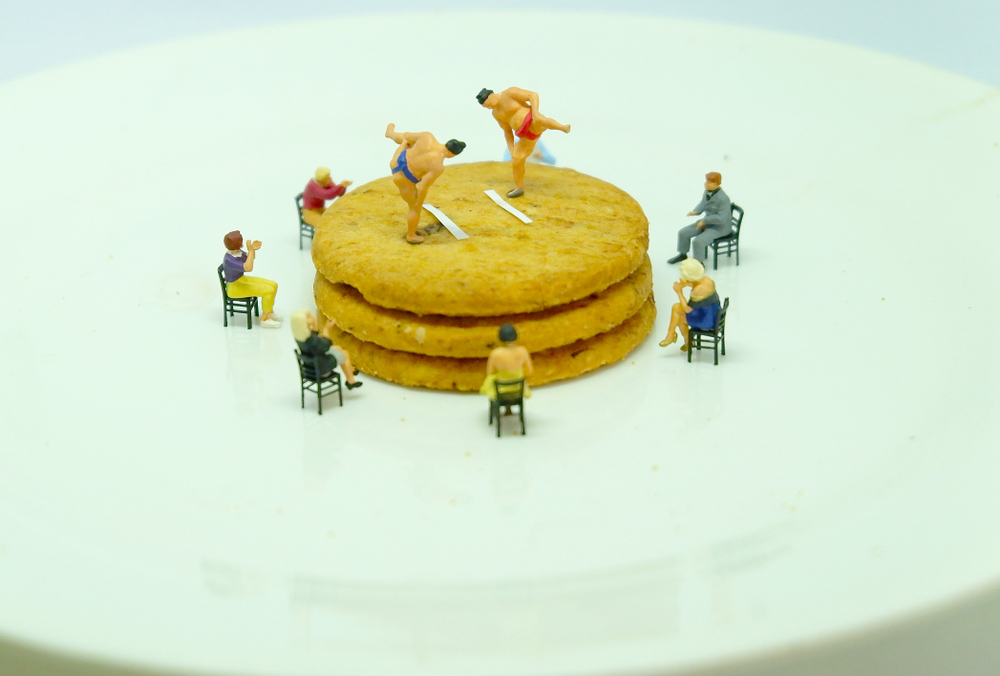
    I miss not being able to see the hatsu basho (January sumo tournament) that is now under way in Tokyo, as they don’t show sumo on the television here in the U.K. anymore. It would be great if Harumafuji, the new Mongolian second ranked ozeki, does well*, but it seems this year will be another challenging one for sumo’s credibility, particularly in the way it deals with the foreign rikishi wrestler.

    When I was still working at my Japanese company in Japan, trying to develop and implement policies to improve the career opportunities for our “foreign rikishi,” in other words our non-Japanese employees, we had many discussions about what we nicknamed “sumo vs. judo” problem.

    The sumo vs judo problem

    In a “sumo” company such as ours, the traditional view was that in order to become a senior manager, you needed to join the company (the “sumo stable” or beya) at an early age and spend several years doing menial jobs, pouring the beer for everyone and living in a company dorm.

    The sumo equivalent would be cleaning out the sumo beya stable, making chanko nabe stew and undergoing grueling training. So if any foreigner wanted to become a manager, that was fine, but they had to have undergone the same process as other Japanese employees.

    Learning the “kata” – knowing the form

    As for training, this was mostly on the job, learning from your seniors, as indeed in sumo, where the kata, or form of sumo, is learned by observing others rather than through any formal guidance or manuals. In fact, there weren’t many manuals or formal appraisal processes at all in our company. People just “knew” how to behave and what was expected of them.

    For many Japanese companies, this changed in the 1990s. This was partly due to the restructuring needed to deal with the slowing down of Japanese economic growth, but also a recognition that the Japanese company had to become more diverse, not only in terms of nationalities, but in the gender and career background of its staff. It was not only the foreigners that objected to being treated like sumo, but other Japanese people, particularly in the younger generations. Also, the vagueness and lack of transparency often led to cover-ups, verging on what could be deemed corrupt practices.

    No point in forcing conformity to the Japanese way on diversity

    If you force diverse groups of people to conform to one mysterious way that can only be learned through many years’ apprenticeship, a way most easily learned by a group who share one particular cultural background, then those who deviate from this norm will find that, despite their best efforts, they are only a pale imitation of the mainstream group.

    In other words, if you want all employees to behave like traditional Japanese salarymen, then hiring people from nontraditional groups is pointless, because they end up being unhappy, fake Japanese salarymen, or, more likely, quit.

    My colleagues and I contrasted sumo with judo, which is also a Japanese origin sport, and has much of the same Japanese ethos regarding the importance of kata and diligence through practice, but is much more transparent in its rules and its teaching methods, a prerequisite, I assume, for it becoming an official Olympic sport for the 1964 Tokyo Olympics. I have to say though: I find sumo more charming and fascinating than judo.

    * Unfortunately he didn’t. He made a majority of wins 8 to7, and did better in the March tournament that has just ended – 10 wins to 5 losses.

    This article by Pernille Rudlin originally appeared in the Nikkei Weekly. 

  • Subtle factors that motivate workers differ in Japan and the West

    Subtle factors that motivate workers differ in Japan and the West

    Every time a Japanese company acquires a Western company, there is a concern about how the Japanese organization will deal with the “high risk, high reward” culture that is prevalent not only in the financial industry but across many Western business sectors.

    Actually, Japanese multinationals have been dealing with this issue for some years, and the solution has usually been to pay the local market rate. It does, of course, result in some anomalies. Presidents of Japanese blue-chip companies are paid only around 10-20 times the salary of the lowest paid worker, whereas at Fortune 500 CEO can earn anywhere from 300-500 times a junior employee’s salary.

    So it may turn out that the Japanese president is earning significantly less than the foreign directors reporting to him from the acquired company. Lower down the ranks, more junior Japanese find that when they are posted overseas, they are having to manage locally hired hotshots who are earning salaries and bonuses that add up to the equivalent of an extra zero on the end of a normal Japanese expat salary.

    Many Japanese working for foreign banks and consultancies in Japan have also been making 10 times the average salary in Japan. Of course, Japanese on traditional salary packages can comfort themselves with the thought that they have more secure jobs, especially given what has been happening recently. But I think there is a danger in oversimplifying this risk/reward trade-off.

    Knowing that you won’t be laid off when times get tough, or conversely that you are being paid handsomely, is not sufficient for most people, Japanese or Western, to feel completely fulfilled and motivated in their work. These factors may ensure people stay in their jobs but not that they perform those jobs to the best of their abilities.

    High salaries and bonuses are in some ways proxies for the things that really motivate people to work. Being paid well should indicate that an employee is doing something that has had a major impact on the company. It should also reflect the employee’s authority and responsibility to make an impact. Getting quick raises should show that one’s career is advancing and that one’s skills and capabilities are developing.

    These are all drivers of engagement – pride and motivation in work – for people working in Western companies. Surveys show that the drivers of engagement for Japanese people working in Japanese companies are subtly different. Career advancement opportunities and ability to make an impact are important, but so are other factors – immediate personal relationships, having input to department decisions, and having a manager who understands what motivates each employee and who has good relationships with them.

    All people, regardless of nationality, want to feel recognized for making a positive difference in the world through their work. For many Japanese, the traditional way to do this has been through becoming a longtime respected member of a major company. For many Westerners, this route does not exist, so impact on society has to be more visibly rewarded through pay or status.

    Japanese and Western companies need to avoid two extremes when trying to combine corporate cultures. Paying people well but not giving them the authority to make an impact and advance their careers will eventually lead Westerners to leave a company. Offering lifetime employment but without good, enduring personal relationships and mutual respect may mean that although Japanese employees stay, their morale is low.

    This article by Pernille Rudlin originally appeared in the Nikkei Weekly.

    This article appears in Pernille Rudlin’s latest book “Shinrai: Japanese Corporate Integrity in a Disintegrating Europe” available as a paperback and Kindle ebook on Amazon.

  • Humour easily crosses cultures but be careful with sarcasm

    Humour easily crosses cultures but be careful with sarcasm

    A British client attended some customer satisfaction survey interviews I conducted recently with Japanese companies. Later, I asked her if there was anything she had found surprising about the meetings. It was her first trip to Japan and she did not speak any Japanese. Her response was that the Japanese customers laughed a lot more than she was expecting.

    British people who are not very familiar with Japanese people tend to assume that Japanese are formal, polite and very serious. Anyone who has spent some time working with Japanese people or living in Japan will know that in fact it is completely wrong to assert that Japanese do not have a sense of humour. Actually, Japanese people sometimes mention to me that they wish British people would relax and lighten up a bit more, especially “after five.”

    I wasn’t cracking jokes during the customer interviews, nor am I fluent enough in Japanese to be able to pull off Japanese ‘share’ humour – word play and puns. I would like to think the laughter wasn’t embarrassed laughter, either. I was also not being sarcastic, ironic or teasing. These are types of humour the British use frequently, even in formal business settings, and they can cause misunderstandings in cross cultural situations.

    A British marketing director working for a Japanese car company told me of a disastrous board meeting he once attended. The Dutch and German directors were arguing, vehemently putting their points of view forward and aggressively disagreeing with each other. The Japanese managing director became increasingly uncomfortable with this atmosphere and intervened, saying, “Perhaps now you would like to hear my comments.” The British sales director responded, “Oh, we don’t want to hear your comments.” The Japanese managing director then walked out of the meeting, presumably to avoid losing face as he was close to losing his temper.

    The marketing director ran after the managing director to impress upon him that “Mike was just joking.” The Japanese managing director replied, “I realise that, but it was not appropriate.” Clearly Mike was trying to lighten the atmosphere with a bit of sarcasm, but it went badly wrong.

    Most British wince when I tell them this story. I explain that Japanese are perfectly capable of being sarcastic and tease each other regularly, even in the workplace. But humour does not translate well if it transgresses cultural values too aggressively, particularly in formal business settings. In this case, the Japanese need for harmony – and also respect for hierarchy – was threatened by Mike’s remark.

    So what did I say that was so funny in my meetings with Japanese clients? To be honest, I don’t really know. I suspect it was more about being witty, showing that I had a sense of the absurd and being self deprecating – humour traits the British like to pride themselves on and which the Japanese also enjoy. It seems wit, absurdity and self deprecation cross cultures much more successfully than sarcasm, jokes or puns.

    This article by Pernille Rudlin originally appeared in the Nikkei Weekly.  This and other articles are available as a paperback and an e-book “Omoiyari: 6 Steps to Getting it Right with Japanese Customers”