Category: Japanese business in Europe

  • Sakata acquires Dutch company Sana Seeds

    Sakata acquires Dutch company Sana Seeds

    Sakata Vegetables Europe, headquartered in France, has acquired the Dutch cucumber company Sana Seeds. Sakata has acquired several companies across Europe over the past few decades – Samuel Yates in the UK in 1996, a seed company in South Africa in 1999, a flower company in Denmark in 2003, a gerbera company in the Netherlands in 2008 and a cucumber company in Jordan in 2017. It also has operations in Spain, employing  over 200 people in the region in total.

    For more content like this, subscribe to the free Rudlin Consulting Newsletter. 最新の在欧日系企業の状況については無料の月刊Rudlin Consulting ニューズレターにご登録ください。

    Share Button
  • Hitachi Rail – the challenge of not being too dependent on Britain

    Hitachi Rail – the challenge of not being too dependent on Britain

    According an interview with Nikkei Business with Alistair Dormer, Representative Executive Officer for Hitachi’s main board and EVP for the Green Energy & Mobility Sector Strategy Planning Division, Hitachi faced two main challenges in its rail business in Europe. Firstly that they were not so strong in control and signal systems, particularly as standards were quite different between Japan and Europe. Secondly, they were too dependent on Britain. For those reasons, it made good sense to acquire Italy’s Ansaldo.

    Dormer is himself British – he was in the Royal Navy, before working for Alstom UK and then joining Hitachi Rail in 2003, becoming Managing Director of Hitachi Rail Europe in 2005 and then Global CEO of Rail in 2014. He had already risen to board level at Hitachi by 2015, but took a break in 2022 for family reasons. He was been re-appointed as Representative Executive Officer and Executive Vice President, in January 2023, as well as chair of Hitachi Europe and Hitachi Energy.

    The acquirer needs to have the mindset that they are the ones who will change

    He has some wise words to say about the post merger integration with Ansaldo. Ansaldo, like Hitachi, had over 100 years of history and a strong culture. “After an acquisition, the acquirer may think about changing the other party’s corporate culture, but this is extremely difficult. Rather, I think the acquirer needs to have the mindset that they are the ones who will change.”

    Hitachi Rail created a management team with 30% Japanese, 30% British, and 30% Italian. Additionally, executives from Ansaldo were appointed to Hitachi’s board of directors. Giuseppe Marino, the current CEO of Hitachi Rail, is a former Ansaldo employee.

    “When a company is acquired by another company, employees become anxious. Will I be able to continue working? Will the parent company do something strange? Will this factory be closed? Rules must be clearly set,” says Dormer.

    Loss of decision making power could shut down the business

    “When acquiring a company, you may take away all decision-making rights from the other company. As a result, the acquirer becomes dissatisfied, loses decision-making power, everything slows down, management and employees become dissatisfied, and customers become dissatisfied.”  Unlike many previous Japanese acquisitions, where the acquired company was left to carry on as before, the brand name and uniform were changed to Hitachi on day one. Hitachi signs were posted at all factories, and Hitachi’s values ​​were posted on bulletin boards.

    “Because Hitachi was not used to developing business in Europe, it instructed Ansaldo to seek permission for even the most trivial details. This would have shut down the business.” So Dormer suggested to the CEO Nakanishi that Ansaldo made their own decisions, and Dormer would monitor their performance monthly.  New rules were created, made out of Hitachi and Ansaldo rules.

    “Simple English” communication

    Communication is of course key. “We also encouraged the use of simple English in communication. Particularly to British people, who tend to use complicated words. This is also necessary for Japanese, Italians and Germans. Having a common language called Simple English will make your job much easier.”

    With the acquisition of ABB’s Power Grid Systems business, the values were very similar, but nonetheless it was important to change the communication methods and processes. Dormer encouraged ABB executives to stay in Japan for six month to see for themselves how decision making works there.  “We should change the way we ask questions. First of all, simple English. Then ask, “How does this process work?” You will find that 90% of the process is the same as theirs” says Dormer.

    Hitachi is now hoping to acquire the railway signaling business of French electronics giant Thales – the UK’s Competition and Markets Authority has just approved. If the EU approves, Dormer hopes to use the same approach, resulting in Hitachi becoming number one in the global railway control market.

    For more content like this, subscribe to the free Rudlin Consulting Newsletter. 最新の在欧日系企業の状況については無料の月刊Rudlin Consulting ニューズレターにご登録ください。

    Share Button
  • Kyowa Kirin acquires UK gene therapy startup Orchard Therapeutics

    Kyowa Kirin acquires UK gene therapy startup Orchard Therapeutics

    Kyowa Kirin will acquire British gene therapy startup Orchard Therapeutics for approximately $477.6 million (¥70.7 billion), to bolster its gene therapy pipeline.

    Orchard Therapeutics’ portfolio comprises Libmeldy (atidarsagene autotemcel), also known as OTL-200, intended for eligible patients with early-onset metachromatic leukodystrophy (MLD), a rare and life-threatening inherited disease of the body’s metabolic system. It’s already been approved by the EU and UK regulatory bodies and is currently being reviewed by the USA’s Food and Drug Administration.

    Orchard has 174 employees and Kyowa Kirin has around 6,000 employees worldwide, of which around 700 are in Europe. Kyowa Kirin is in turn owned by Kirin Holdings, a beer and beverage company. It acquired (when it was Kyowa Hakko Kirin), Scottish pharmaceutical company ProStrakan in 2011 and then in 2014 ProStrakan acquired Archimedes Pharma from Novo Nordisk.

    For more content like this, subscribe to the free Rudlin Consulting Newsletter. 最新の在欧日系企業の状況については無料の月刊Rudlin Consulting ニューズレターにご登録ください。

    Share Button
  • Marugame Seimen udon restaurants – success in Europe by focussing on your own identity rather than 100% “Japaneseness”

    Marugame Seimen udon restaurants – success in Europe by focussing on your own identity rather than 100% “Japaneseness”

    Japanese company Toridoll is aiming to be a “Japan-originated global food company” with 4,000 outlets outside Japan by March 2028. It  already has 11 Marugame Seimen udon noodle restaurants in the UK and 707 stores worldwide. It  It sees Europe as a test market for its vision, as it is not as dominated by chain stores as the USA is.

    What’s different about its strategy, according to an interview with the CEO, Awata Takaya in Nikkei Business magazine,  is that it is not fussy about putting Japanese taste, or authentic Japanese food to the fore. Menu items include “tonkotsu udon,” “chicken cutlet curry udon,” and “vegan udon” – none of which would be found in an udon restaurant in Japan. “If the menu is 100% Japanese, it won’t be work on a daily basis,” says President Awata.

    Toridoll is looking to open outlets which reflect its philosophy, of experiential sales – where customers can see the food being made. This is why Toridoll acquired British food chains The Real Greek – “where you feel like you’ve come to Greece” and Franco Manca “with pizza ovens visibly inside the store” recently.  Marugame Seimen also provides plenty of opportunities for British staff to visit Japan and learn to make udon noodles.

    Another differentiation is that it works closely with local partners who help them with location selection, new store launches, and securing human resources, moving ahead with speedy store openings. Many of Toridoll’s executives are veterans of working or living overseas or for foreign companies. Awata’s COO was at Deloitte, the head of the Marugame Seimen business is  Victor Hisao Misawa, a marketing professional who grew up overseas, worked at Unilever and was an executive at French company Bic. The Deputy General Manager of overseas development is a graduate of an American university who then was stationed in African countries such as Uganda and Malawi as an employee of the Japan International Cooperation Agency, where he worked on many projects including power plants and agriculture. Shiojiri Nahoko also graduated from an American university and then worked at a major consulting company. She is now based in Hong Kong and working as Deputy Director of the Global Strategy Office.

    Awata recognises that loss of quality is an issue with global expansion – “UK store operations have not yet achieved the quality and efficiency of Japanese stores. In fact, in the UK it takes longer than in Japan from the time you order to the time the food is served. It will be necessary to focus on employee training.”

    As so often, Japanese culture is less about “things”, but the “way” that those things are created.

    For more content like this, subscribe to the free Rudlin Consulting Newsletter. 最新の在欧日系企業の状況については無料の月刊Rudlin Consulting ニューズレターにご登録ください。

    Share Button
  • Clear trends from less data on Japanese companies in Europe

    Clear trends from less data on Japanese companies in Europe

    The latest data on the numbers of Japanese companies around the world from the Japanese Ministry of Foreign Affairs was published over the summer. It’s back down to one spreadsheet, in normal sized font, where the only colours used are to highlight the title of each region. The number of spreadsheets published had mushroomed from 1 to 5 between 2013 and 2018, and even with (or maybe because of) the copious use of tabs, freeze frames and various shades of yellow, orange, green and purple, the whole thing was extremely difficult to navigate.

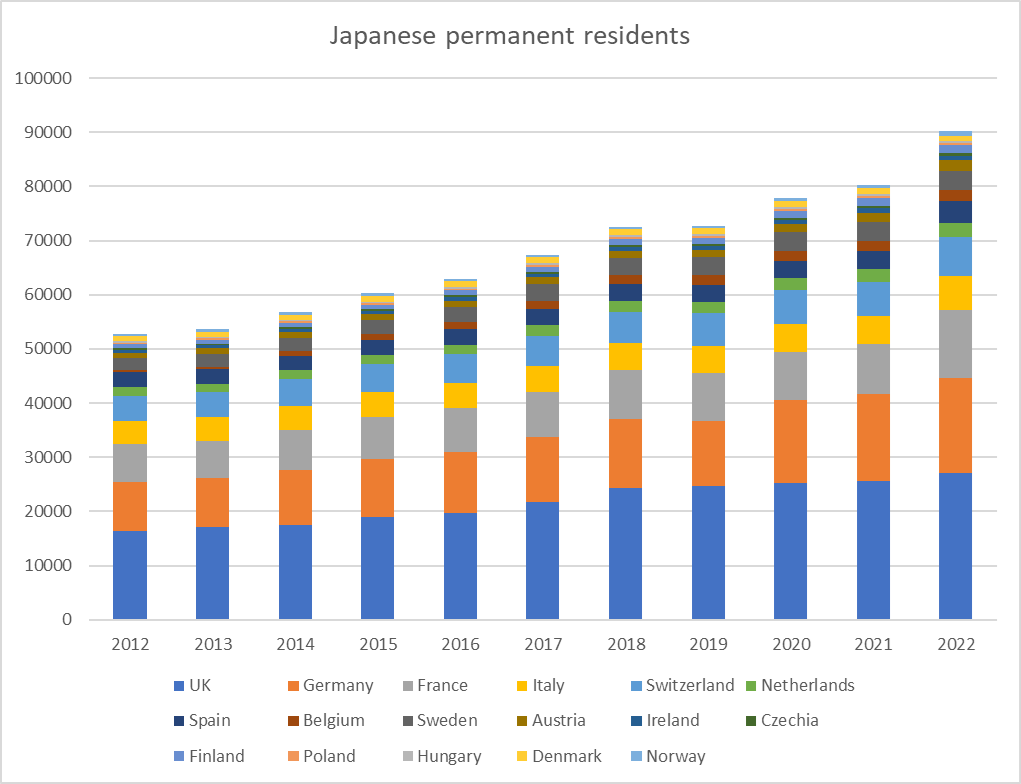
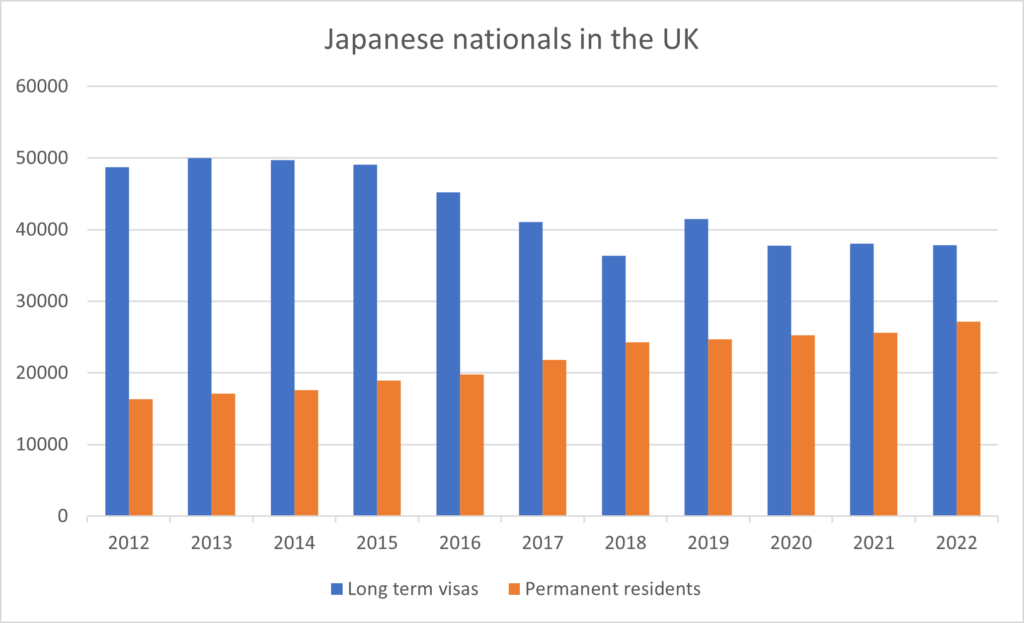
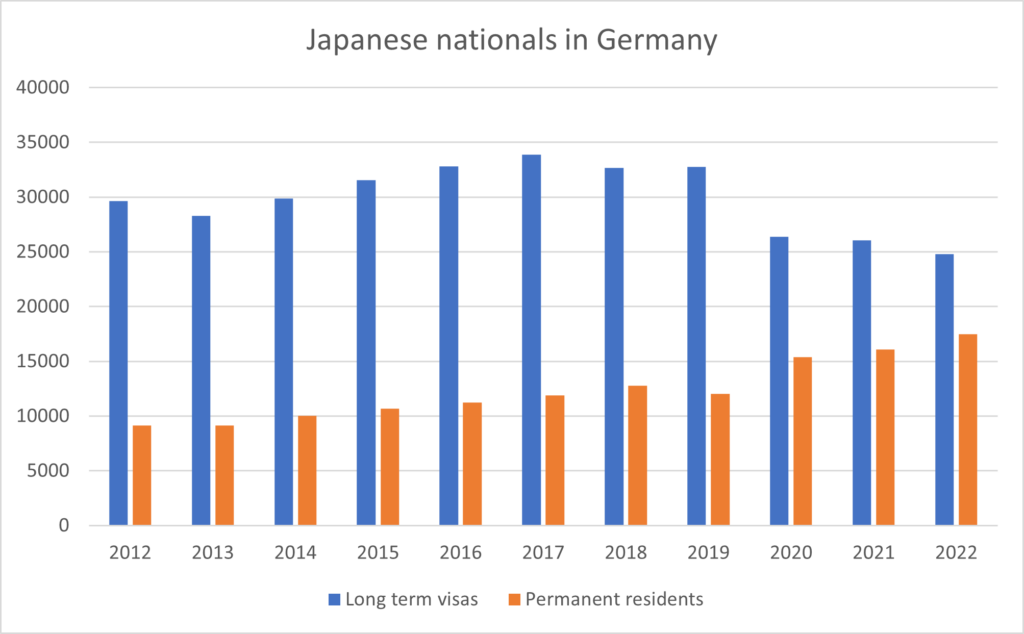
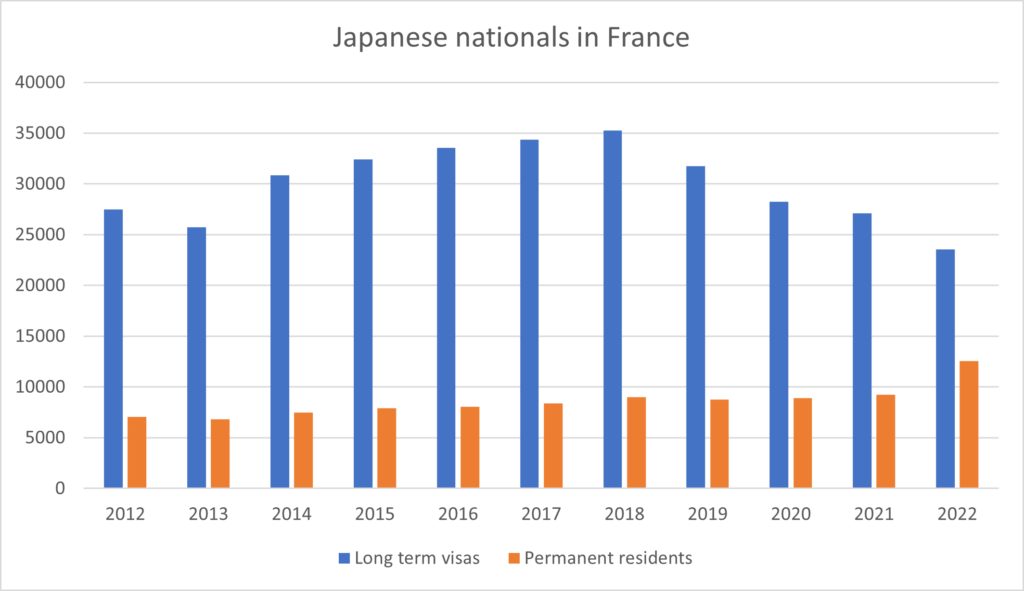
    I used to imagine the moans of the junior civil servants putting in long hours to compile this, the sighs of the middle management having to check its accuracy, and then the teeth grinding of the general managers who wished for the older, simpler days of a printed out hard copy. In the new stripped down MoFA world, the only data disclosed is the total number of Japanese organisations in each country. There are no longer any categories regarding whether they are public limited companies, joint ventures or branches. The data on Japanese nationals resident overseas used to be combined with the data on organisations, but is now published separately.

    In a way less data* is less transparency, but perhaps usability is more important than the sheer volume. This seems to have been the decision that Hitachi has made too. The number of pages of its most recent integrated report has been halved from 106 to 53. In Hitachi’s case this can be excused by the sheer size and complexity of the organisation – 320,000 employees working in a huge variety of businesses. What led to the cull was that those writing the report – the investor relations department – were also the users, who talked through the report with investors. They themselves felt it was hard to explain, and feedback from the investors also pointed to usability concerns. Hitachi has won awards for its reports, so this was a bold decision to make.

    According to a survey of  881 companies by KPMG, the average integrated report in Japan had 75 pages and 66% of all surveyed companies had 61 pages or more. This ratio has increased by 4 percentage points from two years ago, thanks to the increasing obligation felt to report on ESG metrics.

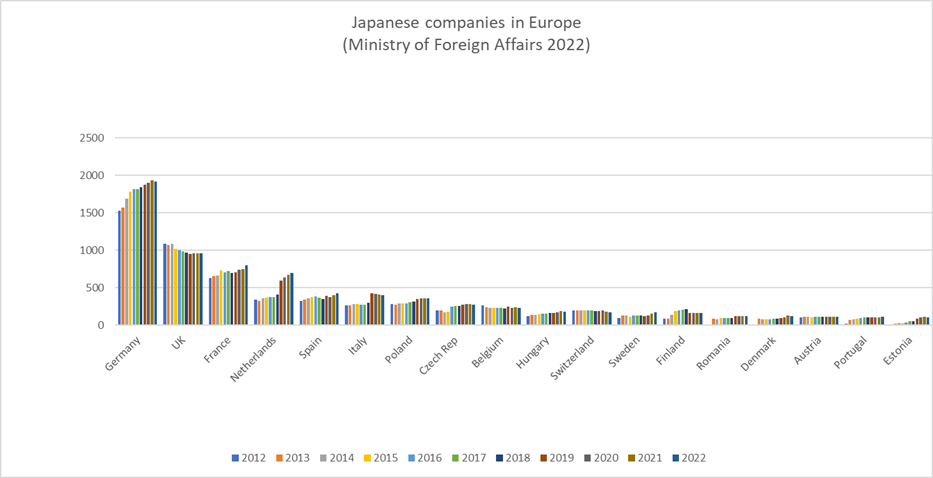
    Anyway, the new simplicity means there is only one chart we can produce from the MoFA data, for countries with more than 100 Japanese companies in Europe, as below:

    And yes, it does make certain trends very clear.

    • Germany still dominates as a host of Japanese companies, but there seems to be a tailing off of growth (+22% since 2013)
    • Conversely, the numbers of Japanese companies in the UK has fallen (-10% since 2013), but now stabilised.
    • France continues to grow as a host of Japanese companies (+21% since 2013), with quite a jump in the last year. This may be as a result of the 10 or so acquisitions made of French companies by Japanese companies 2020-2022
    • There was a significant leap in the numbers of Japanese companies hosted by Netherlands and Italy in 2019. It’s difficult to know whether this due to the “hard” nature of Brexit becoming clearer in 2018-9 or some change in the way MoFA was categorising its data.
    • Eastern European countries, probably due to automotive and other manufacturing costs and existing skills, have become popular – Poland, Hungary, Romania, Czechia
    • Smaller, more service sector oriented countries in the Nordics and Baltics are also becoming more popular such as Estonia, Denmark, Sweden
    • The above has meant that Switzerland, Belgium, Finland and Austria have dropped down the rankings

    *Grammar pedants may recoil from the use of “less” with “data” here. Sorry.  This may reassure.

    For more content like this, subscribe to the free Rudlin Consulting Newsletter. 最新の在欧日系企業の状況については無料の月刊Rudlin Consulting ニューズレターにご登録ください。

    Share Button
  • Toshiba launches quantum technology hub in Cambridge, UK

    Toshiba launches quantum technology hub in Cambridge, UK

    Toshiba launched its Quantum Technology Centre in Cambridge on 22nd September 2023. The centre has about 40 employees, with plans to expand the head count to 70. Toshiba will invest 20 million pounds ($25 million) in the facility over five years starting in fiscal 2023.

    Toshiba already had a research laboratory in Cambridge, conducting research on artificial intelligence and quantum technology. Some engineers will transfer from there to the new quantum-specialized offshoot.

    For more content like this, subscribe to the free Rudlin Consulting Newsletter. 最新の在欧日系企業の状況については無料の月刊Rudlin Consulting ニューズレターにご登録ください。

    Share Button
  • Japan’s M3 acquires British medical staffing company Messly

    Japan’s M3 acquires British medical staffing company Messly

    Japan’s M3, a healthcare services company listed on the Tokyo Stock Exchange Prime Market, has acquired UK start up Messly, a recruiting marketplace platform for U.K. doctors, for surgeries and hospitals to hire locums, or temporary doctors, at short notice. It was founded in 2017 and 70% of the UK’s trainee doctors are registered on it.

    M3 has already acquired several healthcare software and services related companies in France, Germany, Spain, Sweden and the UK since 2011 when it acquired doctors.net.uk. We estimate M3 has over 500 employees in Europe, out of 10,533 worldwide.

    For more content like this, subscribe to the free Rudlin Consulting Newsletter. 最新の在欧日系企業の状況については無料の月刊Rudlin Consulting ニューズレターにご登録ください。

    Share Button
  • Japan owned British crypto currency firm B2C2 acquires France based Woorton

    Japan owned British crypto currency firm B2C2 acquires France based Woorton

    B2C2 was established in 2015 and acquired by Japanese company SBI (Strategic Business Innovator group, formerly part of SoftBank) in 2020. It employs around 90 people in the UK and also operates in the U.S., Cayman Islands, and Japan. The acquisition of Woorton means B2C2 not only expands its European operations but acquires Woorton’s PSAN license which is regulated by France’s financial market authority, the AMF. As a result, B2C2 can now cater to clients in the European Union, aligning with the upcoming MiCA regulations.

    SBI is still operating in Russia as SBI Bank LLC, employing around 245 people.

    For more content like this, subscribe to the free Rudlin Consulting Newsletter. 最新の在欧日系企業の状況については無料の月刊Rudlin Consulting ニューズレターにご登録ください。

    Share Button
  • Dentsu acquires Germany’s RCKT

    Dentsu acquires Germany’s RCKT

    Dentsu Group has acquired RCKT “a leading German digital-first brand, communications and creative agency”. RCKT will join the Dentsu Creative part of the Dentsu Group. The RCKT brand will be retained during a period of integration, becoming known as “RCKT, a Dentsu Creative Company” with immediate effect.  Given the recent reorganisation of Dentsu, where companies have been consolidated under the Dentsu brand, we predict the RCKT name will not last long.

    Dentsu now has around 3,200 employees in its DACH organisation. Dentsu Creative employs 9,000 people across 46 markets.

    We estimate that Dentsu employs around 13,000 – 14,000 people in the EMEA region – however it does not disclose any numbers in its annual reports on this.

    For more content like this, subscribe to the free Rudlin Consulting Newsletter. 最新の在欧日系企業の状況については無料の月刊Rudlin Consulting ニューズレターにご登録ください。

    Share Button
  • Nippon Express acquires Switzerland based Tramo Group

    Nippon Express acquires Switzerland based Tramo Group

    Japanese logistics group Nippon Express has made another acquisition in Europe, the Swiss based luxury furniture specialist, Tramo Group, via Nippon Express Italia. It had already acquired the Austrian company Cargo-Partner earlier this year and in 2018 it acquired Italian luxury fashion logistics services company Traconf, as well as Franco Vago. In 2012 it acquired Swedish company APC Logistics.

    Nippon Express is aiming to generate half its revenue from overseas business by 2037, up from the current 30%. It currently has around 3,500 employees in Europe (out of 72,000 globally, of whom 42,500 are in Japan) and the acquisition of Tramo may add up to 500 to that total. Tramo has operations in Italy, the UK, Netherlands, France and Spain as well as in the USA.

    For more content like this, subscribe to the free Rudlin Consulting Newsletter. 最新の在欧日系企業の状況については無料の月刊Rudlin Consulting ニューズレターにご登録ください。

    Share Button