

Kimura Takeshi, a Nikkei IT journalist has a self-styled hard hitting rant in Nikkei Business about Showa values such as omoiyari and how they should be ditched if Japanese IT companies are to compete globally. I have to admit he shocked me, as I even titled my book about how to provide Japanese style customer service “Omoiyari”, but then I was brought up in Japan during the Showa era (1926-1989).
He says omoiyari (consideration for others, forethought) and being close to the customer is still important in hospitality or medicine but is plain creepy and useless when it comes to IT. He points out that all it means is that you are close to other humans in the customer company, who are running the IT department, and who will not necessarily tell you or know the full picture of what is going on in their company.
Other Showa values he gives a good kicking to include gembaryoku – or onsite capability, meaning that suppliers are there working at the customer site and “we never give up, never run away.” As he points out (and I’ve often warned suppliers to Japanese companies of this too) this leads to over-servicing and all kinds of work being done which were not in the original project spec, tipping profits into losses.
He also points out that Japanese companies that boast of these values are usually homogeneous organisations with a strong sense of companionship and self sacrifice, where employees are working for the organisation and colleagues, as well as having a budget busting customer entertainment allowance. Not only will this not be competitive globally, but it also means the company is a closed organisation without diversity. High performers are disliked by others. Deference and consensus based decision making (nemawashi) are the norm.
He says this is why foreigners coming to Japan as tourists love it so much, because there is such a strong urge to be considerate and hospitable towards others. But once they live in Japan, they are expected to be members of the community and learn how to read the air and be considerate of others around them, but find this difficult to do as they have been brought up to be self assertive and individualistic. As a result they are excluded from the community and treated as strangers, causing unhappiness and confusion.
Kimura says it feels uncomfortable to have to tell Japanese people to deny their compassionate natures, but he worries that if they don’t, then Japan will not be able to ride the wave of digital revolution and will not only be underdeveloped in IT but an underdeveloped country in a more fundamental sense. IT companies need to include foreigners so that they can thoroughly discuss and create new digital services without having to read the air or worry about whether it would mean a loss of jobs for people who have supported you on the client side.
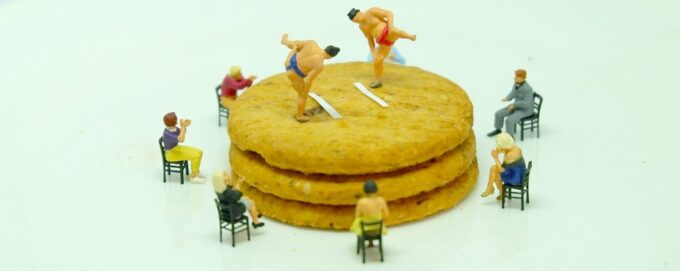
Instead of omoiyari based closeness to a customer he recommends “がっぷり四つに組む” (Gappuri yotsu ni kumu – be locked together in 4 ways) which was a new expression to me. It comes from Japanese martial arts, meaning to grab each other’s belts with both hands.
I talk further about omoiyari and Japanese customer service with Rochelle Kopp, founder of Japan Intercultural Consulting, in a podcast available here.


Leave a Reply
You must be logged in to post a comment.