Author: Pernille Rudlin

  • Hitachi expands “job type” system to cover all employees, domestic + overseas

    Hitachi expands “job type” system to cover all employees, domestic + overseas

    Hitachi has been heading in the direction of unifying its Japan and ex-Japan human resources systems for some years now, so switching all Japan-hired staff to the more Western style “job type” system, away from seniority based promotion, was to be expected. But it is nonetheless a radical step for one of Japan’s biggest companies. If other Japanese companies are able to follow suit, this would help remove one of the most significant hidden barriers to non-Japanese and other “diverse” people being able to rise to more senior roles in the headquarters.

    Most Japanese multinationals make a distinction between “proper” staff – hired in Japan, straight from university, with no job descriptions, on a general track which is influenced by seniority and the promise of lifetime employment and possibility to reach the very top of the company –  and “contract” staff – those with job descriptions who are usually hired mid-career and have no job security or prospects of promotion. Those employees hired outside Japan are seen as being in the latter category.

    Fujitsu has applied the “job type” system to 90% of its Japanese employees from April 2022. NEC is introducing the system to its senior management from April 2023 and expanding to the rest of the Japan hired staff from 2024. NTT finished introducing it to all management staff in 2021/2.

    In Hitachi‘s case it became a necessity to do this, because of its major overseas acquisitions of ABB power grids and GlobalLogic, bringing in more than 100,000 overseas employees into the group. As of October 2022 the ratio of non-Japanese in Hitachi’s board of directors was 18% and the company aims to increase this to 30% in the mid to long term.

    It’s not surprising that it is Japan’s technology and IT companies that are pioneering this. Such a move is an important precondition for digital transformation – it will make it easier to hire specialists such as AI engineers and data scientists, who would expect higher remuneration than would be available under the old generalist track, seniority based system.

  • Mitsubishi Corporation – dealing with the Black Ship of digital transformation

    Mitsubishi Corporation – dealing with the Black Ship of digital transformation

    Miura Hiroaki, the General Manager of Mitsubishi Corporation’s IT department (and formerly in charge of IT in the Europe, Middle East and Africa region), has a series in the Nikkei Business magazine on digital transformation at Mitsubishi Corporation. He joined Mitsubishi Corporation in 1996 and like me, was trained as a new member of staff to pick up the group fixed line phone within two rings and answer it correctly – with the team name, not your own. “Fixed-line phones were not just a means of communication, but also played a part in employee education and guidance. The mentality of abolishing this was unthinkable” he says. But Mitsubishi Corporation did, in 2019.

    The only way to deal with the anger that followed the abolition of fixed line phones was to build trust, he explains. He remembered what one of his mentors had told him about building trust – to take someone’s feelings seriously, and to laugh together. So he listened patiently to all the anger, which gradually dissipated.

    As well as remembering the words of his mentor, he also found revisiting Prince Shotoku’s 17 article constitution, drafted in the 7th century, useful. He sees the statement in it that “harmony is valuable” as being misinterpreted by him and others in Japanese society – that people should try to understand the other person’s point of view, without arguments. Instead, it proposes the idea that “we should always build solid trust so that we can argue with each other in times of crisis”. Miura’s view is that Japan has suffered as a national power in the 1990s and 2000s  from not discussing important issues enough.

    IT departments should be at the forefront of change and debate, but “the reality is Japanese corporate IT departments are being overwhelmed by having to maintain obsolete systems, suffering from a shortage of human resources, and being driven into a difficult position in terms of their relationships with employees.”

    Miura also found Mitsubishi’s corporate principles an important touchstone, and driving force for change –  social contribution, fair play, and a global perspective. They have more absolute value, he argues, than just blindly adopting global standards. Bezo’s view that “good intentions don’t work, mechanisms do”, are not appropriate for Japanese companies. Mitsubishi Corporation’s predecessors faced up to and adapted to the disruptive Black Ships of Western globalization before, in the Meiji Era, and will do so again.

  • Who’s getting the biggest pay rises in Japanese companies in Europe?

    Who’s getting the biggest pay rises in Japanese companies in Europe?

    If you’re in Hungary, Poland or Romania and you’re working in construction or engineering or in IT for a Japanese company, you’re in luck.

    According to a survey by JETRO of Japanese companies in Europe, of the 857 organisations who responded, employees in Romania, Hungary and Poland are seeing pay rises of well over 7.5% to 8.5%, whereas employees  in Western European countries such as Italy, Finland and Sweden are getting less than 3%. Those countries with the largest numbers of Japanese companies – Germany, UK, France – are seeing pay rises ranging between 3.5 to 4.5%.

    The top three sectors with the highest pay rises were:

    • 2022/23: Construction/Plant/Engineering (6.25%), Communication/IT/Software/Information system/Digital services (5.95%), Rubber products (5.87%)
    • 2023/24: Other manufacturing industries (7.50%), Non-banking financial institutions (7.17%), Non-ferrous metals (6.00%)

    These seem to be indicators of where demand is the strongest and therefore competition for employees. We’ve heard quite a few cases of Japanese companies expanding in Romania recently, not only in manufacturing but also IT services and logistics. Hungary has been a hotspot for a while now, particularly in automotive manufacturing.

  • Top issues for Japanese companies in Europe, Middle East and Africa for 2022/3

    Top issues for Japanese companies in Europe, Middle East and Africa for 2022/3

    The annual survey by JETRO of Japanese multinationals shows that many are struggling to return to pre-COVID levels of profitability. 65% of the 7,000 companies surveyed expect to be profitable by the end of FY 2022 (March 31 2023) but the automotive parts sector is forecasting widening losses.

    Expectations for profitability are slightly higher in Europe than the global average and within the region, on a country by country basis, business prospects are overall more positive for Japanese companies in the Netherlands and Germany than for those in France or the UK. On the other hand, due to logistics, procurement and energy costs, 35% of Japanese manufacturers in Eastern Europe are expecting their business prospects to worsen, only just balanced out by the 36% who expect their business prospects to improve. Increasing labour costs and hiring and retention even outweigh the impact of the Ukraine war for Japanese companies in Europe as the key challenge.  This is also seen as a challenge in Western Europe, but with more focus on white collar, managerial workers, particularly in Germany and the Netherlands.

    More than 70% of Japanese companies in the Netherlands, UK, Germany and UAE are expecting to achieve profitability in FY2022. However only 37.9% of companies in the region expect profits to improve, 11.8% lower than 2020/21. More than half of the Japanese companies based in Finland, Ireland, Italy, Sweden, Czech Republic and Portugal are expecting profits to improve –  compared to 46.7% of Japanese companies in the Netherlands, 44.4% in the UK, 38.1% in France, 36.4% in Germany, 35.3% in UAE and 31.1% in South Africa. Manufacturers in the UK, having not recovered as quickly as in the rest of Europe from the pandemic, are now more optimistic about profitability for 2022/23 than other manufacturers in the region.

    45% of Japanese companies are expecting to expand their business in their region over the next 1-2 years, but do not expect to return to full pre-COVID levels because of rising costs. One bright spot is increasing investment in the human resources and hospitality sectors, thanks to the lifting of coronavirus restrictions.

    Within EMEA, more than 50% are expecting to expand their business in Denmark, Portugal, Switzerland, Italy, Spain, Ireland and Romania. When asked about expanding “functions”, Germany, UK and the Netherlands were the top 3 for expanding sales functions, Germany, Netherlands and Czech Republic for expanding manufacturing and Germany, France, Spain, UK and Belgium were top for R&D.   Overall, particularly for the UK, the  mood seems to be “keeping things as they are”

    Trade

    Over 50% of Japanese companies in the UK say that Brexit has had a negative impact on their business, mainly due to (in rank order) increased customs clearance processes, delays and costs of logistics, imposition of tariffs, responding to new UK regulations (eg the CE vs UKCA mark), customers leaving the UK and difficulties in hiring. 40% of Japanese manufacturers in the UK say they are experiencing problems in exporting to the EU.

    37.9% of UK based companies say they are using the EU-UK Trade and Cooperation Agreement for their exports to the EU, 12.9% up on the previous year. The main reason given for not using it was that their exports were already tariff free, or did not fall within the agreement. The main challenges in using the TCA were setting up their own internal systems, getting the cooperation of EU based suppliers or customers and interacting with customs. Securing human resources was cited by 50% of the Japanese companies in the UK as a negative impact of Brexit (61.5% for manufacturers), compared to only 9.8% of Japanese companies in the EU saying they were concerned about this as a result of Brexit.

    49% of Japanese companies in the EU are using the EU Japan Economic Partnership Agreement for importing from Japan to the EU and 34% are using the agreement to export from the EU to Japan. More than half of Japanese companies in Austria, Italy, Czech Republic, France and Spain are using the EPA to import to the EU. The sectors with the highest use of the EPA are chemicals, wholesale, foods, plastic products and transportation equipment.

    Localization of supply chains and staff

    60% of Japanese manufacturers globally are expecting to review their supply chains in the future months.  Localization of procurement, production and sales is accelerating due to rising raw material and transportation costs and the emergence of supply chain disruption risks. Within Europe, 48.2% of all companies have reviewed their supply chains and 55.5% expect to review them in the coming year.

    In Europe, however, there is more interest in localising procurement within the EU than within the country of location. 21.4% of Japanese companies in Western Europe, 32.1% of Japanese companies in Central and Eastern Europe and only 9.5% of Japanese companies in the UK are expecting to increase domestic procurement, whereas 34.3% of Japanese companies in Western Europe and 45.8% of companies in Eastern Europe are expecting to increase their procurement within the EU. No UK companies are expecting to increase their procurement from the EU and no Eastern European Japanese companies are expecting to increase their procurement from the UK either.

    Around 20% of European companies are expecting to increase procurement from Japan, but significantly more (around 35%) are expecting to increase procurement from ASEAN countries.

    Japanese companies are also planning to reduce the number of expatriate staff sent from Japan, and increase the number of locally hired staff, particularly in Asia.  The pandemic has accelerated the ability to manage the business remotely, from Japan. Within EMEA, 28.9% are expecting to increase their Japanese expats to the Netherlands, compared to a 22.1% increase to UAE, 19.3% increase to Germany, 18.1% to the UK and 13.3% to France and 6.6% to South Africa. 13.3% are expecting to reduce the number of Japanese expats in the Netherlands, 12.4% in Germany, 6.4% to the UK, 16.7% to France.

    In terms of hiring more local employees, Japanese companies in Germany came top with 44.3% wishing to do so, then South Africa with 39.5%, Netherlands with 38.9%, France with 37.7%, UK with 36.1%, UAE with 35.9%. 10% of Japanese companies in Germany and the Netherlands were planning to reduce local staff numbers, compared to 11.3% in the UK, 9.8% in France, 9.3% in South Africa, and 4.9% in the UAE.

    Whereas automation and reduction of the workforce had been a top priority for manufacturers before 2020, while this is still at number 2, the top priority for the next few years is investment in new equipment and new projects. The third highest priority is revising manufacturing location. The reasons underpinning these priorities are the need to optimise production costs, the high cost of labour and the high cost of raw materials.

    CSR and supply chains

    A third of Japanese multinationals are doing due diligence on human rights in their supply chains, particularly in Europe, where regulations are being introduced. 46.2% of Japanese companies in the UK are already doing due diligence – compared to 42.9% in France, 30.3% in Germany and 23.2% in the Netherlands. Sectors which are particularly concerned with human rights are mining and minerals, plastic products, non ferrous metals, textiles, construction and foods.

    42.4% of Japanese multinationals have started taking steps to reduce their carbon emissions, 9% up on the previous year. 20% of Japanese companies are proceeding with “green procurement” for their suppliers. Portugal, Switzerland, Ireland, Austria, Spain and France score particularly highly in terms of taking steps to reduce carbon emission with over 70% of companies in those countries already having done so, compared to 63.6% in South Africa, 58.3% in the UK, 55.2% in the Netherlands, 51.5% in UAE and 50% in Germany.

    Actions taken include reducing energy usage, using  more electric power, using more renewable or new energy sources, with solar being the most popular. Other actions have included developing new environmentally friendly products, green procurement and revising procurement and logistics. The interest in green investments is at a record high, greater than digital investments or eco friendly transportation or tourism.

    Sales

    The most promising sales destination for Japanese companies in Europe continues to be Poland, for the fourth year running. Turkey has overtaken Germany for the first time in 7 years and the UK is back in the top 10. Other Eastern European countries in the top 10 are Hungary, Czech Republic and Romania – mainly for their economic growth prospects. The other Western European countries in the top 10 are France, Italy and Spain.
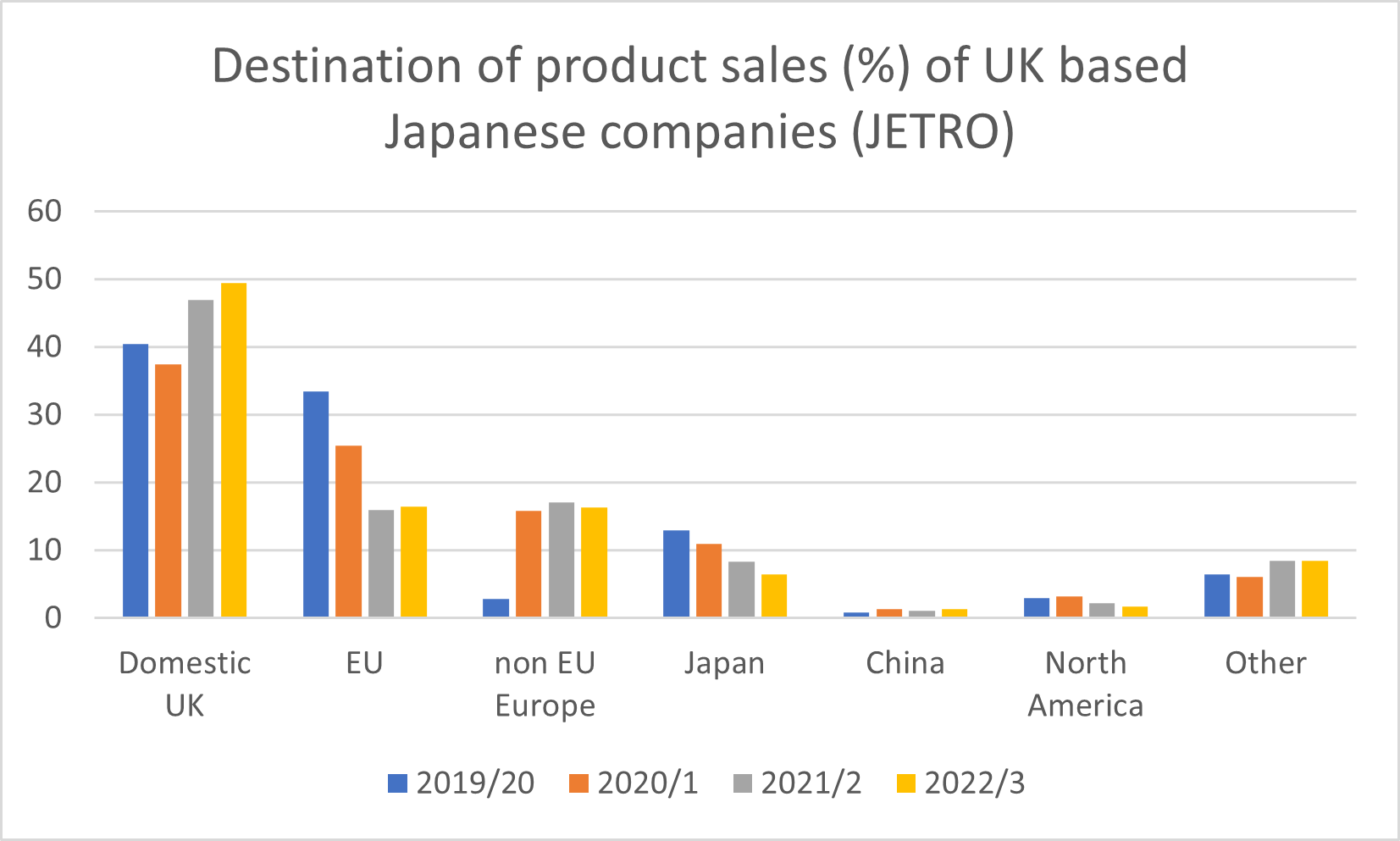
    Japanese companies in the UK are showing an increasing focus on the UK domestic market for their sales, with an average of 49.4% of sales to the UK market, 2.4% up on 2021/2, compared to a European average of domestic sales of 37.7%. UK companies are selling on average 16.5% of sales to EU countries, compared to 37.6% of sales to other EU countries (excluding their own country) for Japanese companies located in the EU.  Unsurprisingly, Japanese companies in the UK have become more UK oriented since Brexit, as many of the EU sales and coordination functions have shifted from the UK to the EU – and is now potentially stabilising after the sharp decline over 2019/20 to 2021/2

    Although the proportion of sales to non-EU Europe (presumably Norway, Switzerland, maybe Turkey) is higher for the UK (16.3%) than for Europe overall (4.4%), there is not much evidence that the UK is being used as a base for sales outside Europe – the proportion of sales to North America (1.7%) or China (1.3%) is actually slightly lower than for the whole of Europe. Sales to Japan have been falling steadily since 2019 (possibly related to Honda Civic sales to Japan). The proportion of sales to “other” countries is higher – 8.5% compared to 6.5%, perhaps showing that some Japanese companies in the UK are indeed Europe, Middle East and Africa headquarters, with sales focused more on the latter regions. ASEAN only accounted for 1% of the 7% of sales to other countries in 2019/20.

    Hybrid working and pay rises

    European employees of Japanese companies are not returning to the workplace at anything like the rate they are in South West Asia, North West Asia or ASEAN. During 2021, 14.6% of Japanese companies in Europe said that 90% or more of their employees were working at their office or factory and only 29.6% were expecting this to happen in 2022/3 in Europe. In Asia, around 30% of companies said their over 90% of employees were working at the office or factory in 2021 and this is expected to be near to 70% in 2023. This may reflect that there are proportionately more manufacturing companies in Asia than in Europe.

    In terms of reviewing management and personnel policies and structure, by far the most popular choice for review was human resource development and training – chosen by 61.6% of Japanese multinationals. Second was reviewing working from home policies, at 35.3%, closely followed by reviewing staff remuneration at 32.3%. The next three topics were all chosen by around 27% of Japanese companies – digitization of workflows, reviewing the expat staff structure and localising management.

    Pay rises are highest in emerging markets such as Brazil, India, Mexico, Vietnam and South Africa and in Europe – Hungary, Poland, Romania and Czech Republic – at around 6 to 9% over the past two quarters, whereas despite the high inflation rates, pay is only expected to rise by 2.7% to 4.6% in the Netherlands, Germany, UK, France and UAE.

    Update – this article has been added to since the publication of a European focused version of the survey by JETRO in December 2022. 

  • Some thoughts for Japanese companies investing in Egypt

    Some thoughts for Japanese companies investing in Egypt

    There were several participants from Egypt in an online training session I ran recently for a Japanese automotive company. It is one of the few positive outcomes of the pandemic, that putting training online means it can now be accessed by people who would normally not be able to travel to the regional headquarters in Western Europe to participate in classroom-based training.  Technology problems still remain, however. One of the Egyptian participants was a senior manager with many insights to share, but the audio connection was too poor quality to hear what he had to say.

    It was unsurprising, therefore, to see that a strong infrastructure was not one of the key attractions for investing in Egypt, according to a recent JETRO survey of Japanese companies who have operations in Africa. Where Egypt did score highly was on the size of its market and growth potential. It has a population of over 100 million, making it the largest Arab country in the world and the third largest country in Africa.

    Respondents to the survey also rated Egypt relatively highly on political stability. Since Abdel Gattah al-Sisi, the current President, ousted Mohamed Morsi in 2013, the situation has improved, with the ending of a nationwide state of emergency in 2021, but it is still has military rule, with various human rights concerns. Other Arab states have been supporting Egypt’s economy since Morsi was ousted. They were previously opposed to Morsi, because of his membership of the Muslim Brotherhood.

    The Muslim Brotherhood’s roots stretch back to before WWII, when it was founded in Egypt as a pan-Islamic, religious, political and social movement. It was opposed to the British rule in Egypt, an occupation dating back to the 19th century. As a consequence of the occupation, English is widely spoken in Egypt, particularly among the management cadre.

    However, as I know from my own family history, Egypt should not be viewed too complacently as an attractive investment destination. My grandfather was posted to Cairo in the 1950s, when he worked for Scandinavian Airlines. After a couple of years there, living a luxurious life with servants and a cook, he found himself having to organise the rescue of his fellow European expatriates, because of the Suez Crisis. This had been preceded by terrorist acts by the Muslim Brotherhood against buildings frequented by the British and other foreigners.

    In more recent years, the continuing regular terrorist attacks on foreigners have impacted tourism and the sector has now been hit by the loss of Russian and Ukrainian visitors who were an important source of income. Russia and Ukraine also account for over a quarter of global wheat exports and around 80% of the world’s supply of sunflower oil, so the prices of wheat and cooking oil have rocketed up. This is impacting Egypt badly, as it is the world’s biggest wheat importer, with a subsidised bread programme for two thirds of its population. The intertwined histories of countries in the Europe, Middle East and Africa region continue to evolve.

    This article was originally published in Japanese in the Teikoku Databank News on 11th May 2022

  • Japanese digital transformation in Europe

    Japanese digital transformation in Europe

    The digital transformation being undertaken by so many Japanese companies is beginning to have an impact on their European operations. One of my longstanding clients has notified me that their European HR and Learning & Development function in the UK has been outsourced to a company in India and the UK staff have been made redundant. I suspect this is not just happening in Europe but globally, as the company has divested many of its subsidiaries and is keen to consolidate and digitize the administrative functions of the remaining businesses.

    Several other UK subsidiaries of Japanese companies which had a regional coordination or regional sales function have transferred these functions to EU based subsidiaries. This was partly in response to Brexit, but it has also provided an opportunity to restructure their businesses. Some have become branches of Japan HQ or of the EU subsidiary, and still retain regional coordination functions and staff, funded by management service fees.

    Those that have continued as incorporated subsidiaries have found that although their turnover has dropped, their profitability has improved, partly due to the reduction in headcount but also because they are able to focus on their UK business, without having to carry the costs for coordinating across the region.

    I have seen the same influences improving the profitability of my own business this year. A few years’ ago, I transferred my EU business to my German partner, so I no longer have to bear the costs and complexity of coordinating it. This and implementing some new, user friendly, cloud-based accounting software meant that I didn’t need to pay for a bookkeeper to come in once a month.

    The pandemic pushed much of my training delivery online, permanently, which has meant it can reach a wider audience, so the contract sizes are larger than before. My main overheads are now software and IT related, not travel expenses or paying locally based subcontractors.

    Costs have also come down because I stopped my membership of various networking groups – partly because during the pandemic there were no in-person networking events to go to, but also because I was getting enough business from existing customers or through online enquiries, so there was no need to find new leads.

    From my experience of working in or for Japanese multinationals over the past 30 years, I suspect that these changes will prove to be cyclical. Individual subsidiaries will start to ignore the global outsourced administrative functions and quietly build up their own local capability again. Then to avoid duplication of costs, a regional function will be revived.

    My overheads are beginning to increase too. I’ve started renting an office, as I find my home office is too distracting, and it is good for my physical and mental wellbeing to walk to work. I may even re-join some networking groups, because after all, the point of digital transformation is not just to cut costs, but to innovate. And that is best done by meeting new people, in person, who have fresh perspectives.

    This article by Pernille Rudlin first appeared in the Teikoku Databank News in September 2022

  • Ukraine – winning the digital communication war

    Ukraine – winning the digital communication war

    A week before Russia invaded Ukraine, I received an email from two Ukrainians working for a Japanese technology company in Lviv, enquiring about the training I do, and asking for a meeting. I was aware even then of rising tensions in the region, but thought it best to respond as I would normally do, and we arranged an online meeting for the next week.

    Unsurprisingly, the meeting was cancelled. When I replied to their cancellation email by asking them what we could do to help, they said “keep telling people what is happening here.” They had already grasped the importance of communication in 21st century warfare.

    I have to confess I had not paid much attention to what was happening in Ukraine up until then in terms of my own business. I had been aware of the Maidan uprising and the Russian invasion of Crimea in 2014, especially as I knew that the brother of the Ukrainian HR manager at one of my Japanese clients had been fighting in the Ukrainian army.

    I assumed Japanese investment in Ukraine would be limited, and mostly automotive related, but the contact from the Japanese technology company alerted me to the fact that there was a technology cluster in Lviv, with many IT related companies and technology start-ups. Indeed Hitachi, through their recent acquisition of American software engineering services provider GlobalLogic, turned out to have over 7,000 employees in Ukraine.

    The reasons for this boom in IT related services in Ukraine become clear on reading the latest JETRO survey of Japanese companies in Europe.  This showed that Japanese corporate interest in investing in digital transformation technology is second only to their interest in investing in carbon reduction technology in Europe.

    37% of Japanese companies in Europe are already using digital technologies. This rises to over 50% in the case of Japanese companies in central and Eastern Europe, where it is possible to find digitally skilled employees at a lower cost than in the West.

    The impact of a digitally sophisticated population is certainly being felt in the current war. Not only have Russian websites been hacked, but it seems to us in Western Europe that Ukraine is winning the social media communication war at least. In between the harrowing footage of bombing and killing, we have been in awe of the dark humour and cheerful bravery in the videos Ukrainians are sharing of their farmers removing tanks with tractors and mines with their bare hands, while still smoking a cigarette.

    The communication skills of Ukrainians and in particular their President Zelensky, help Europeans, with our own memories of wars, dictators and invasions, to empathise with them. In the UK, one of our TV channels has been showing the comedy series that Zelensky appeared in, as a history teacher who was elected President. The storyline shows how he won popular support, after one of his young students filmed his passionate and swear laden anti-corruption speech on their smartphone and posted it on Facebook.

    This article was originally published in Japanese in the Teikoku Databank News on 13th April 2022

  • Rhymes from history – the Japanese Business Mission to Britain – 100 years’ ago

    Rhymes from history – the Japanese Business Mission to Britain – 100 years’ ago

    I’ve been researching the visit of the Japanese Businessmen’s Mission to Britain, which ended a hundred years’ ago, to see if there are any parallels with today.

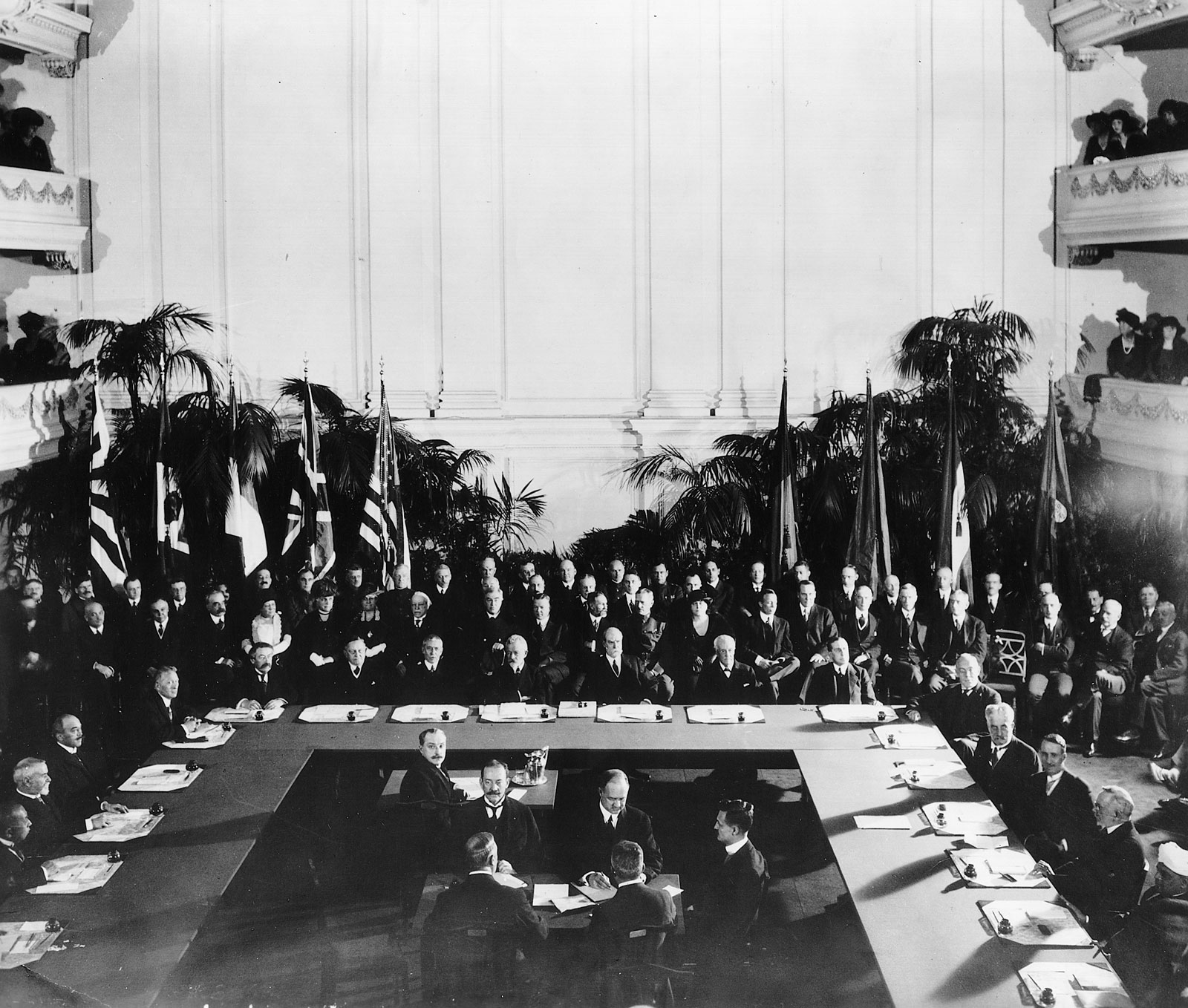
    The visit took place around the time that the Anglo-Japanese Alliance of 1902 became defunct, superseded by the Four Power Treaty of the Washington Conference between Japan, the UK, the USA and France. The conference ended in February 1922, but it was not until the treaty was ratified in August 1923 that the Alliance was officially terminated.

    The alliance was originally directed against Russian expansionism in the Far East, and latterly to deal with the threat from Germany, but by 1921 Britain no longer feared Russia, and Germany had been defeated in WWI. Instead, Britain wanted to maintain close relations with the United States, which had a more hostile attitude towards Japan and saw potential conflicts of interest in the Pacific region and China.

    The mission, led by Dan Takuma, visited the United States, Britain and France from October 1921 to February 1922, deliberately coinciding with the Washington Conference. There was some confusion in Britain over what to call the mission – sometimes it was referred to as an industrial mission, sometimes as a commercial mission, but it seems from accounts of the speeches that many of the British hosts were well aware that there was also a diplomatic agenda.

    Japan had become a net exporter and a creditor nation as a result of WWI, deeply involved in the international economy. Shibusawa Eiichi felt that this was the moment for Japan to strengthen its global influence, by ensuring its economic and social infrastructure was up to the level of a developed nation.

    As a consequence, the members of the zaikai (powerful business people) on the mission showed as much interest in British labour relations, the cooperative movement and the Federation of British Industries as visiting shipyards and factories or discussing tariffs and trademarks. They also were keen to understand Britain’s transportation infrastructure. After their tour of Britain, they went to France to inspect the newly formed International Chamber of Commerce.

    There was plenty of talk during the dinners and lunches for the mission, hosted by British businessmen, of keeping open doors in trade. However, it was clear the British were beginning to see Japan as a competitor in its colonies, particularly in cotton goods. Dr Dan responded to this by saying that the competition for both Japan and Britain would be China.

    The Japanese mission was worried that the end of the Anglo-Japanese alliance might therefore lead to more trade barriers, as well as harm Japan’s global standing, as the alliance had been proof of Japan’s creditworthiness.

    It seems they were right to be worried. Once the Great Depression hit in 1929, the US became more protectionist. In 1932, Britain implemented the Imperial Preference tariff policy, of home producers first, empire producers second, and foreign producers last – the same year that Dan Takuma was assassinated.

    This article was originally published in Japanese in the Teikoku Databank News on 9th March 2022

  • 77% of Japanese companies in Europe say the Ukraine war has had a negative impact on their business

    77% of Japanese companies in Europe say the Ukraine war has had a negative impact on their business

    77% of Japanese companies in Europe have had their business negatively impacted by the war in Ukraine, according to a survey conducted by JETRO in September 2022. The manufacturing industry was particularly hard hit, at 83.7% and Japanese companies in Belgium (92.5%), France (87.5%) and Spain (86.2%) had the highest proportion of all countries reporting a negative impact. This may be linked to the industries most expressing concern about negative impacts – food, automobiles/motorcycles and electrical and electronic equipment. France is host to a number of Japanese food related companies and Belgium is the European headquarters of Toyota and other related automotive companies.

    The main negative impacts were an increase in energy price, an increase in raw material and resource price and confusion and congestion of logistics.

    The main responses to negative impacts of the invasion of Ukraine were “passing on price rises to customers” (50.5%) and diversifying procurement sources (27.5%). Manufacturers were also increasing inventory more than they were trying to find new customers.

    More general concerns were rising and persistently high costs, including energy, and the extension of the frontiers of the war, the use of nuclear weapons and attacks on nuclear power plants, as well as any increase or prolongation of uncertainty about the future – when the war would end, when it would be possible to resume business with Russia.

  • It’s no longer “post off” for Japanese employees in their late 50s

    It’s no longer “post off” for Japanese employees in their late 50s

    An increasing number of Japanese companies are abolishing the “post off” system, whereby employees are removed from line management around the age of 55, according  to the Nikkei. The aim of this system was to restructure the organisation and cut labour costs. Average income fell by around 20% post “post off”. However, as most Japanese employees do not retire until they are 60, this meant 5 years of “digestion” as the Nikkei charmingly puts it, before being finally expelled.

    The system dates back to 1986, when the retirement age in Japan was still 55, and a new law was enacted, making it compulsory to allow employees to work until the age of 60 – before they could receive a pension. The concern was that if seniors stayed on in management, it would make it difficult to “refresh” and have a generational change, and labour costs would rise, because of Japan’s seniority based wage system.  So the post off system was introduced.

    According to a 2022 survey by the HR Research Institute, 29.1% of Japanese companies have introduced a post off system, and the most common cut off ages are 55 for kacho or section chiefs and 58 for General Managers or bucho. Unsurprisingly, this has resulted in a loss of motivation for many employees in their late 50s, as they wait until they can retire.

    NEC abolished the post off system in 2021, and around 1,000 managers have returned to their managerial positions and regained their salary levels. “I was evaluated in a visible way and my motivation increased” said one such manager, a software developer, who is now enthusiastic about applying for an extension to her employment, even after she reaches 60. Under the post off system, the manager had to direct her own ex-subordinates by going through her own boss, confusing everyone.

    At the same time, NEC has ensured that younger and mid career people do not feel demotivated, by introducing a common evaluation standard for each level of the business, and evaluations are conducted by multiple managers, to ensure the evaluation is more objective.

    The laws around retirement have changed in Japan too. In 2013 companies were obliged to offer employment to workers up to the age of 65 and in 2021 this was extended to 70. The need to keep older employees motivated has become even more acute.