
Search results for: “fujitsu”

  • Top 30 Japanese companies in the UK – Brexit impact

    Top 30 Japanese companies in the UK – Brexit impact

    I’d been avoiding doing a Top 30 Japanese employers in the UK ranking to accompany our Top 30 Japanese employers in Europe, as officially disclosed data per country are much harder to get hold of than regional totals.  But with Brexit, more data has been disclosed about employee numbers and where there are still no data from the company itself, I took the top figure from publicly available sources.

    Credit research agency Teikoku Databank, for whom I write a monthly column, estimate there are 1,380 Japanese companies with operations in the UK, with the manufacturing industry accounting for 40%.  The estimate commonly used by the Japanese Embassy in the UK is that Japanese companies directly employ around 140,000 people. Our Top 30 employ nearly 100,000 of those employees, so they represent around 2/3 of the total number who are employed by Japanese companies in the UK.

    Manufacturers do indeed represent more than half of the Top 30, although the largest company (12,000 employees), Fujitsu, is an IT solutions and services provider in the UK.  16 of our Top 30 companies have factories in the UK, half of which are automotive related. Automotive factories are part of a highly integrated European supply chain, both exporting a high proportion of their production to Europe and importing parts from Europe.  The rest range from food processing to electronics to medical instruments.  The automotive factories export more than half of their production to the rest of Europe, and also import plenty of parts from Europe for assembly.

    In terms of Brexit impact, most of these companies have other factories in Europe, such as in Spain, Romania, Portugal and Poland, so my guess is that over the next few years, depending on the deal which the UK makes with Europe, some production and jobs might transfer to other locations.

    The remaining companies are almost all financial services companies.  Again, they all have offices elsewhere in Europe and I have already heard that some of them have opened “European Union” branches and built up capabilities in Amsterdam, for example.  If the UK loses its “EU passport” to operate freely across EU financial markets, then undoubtedly more jobs will shift.  In any case, just as with the manufacturers, there have been shifts eastwards of middle and back office jobs to Continental Europe, particularly Poland.

    According to the Teikoku Databank, 18.7% of the 1,380 companies are wholesalers/sales operations, 17% are in the services sector, and 11.5% are financial/insurance.  The biggest group (29.5%) have consolidated turnovers of between £75-£750 million/Y1bn-Y10bn/$100m-$1bn and 22.8% have turnovers of over £750m/Y1bn/$1bn, so the larger Japanese companies are well represented, in contrast to ASEAN, where most of the Japanese companies who have presence there are classified as small-medium size enterprises in Japan.  55% of the UK Japanese companies have their headquarters in Tokyo, 8.5% in Osaka and 5.9% in Kanagawa prefecture (Yokohama and Kawasaki).

    But the outstanding feature of the Top 30 that most concerns me, both for my own business and for the future of the UK, is the large proportion of the Top 30 that are the product of an acquisition.  Having put a stake in the ground, they may well stay in the UK despite Brexit, but will the UK really see many more major acquisitions from now on?  And despite their British roots, might the European HQ gradually shift away?  21 of the Top 30 currently have their regional HQ in the UK, but I have seen many of them become more virtual and integrated in the way they manage the region, so that actual physical location is less important for management level regional executives.

    • Fujitsu – ICL
    • Sumitomo Electric Industries – Lucas
    • Itochu – Stapleton Tyres, Kwik-Fit
    • Mitsubishi Corporation – Princes Foods
    • Hitachi – The Railway Engineering Company, Horizon Nuclear Power
    • NSG – Pilkington Glass
    • Dentsu – Aegis
    • Calsonic Kansei – Llanelli Radiators, Marley Foam
    • Suntory – Lucozade, Ribena
    • Olympus – KeyMed
    • Mitsubishi Chemical Holding – Lucite
    • Mitsui Sumitomo Insurance & Aio Nissay Dowa – Amlin, Insure The Box
    • Sompo Holdings – Canopius

    My sense is, UK based people might want to get ready to move eastwards  too in the next few years, if they want to work for the Japanese Top 30. Ironically, Poland looks a good bet, the source of so much immigration to the UK recently and in the more distant past.

    FREE PDF DOWNLOAD OF TOP 30 JAPANESE EMPLOYERS IN THE UK 2021
    Save

    Save

    Save

    Save

    Save

    Save

    Save

  • East meets East #3 Pork, guns and the Galapagos

    East meets East #3 Pork, guns and the Galapagos

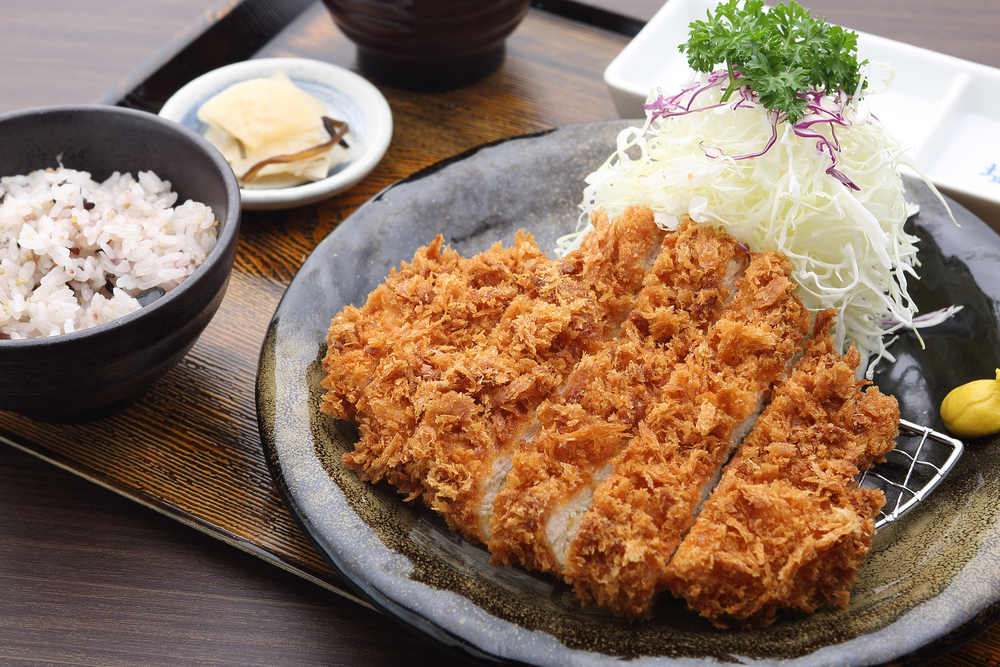
    My fantasy local start-up idea is a tonkatsu (Japanese deep fried breaded pork) restaurant, using outdoor bred Norfolk pork and Colman’s mustard (manufactured in Norwich) with a side order of locally grown shredded cabbage. *

    Although tonkatsu is now viewed as a typical Japanese dish, in Japan it was originally a yoshoku “Western Style” dish, introduced into Japan in the 19th century, when Japan began to open itself to foreign influence and trade again.  Japan had cut itself off for the best part of three hundred years, with no foreigner able to enter or any Japanese leave the country under pain of death.

    This law was put in place by the Tokugawa shoguns in the 17thc, to end the colonial and religious influence of Spain and Portugal and also to help the Shogun to gain more control over the foreign trading of other feudal lords, preventing them from building up military strength.

    Trade did not cease entirely during this time – it was just heavily controlled – with Dutch and Chinese merchants being allowed to live on an artificial island off the coast of Nagasaki.  Western scientific ideas also trickled into Japan, but largely undercover.

    Consequently, when the Americans finally forced Japan open in the 19th century, the Japanese found themselves far behind in military strength, still using matchlock guns from the 16th century.  Japan had also missed out on the industrial revolution, but quickly caught up, sending many of its brightest and best to Europe and the US to study technological developments, and bringing foreign experts back to work in Japan.

    Post war Japan offers a more modern day insight into what happens if a trading nation like, oh, let’s say the UK, chooses to shut its borders to migration (98% of the Japanese population are of Japanese nationality) but tries to export as much as possible to the rest of the world.  Initially, Japan won through with cheap, increasingly well-made products.  As the pound is already falling with the threat of Brexit, presumably there will initially be some positive impact in terms of British exports becoming cheaper.  Imports will however be correspondingly more expensive.

    If houses prices weaken and the FTSE falls post Brexit, because of foreign investment pulling out of UK assets, then we might be faced with an asset price crash similar to when Japan’s economic bubble burst in 1990.  In the years after, a large number of basic manufacturing jobs in Japan went offshore, to Asia.  After a decade or so of deflation and low growth, some higher end manufacturing moved back, but factories are far more heavily automated, and robot driven than before.

    Even though the UK is increasingly exporting more services than manufactured products, the same offshoring and automation threats will apply.  In fact, we are already seeing this happening – recently HSBC announced that 840 IT back office jobs will be moved out of London to Poland and China and RBS have also announced similar reorganisations.

    Other jobs which cannot be offshored (for example, warehousing, food harvesting and processing) – which were being done by immigrants – are also threatened by automation.  My old employer Fujitsu has been pioneering an agriculture “cloud” which uses supercomputing and Big Data to allow elderly farmers to capture and automate their knowledge on when to sow, fertilise or harvest.

    Where automation is impossible, Japan has also let occasional groups of immigrants in to do what are known as the 3 K jobs – Kitanai (dirty), Kitsui (hard) and Kiken (dangerous), such as in construction and nursing.

    It’s possible British employers will also improve wages and conditions to attract indigenous British employees to our 3K jobs.  However, as we are quite close to full employment already, this will in turn push prices up (and as noted, prices of imports are likely to rise too), so overall, people will not feel better off.

    Japan used to be very expensive, but the 20-year stagnation has resulted in deflation, with 40% of its workforce in badly paid, insecure jobs and the other 60% with the secure jobs have seen their take home pay fall in real terms, despite deflation.

    Innovation should be the way out, but actually Japan has a nickname for innovations that only sell well in Japan, because they were designed by Japanese for Japanese – the Galapagos syndrome – after the isolated islands where flora and fauna developed to fit local conditions, but die in the world outside.


    *if anyone wants to take up this idea, I’d be delighted to act as advisor, for equity and a lifetime supply of meal vouchers (however, if the UK leaves the EU, starting in the Netherlands or Denmark might be preferable)

  • Japanese boards in Europe should reflect their customers, employees and community

    Japanese boards in Europe should reflect their customers, employees and community

    I have just completed the first phase of research into how diverse the European subsidiary boards of the biggest Japanese companies in Europe are, both in terms of the nationality mix of Japanese and European directors, and also the number of women on the board.

    More boards in Japan had women on them than in Europe, which is surprising if you were expecting boards to reflect the employee mix – particularly the pipeline of managers coming through the ranks of an organisation – as there are without doubt more women employees and proportionally more women managers in Japanese companies in Europe than there are in Japan.

    The proportion of directors with European nationalities on the board of Japanese subsidiaries varied wildly from none in the case of Toshiba, Sharp and Fast Retailing (the Uniqlo subsidiary in the UK), through to 100% in the case of Asahi Glass, Bridgestone, Canon and Nidec. So national diversity does not seem to be influenced by which industry the company is in. This also means that what to me is the most compelling case for a diverse board, that it should reflect the customers it is serving, is not the key factor I thought it would be.

    20 years’ ago, becoming less reliant on Japanese customers abroad as well as in Japan, was the driving force for many Japanese companies embarking on “kokusaika” (“internationalization”). Canon was a pioneer then in appointing Europeans to senior positions in overseas subsidiaries and does as a consequence appear to have fared better than other companies in the consumer electronics sector, both in Japan and in Europe.

    The current favoured path to globalization for Japanese companies is through M&A rather than growing international businesses and executives internally, and the major acquisitions of the past decades account for the diverse boards of Asahi Glass (who acquired Glaverbel) and other companies that still have a high proportion of European directors such as Fujitsu (International Computers Ltd), Nomura (Lehman Brothers) and NSG (Pilkington).

    There is some sectoral influence. For example, the financial services industry is under intense scrutiny by European regulators who have the power to approve board appointments. They expect directors to have deep understanding and experience of local markets – something which not many Japanese executives can claim.

    Both Fujitsu and Hitachi have substantial public sector oriented businesses in the UK (government services, nuclear power and rail) which means that they not only need to meet the diversity requirements of government purchasing but also gain acceptance of the communities in which they operate. For example, the board of a Japan-owned UK utility recently advertised for a director, with a requirement that applicants be a customer of that utility.

    For smaller Japanese companies, or those which are just starting in Europe, it is tempting to stick with a small board with just a couple of non-resident Japanese directors, but as boards come under pressure to have greater transparency and better governance in Europe, appointing local directors from the start should lead to better relations with regulators, customers and employees.

    (This article first appeared in Japanese in the Teikoku Databank News in December 2015 and also appears in Pernille Rudlin’s new book  “Shinrai: Japanese Corporate Integrity in a Disintegrating Europe”  – available as a paperback and Kindle ebook on  Amazon.)

  • Octopus balls to Tokyo – why it matters where your company is from in Japan

    Octopus balls to Tokyo – why it matters where your company is from in Japan

    Most countries have rival cities – usually the official capital city versus other cities which consider themselves to be the real business, historical or cultural heart of the country – think London versus Manchester or Birmingham, Berlin versus Dusseldorf or Frankfurt, Rome versus Milan, Madrid versus Barcelona.  Japan is no exception and the rivalries go way back into history.

    Kyoto used to be the capital of Japan, before Tokyo (or Edo as it was then) began to usurp it in the 17th century.  If you ask Japanese people today about Kyoto, they joke that Kyotoites still think Kyoto is the real capital of Japan, and the Emperor is just temporarily visiting Tokyo (he moved there in 1868, when Tokyo became the official capital) – and will return one day.

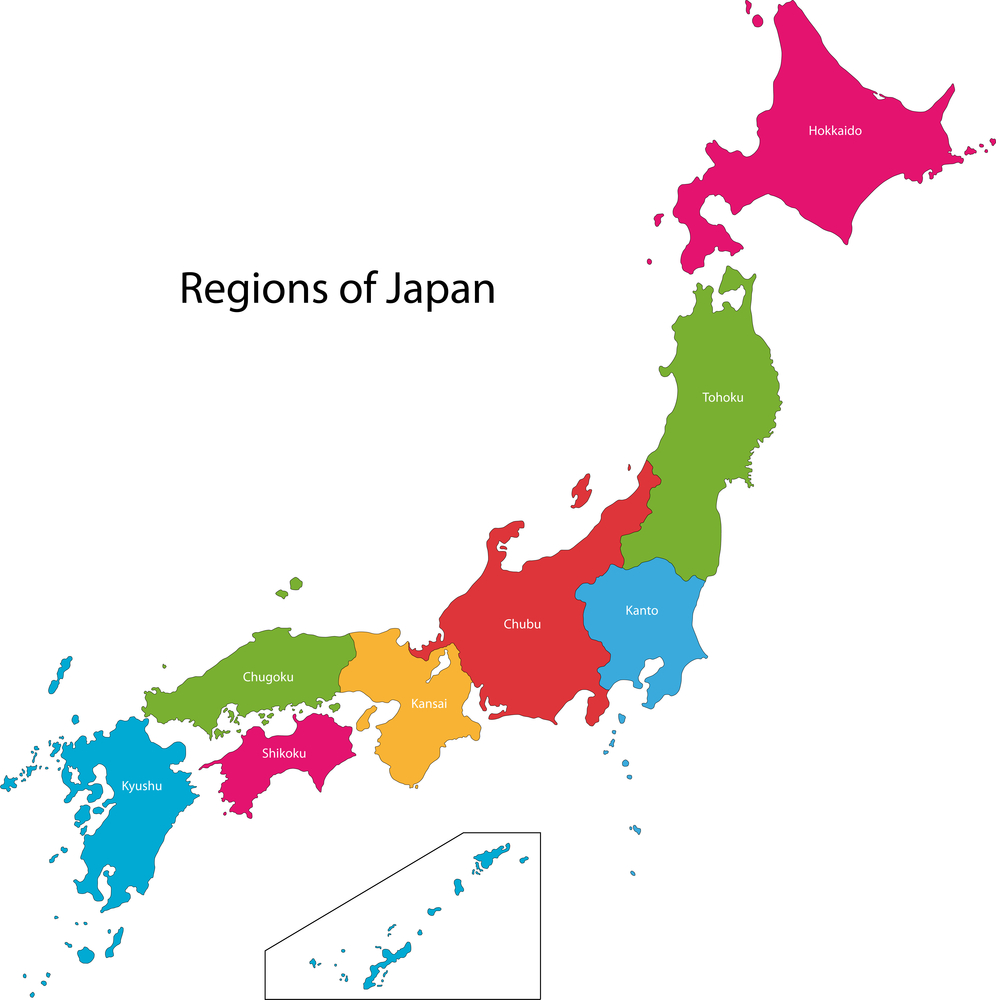
    Tokyo literally means the Eastern Capital and is part of the Kanto region, where the ruling feudal Tokugawa shogunate was based from the 17th century.  Kanto means East of the Barrier (usually considered to be the Hakone checkpoint) and Kansai – the region where Osaka, Kobe and Kyoto are based – means the West of the Barrier (originally the Osaka Tollgate).

    Before Kyoto’s reign as capital for a 1000 years, Nara (also in the Kansai region) was the capital and seat of the Emperor but is now a quiet backwater, more visited by tourists than business people.  Kobe is the other main city in the Kansai region – a port with a strongly cosmopolitan feel and very close to Osaka geographically.  Whilst Kyoto remains aloof and quietly superior (and has some very successful high tech companies of its own such as Kyocera and Nidec), the real battle now in business culture is between Osaka and Tokyo.

    Osakans see Tokyo as standardizing, dull and full of bureaucrats and view Osaka (which historically had very few samurai but plenty of merchants) as the real money maker, with vastly superior food.  Many of Japan’s celebrities, comedians and musicians come from the Kansai region too.

    So what does this mean for corporate cultures?  Osaka companies often have merchant roots – the joke goes, when you meet an Osakan, you don’t ask “how are you” (ogenki desuka) but “how’s business” (moukarimakka).  To which the correct response is “bochi bochi denna” – a wonderfully vague way of giving nothing away, like saying “plodding along nicely thank you”.  Osaka companies are brash, tough negotiators and mean with the money.  “They’d skin the fleece off a gnat” said one British engineer to me, describing his colleagues in the Osaka HQ of a consumer electronics company.

    Tokyo companies are gentlemanly but at the same time highly political.  You need to have a good understanding of their organisation, the factions and the individual relationships to understand how to get things done.  Mitsui and Mitsubishi, both Tokyo based corporate groups, are distinguished by the saying “Mitsui  is people – Mitsubishi is the organisation”.  It’s hard sometimes to understand how exactly this is different, but it seems to boil down to the idea that if an individual is powerful enough at a Mitsui group company, they can get things done, whereas at a Mitsubishi group company, the whole organisation has to support an action.

    The other main corporate groups, Sumitomo and Itochu, are Kansai based companies.  Both have strong “mercantile” roots – Sumitomo in metals trading, hard-nut, conservative and domestically focused and Itochu – strong in fashion and consumer goods, and seen as the more maverick, progressive and international in outlook.  The regional cultural differences don’t seem to have been that strong between Sumitomo and Mitsui as various mergers have taken place between their respective member companies, particularly in financial services.   However regional cultural differences have definitely had an impact on Astellas Pharma, the product of a merger between Yamanouchi (Tokyo) and Fujisawa (Osaka).  Apparently many Fujisawa employees were horrified that Yamanouchi was going to be the dominant partner in the merger.  Fujisawa had a strong tradition of innovation and had regarded Yamanouchi as “Mane-nouchi” (Mane = imitation) – a bunch of play-safe Tokyo bureaucrats.

    Those who know Japan well will have spotted that there is an important region missing from this analysis – Chubu.  Literally and metaphorically this is the midlands of Japan.  Just like the Midlands in the UK it is the historic heart of the car industry.  Nagoya is the main city, and teased just as Birmingham in the UK is for being ugly and soullessly modern.  The area has the last laugh though, as it is the most wealthy in Japan – thanks to the enduring success of Toyota (so mighty their home town was renamed Toyota City) and its corporate group of suppliers such as Denso.

    So, where are the top 30 Japanese companies in Europe from?

    Kanto/Tokyo based companies:

    • Asahi Glass
    • Astellas (but Fujisawa originally Osaka)
    • Canon
    • Daiichi Sankyoshutterstock_36509791
    • Fujifilm
    • Fujitsu
    • Hitachi
    • Honda
    • Kao Corporation
    • Mitsubishi group
    • Mitsui group
    • Nissan
    • Nomura (but was Osaka originally)
    • NTT group
    • NYK group
    • Olympus
    • Ricoh
    • Sony
    • Toshiba

    Kansai based companies:
    • Horiba (Kyoto)
    • Nidec (Kyoto)
    • Nippon Sheet Glass (Sumitomo Group)
    • Omron (Kyoto)
    • Panasonic (Osaka)
    • Sharp (Osaka)
    • Sumitomo group (Osaka)
    • Takeda Pharma (Osaka)

    Chubu based companies:
    • Denso
    • Seiko Epson
    • Toyota

    Chugoku (Hiroshima etc) based companies:

    • Fast Retailing/Uniqlo


    [download_after_email id=”6107″]

  • Hitachi – we’re not heavy, dull or ugly outside Japan

    Hitachi – we’re not heavy, dull or ugly outside Japan

    Hitachi is seen as inward looking, conservative and lacking in commercial sense by business people in Japan, but outside Japan it is seen as a motivating place to work, exciting and cool by employees of Hitachi’s overseas subsidiaries such as Hitachi Rail Europe and Hitachi Data Systems, according to Nikkei Business magazine.

    Could this help change Hitachi domestically?  Currently Hitachi has over 1000 employees with PhDs working for them in Japan, generating many patents, but this technical strength does not seem to be translating into sales.  The improvement in profits is largely due to withdrawing from unprofitable businesses such as mobile phones and LCD screens and also the contributions from social innovation business overseas.  It is not due to any ground breaking innovation in products or services.  It is also seen as being self centred, and not often forming alliances with other companies.

    In the rail business however, Hitachi has taken the biggest share of rolling stock orders through to 2019 in the UK.  Hitachi first opened an office in the UK for its rail business in 1999, with just one expatriate staffing it.  It is now seen as the most powerful train supplier in Europe, according to an executive from Virgin Trains.  It has had to completely overhaul its designs however, to cope with the UK’s old fragile railway bridges.  Procurement specs for everything from engines, radiators and pumps were reviewed and the body used as  much aluminium as possible to lighten the weight.  “We were able to use all the expertise we had developed in Japan” says Koji Wagatsuma of Hitachi Rail Europe. “Hitachi’s strength is not just IT, but that we know the operational side of various industries really well”, says Shinya Mitsudomi, CSO of Hitachi Rail Europe.

    The other secret of Hitachi Rail’s success is “true delegation”, says the Nikkei.  Instead of relying on history and performance within the company, Hitachi has given responsibility to those who know the market best.  There is a big difference between the UK and Japanese rail markets, in that the risks taken by the supplier in bids are much greater.  It is necessary to guarantee how many people would be needed to run the system per year, and what the lifecycle cost will be.

    Alistair Dormer, the CEO, has clearly been a driving force in Hitachi Rail’s success.  He likes to hold regular town hall meetings, where he consistently promotes the company’s mission and vision.  Ted Yamada, head of HR at Hitachi Rail Europe says “to hire the best people, it’s not just about the remuneration, but to make sure they can get a feel of the kind of company they are working for.”  Not only the CEO but also the chairman of Hitachi in Japan, Hiroaki Nakanishi, is a good story teller.  As I repeatedly point out in my training sessions, because most Japanese companies are the “family” type,  storytelling and parent figures are far more important in giving direction than targets or strategies or policies or structures.

    A further feature that Nikkei Business picks up on, is that Hitachi is beginning to pull together virtual company structures, most notably for Hitachi Data Systems.  We were moving towards that when I was at Fujitsu – I think IT companies are probably best suited to this kind of organisation – where services have to be provided globally so it makes sense to have teams and hierarchies which span several regions.  It does mean a lot of travel to work well – one Hitachi Data Systems director says he has 56 Japan entry stamps on his American passport.  Conversely, Japanese engineers travel regularly to the UK and the US.

    The feature finishes with an interview with Hiroaki Nakanishi, who comes up with a few punchy quotes.  Asked about the impact of Hitachi putting non-Japanese at the top of various regions, he says it has an instant effect on the mindset of the Japanese employees, who now realise that they have to persuade a foreigner of their ideas, so all the “Japanese only” methods they have used in the past will not work.  Consequently, decision making and execution have speeded up. Everything in the value chain from marketing to sales, development to production and after sales service have to be overseas.  So it’s not possible for Japanese to be seconded abroad and manage everything.  Most  of the executives are local, non-Japanese.  “Before now, Japanese companies would build a factory overseas, but just transfer manufacturing knowhow, and then when it was completed, the head of manufacturing in Japan would fly over and play lots of golf.  That’s just no longer feasible.”  Since Jack Domme took over at HDS, objectives have been set for individual employees and decision making has become more transparent.  HDS is now well regarded by others as a company which would be an enjoyable challenge to work for.  “Starting small and growing big is just fooling yourself  – there are no dreams or hope in that.  People with ambitions will not join such a company” says Nakanishi.  “We are still a Japanese company, and so there will be some parts which are difficult for non-Japanese to understand, so not being Japanese might be a bit of a handicap” but maybe no more than Siemens is a German company, or GE is American, Nakanishi adds.

  • The Bubble Gang – what became of my cohort in Japan

    The Bubble Gang – what became of my cohort in Japan

    In the UK I would be regarded as part of Generation X but in Japan I am in the Bubble Gang, of people aged 45-49 who joined a major Japanese company straight out of university between 1988 and 1992 – at the very end of Japan’s economic “Bubble Era”. I graduated in 1988 but did not join Mitsubishi Corporation until 1990, spending two years at a US PR company first. And actually, because I transferred to Mitsubishi’s Tokyo headquarters in 1992, my company ID number started with 92, and I was therefore regarded as being a member of the 1992 graduate intake, despite my protests.

    After a period selling building materials in Japan, I transferred to the HR department, where we tried to set up an international HR system which was intended to make the year of joining less relevant and therefore Japanese traditional seniority based promotion less rigid. This was meant to ensure non-Japanese, mid-career hires had more chance of being promoted appropriately, but twenty years on, elements of the old system still persist in Mitsubishi and elsewhere. I was given the title of manager at the time, but didn’t really manage anything in the Western sense of the word – having no team or budget under my control.

    If I had stuck with the company into my late 30s I may well have become a ‘proper’ manager, attaining the kacho (team leader or section chief) grade under the Japanese system, and who knows, ten or so years later maybe even made it to bucho (General Manager – head of a department) as some of my friends from that time have recently done.

    Contemplating that future at the age of 33, when so many of my MBA class were already running businesses, put a chill in my soul and I decided to leave Mitsubishi after 9 enjoyable years.

    It’s not often you get a chance to see how your career might have panned out if a different choice had been made, but thanks to a special feature in the Nikkei Business magazine on the Bubble Gang, I now have more insight, and it has reassured me that I probably took the right path.

    The article sets out the following phases:

    1. Entrance ceremony day 1988-1992

    So many new graduates joined – up to a 1000 in some cases – that the company has to hire the Budokan for the entrance ceremony

    1. 2-3 years on – Japan’s “Loadsamoney”

    A separate envelope full of cash is handed out at bonus time, making a 24 hour working day bearable. Hanakin (Flower Friday – the equivalent of POETS day in the UK) drinking to the small hours, including Y50,000 bottles of champagne and waving Y10,000 notes to flag down taxis

    1. 5 years on – the Bubble bursts

    It’s a slow burst, from the initial bubble burst in 1990, when asset prices started to plummet, through to 1997, with the Asian financial crisis, and the collapse of Hokkaido Bank, the Long Term Credit Bank of Japan and Yamaichi Securities. Friends start to lose their jobs. The wife wants to go back to her family.

    1. 10 years on – no team, but performance based pay introduced

    Companies like Fujitsu and Mitsui introduce performance based and potential based pay systems. You start to worry about what level of bonus others in your cohort are getting. Due to a hiring freeze, you don’t have any juniors working for you, so end up having to do admin work yourself.

    1. 15 years on – the company recovers, but your pay doesn’t

    Thanks to a cheaper yen, exports boom and the company results improve, but your pay level does not. Some of the other high fliers in your cohort make it to kacho, but you don’t. Your daughter, whom you struggled to get into a private high school, seems to have lost her mojo too.

    1. 20 years on – the Lehman Shock

    Every industry suddenly goes into recession. Elpida Memory enters bankruptcy and Panasonic and Sony are in tatters. You start to envy the old guys with their golden goodbyes and full pensions.

    1. 25 years on – what do I do now?

    Sharp seems to be on its last legs, Toshiba is hit by an accounting scandal. Is my company OK? Drinking with old friends, there are more grey hairs and wheezing than before. Even your highflier friend has applied for early retirement. Younger colleagues are looking at you, still only a kacho, coldly. Should I stay or start my own business or change companies?

    The feature then looks at the fate of one man at Sharp. He is called to a seminar by a department called “People Making”, which appears to him to be a firing squad. They show him a chart of the pay offs available to people of his age under the voluntary retirement scheme. He then has a meeting with his General Manager, who tells him to stay. His colleague of the same age is not so lucky, and is told that as there isn’t a job for him, he should contact the employment agencies who are both under contract to Sharp to assist with re-employment, elsewhere.

    It seems to be a repeat of the mid 1990s, when HR departments used similar tactics to get rid of the bulge of post war baby boomers, who joined companies in the late 1970s. Apparently the Bubble Gang are the biggest cohort in most companies, comprising 1/6 of the total employees, but only 1/3 have made it to kacho or bucho level.

    In response to this, over 60% of companies surveyed by the Nikkei have reviewed their seniority based pay system or introduced voluntary early retirement schemes. Conversely, 59% of the Bubble Gang, the highest percentage of all the cohorts, feel their company has betrayed them – either because they were not promoted as expected or their pay level is not as they hoped. However the vast majority want to continue working for their company, at least for the time being. No surprise really, because you have to wonder how easy it is going to be for someone who has worked for the same company for 25 years to find a job elsewhere.

  • Japanese companies need to pull up younger burdock roots if they really want to grow globally

    Japanese companies need to pull up younger burdock roots if they really want to grow globally

    Along with “tako tsubo” (octopus pot), another Japanese concept “gobou nuki” (plucking out burdock roots) used in HR has been deemed harmful to corporate Japan’s global prospects.

    The term has been used frequently in the Japanese media recently, according to Masahiro Kotosaka, an ex McKinsey consultant now at Ritsumeikan University.  In a recent article in Nikkei Business Online he points out that the recent appointments as President of Takuya Hirano at Microsoft Japan, Tatsuo Yasunaga at Mitsui & Co, Koji Arima at Denso, Tatsuya Tanaka at Fujitsu and Takahiro Hachigo at Honda have all been described as plucking burdock roots, as they are in their 40s or 50s, younger than normal for Presidents in corporate Japan.  The average age of Japanese Presidents was 62 in 2014 (up from 61 in 2013), around 10 years higher than the global average.

    The older age is of course partly explained by the continuation of seniority based pay and promotion in Japan – although Panasonic, Sony and Hitachi have all recently announced they are abolishing or looking to abolish this system.

    The average age in Japan for a “kacho” (section head, the first managerial position in Japanese companies) is 38.6 and 44 for a “bucho” (department head, or General Manager) according to Recruitworks.  In India, China or Thailand, the average is 9 years lower for kacho and 10 years lower for bucho.  Even the US average is 5 years lower for both positions.

    Kotosaka asserts that Japanese companies need to start pulling out younger burdock roots, people who might be future executives, and making sure they have early leadership experience.  If this does not happen, the younger generations of Japanese will soon feel a big gap with their overseas peers.

    Already Kotosaka has heard (as I have) from Japanese companies that they feel the utilisation of non-Japanese or external executives has increased and the presence of Japanese executives has faded.

    The most notable example is of course Christophe Weber, President of Takeda Pharma, and his team of 16 executives, of whom 8 are non-Japanese and have come from outside the company and two are non-Japanese who joined through being executives in a Takeda acquisition.  Weber had his first leadership experience at the age of 29 when he became a country manager at GSK.  Carlos Ghosn of Nissan also became head of a factory at the age of 27.

    My former employer Mitsubishi Corporation is mentioned as an honourable exception to the lack of experience given to juniors, along with gaishi (foreign owned) consulting companies and private equity firms.  For such companies, people are the main asset, and it’s true I suppose that trading companies such as Mitsubishi that have now moved more towards acquisitions rather than trading, do afford ample opportunity for younger Japanese to take up management positions abroad.  In practice though, I have seen many instances where the acquisition is left to manage itself, and the Japanese expat director mostly stays in the regional headquarters, processing paperwork to send back to Japan HQ, rather than hands on managing the business.

  • The most popular location for a European HQ

    The most popular location for a European HQ

    I’ve just been updating our Customer Relationship Management (CRM) database of Japanese companies and their suppliers in Europe.  I recently shifted the database to a new cloud-based provider, which enables me to cross reference our customer data with social networking sites such as LinkedIn – a very popular business networking site across Europe and the USA.  The way our new CRM interface works has also forced me to focus much more on how our Japanese corporate clients are organising their operations across Europe, including where they have placed their headquarters.

    My conclusions are not entirely scientific, as my own business is based in the UK and therefore biased towards UK based Japanese companies, but it does seem that the UK is the most popular base for European headquarters of Japanese companies.  Of the 96 European headquarter companies I have identified in my database, 53 are in the UK, 24 in Germany, 10 in the Netherlands, 5 in Belgium, 2 in France, 1 in Switzerland and 1 in Poland.

    Of course there are many Japanese companies who do not have a European headquarters, but the trend among those who have been in Europe for a longer period is unmistakably towards consolidating across Europe in terms of functional areas such as purchasing or HR or finance.  This seems to be to the benefit of the UK, which is the undoubted European if not world capital of professional services – with many globally capable financial, marketing, legal, consulting and HR firms in London.

    The UK has long been a favourite destination for Japanese foreign direct investment, for various reasons ranging from the English language, to golf to the UK’s open economy.  Germany has also been very popular, particularly with Japanese engineering companies who feel an affinity with German process orientation and risk aversion, as well as having historical ties such as Fujitsu with Siemens or Denso with Bosch.  The North Rhine Westphalia region was particularly active since the 1960s in encouraging Japanese companies to set up there, although Sony decided initially to set up in Berlin, largely, it was rumoured, because of Norio Ohga’s love of the Berlin Philharmonic.

    More recently, the Netherlands became popular because of the tax advantages offered, and also, along with Belgium, was an obvious logistical centre for Europe.  Lately, however, there seems to be a shift of these headquarters to the UK.  Canon has moved from the Netherlands to Uxbridge, near London.  Denso and Bosch recently announced their break up, and although Denso continues to be headquartered in the Netherlands, there seem to be several senior managers with European roles based in the UK.  Fujitsu and Siemens parted ways in 2009, with the Fujitsu European operations being split between Continental Europe, the Nordics, and UK and Ireland.

    Sony sold its Berlin headquarter building in 2008 and is currently in the process of consolidating its sales and marketing  across Europe, to be based in Weybridge, a few kilometres south west of London.  However, it seems to be shifting towards a “virtual” European structure, with shared HR services now set up in Turkey, and individual senior executives with European remits being based in whatever location they prefer.  This pattern has also become evident in other IT and telecoms companies such as NTT Data.

    Even this virtual European company structure seems to benefit the UK the most, as senior executives of all nationalities are can be found in, or seem relatively happy to relocate to, London and its suburbs.  With more than 40% of London’s population were born outside the UK, London has truly become a global capital and a place to develop global careers.

    This article by Pernille Rudlin originally appeared in Japanese in the 10th April 2013 edition of Teikoku Databank News and also appears in Pernille Rudlin’s new book  “Shinrai: Japanese Corporate Integrity in a Disintegrating Europe” – available as a paperback and Kindle ebook on  Amazon.

  • “White hands, yellow hands” – the early days of IBM Japan

    “White hands, yellow hands” – the early days of IBM Japan

    Takeo Shiina became president of IBM Japan in 1974, at the age of 45.  He joined IBM Japan just after studying in the US in 1953.  “In those days, gaishi (foreign owned companies) were seen as bad.  A major newspaper wrote a series called “White hands, yellow hands” basically saying white handed gaishi were “dirty” and that they would disrupt the markets in Japan, make lots of money and take it all back to the US.

    “The Ministry of International Trade & Industry also did all they could to support domestic computer manufacturers.  They passed a special law so that the amount of tax that IBM Japan paid every year was recycled into supporting Fujitsu, NEC and Hitachi.”

    Shiina took the brave decision to study in the US, after graduating from Keio University because his father had also studied abroad, in Germany, and so he was not afraid of becoming a foreign student.  As for joining IBM, the auditor of his father’s company knew the President of IBM Japan and suggested it to him,  He trained at the IBM plant in Canada and was shocked when he returned to Japan, to find that IBM Japan’s main office was in the middle of a bomb site.  The factory was also just an old Japanese house, with a strong smell of a cesspit toilet as you walked through the door.

    Shiina became head of the factory at the age of 32 and started a new site up as well as inadvertently offering the first ever online system to a steel factory.  He assumed that IBM must be doing that sort of thing in Europe and the USA, but actually it turned out there was nothing to copy.

    The contract was also tricky, in terms of persuading IBM HQ in the USA to accept it.  Due to a mistranslation of “this is no problem in Japan” as “in Japanese this is no problem” IBM HQ finally accepted it, as noone could read the original Japanese anyway.

    Shiina is proud that IBM Japan is now seen as a desirable company to work for, particularly in terms of opportunities for women, and having performance based pay.  His interview with the Nikkei Online, the basis of this precis, is illustrated by his calligraphy which reads “Building a new country – young people, women, regions, foreigners”.

  • What I think about Japanese employee engagement – it’s all in the family

    What I think about Japanese employee engagement – it’s all in the family

    Somebody writing a white paper on the reason for low engagement amongst Japanese workers contacted me this week with some questions, which I answered (possibly in more detail than was helpful!) as follows:

    As you may have gathered from the articles I have written, I am cautious about applying Western standards, using surveys which are basically translations of (usually American) methodologies and materials, to Japanese companies.

    Whenever I find something that is puzzling about Japanese companies – in this case that employees in Japanese companies have consistently lower engagement levels than companies with other countries of origin – then I use the framework developed by Fons Trompenaars and Charles Hampden-Turner, in Riding the Waves of Culture, which classifies Japanese companies as “Family” type companies, as distinct from Missile type companies or Eiffel Tower type companies or Incubator companies. Please see http://changingminds.org/explanations/culture/trompenaars_four_cultures.htm for a summary.

    For Family type companies, the primary motivation is to put food on the table and look after the members of the family, and secondarily the long term survival, and therefore the reputation of the family and its acceptance by the community in which it is based.  In Missile type companies motivation is more about success – personal and the company’s and therefore being materially rewarded and recognised for your contribution to that success.  Eiffel Tower companies are about believing in and executing the strategy and being rewarded through promotion/status.  In an Incubator company, your motivation is self fulfilment – to have a job which makes the most of your skills and interests, and make a difference or do something new.

    If you think of Japanese employees as members of a family, and replace “company/employer” with the word “family” then you can quickly see that they will have trouble answering questions in employee engagement surveys which are more suited to Missile, Eiffel Tower or Incubator companies.  For example, “would you recommend your family to others/are you proud to tell people you belong to/work for your family” – when it would be seen as boastful to tell others what a great family you have, particularly for modest Japanese people – and traditionally it’s been very difficult for people to join big Japanese family style companies later in their careers, so why would you recommend it to your friends?  You wouldn’t say – hey why don’t you leave your family and be adopted by mine?

    Families all pull together, nobody expects to be rewarded individually, and if they were this would cause big arguments and accusations of favouritism.  So again, there is likely to be a negative to neutral response about being rewarded or recognised or able to make an individual contribution/impact.

    Families don’t have strategies, mission and purpose other than, as I said above, long term survival and protection of their reputation.  So questions about whether you understand the mission and purpose and strategy will be tough to answer.  Japanese employees are used to doing what they are told by mum and dad, and the mission of the family is implicit, not explicitly explained.

    So if you asked Japanese employees different questions about their motivation, like “do you feel confident or secure that your company will look after you and your family in the long term”  or “do you believe your company acts in the best interests of the community and therefore gives you the opportunity to contribute to the community too” then they might be much more positive.

    Even questions about teamwork are tough to answer for Japanese employees – you would expect your family to be supportive and work well together because you know each other so well, so Japanese companies don’t spend much time thinking consciously about teams and individual roles within those teams.  They are also, like families, very well aware of each others’ flaws and also the flaws of their seniors – mum and dad – who are the leaders but also just ordinary people who happen to be older – you didn’t choose for them to be your parents.

    So Japanese do tend to be highly critical of each other and their companies in general – but just like families, are extremely defensive if someone outside the company/family tries to criticise it.

    Overall, I would say, even if you asked more culturally sensitive questions in an employee engagement survey, (by the way, even the word ‘engagement’ has no direct translation into Japanese), you would probably still uncover a motivational problem.  Japanese companies have gone through a very tough 20 years.  Many of them are still struggling to find their “raison d’etre”, and are having to make unpleasant decisions about axing businesses, which means that their employees do not feel as secure and protected as they used to, nor do they feel that their company is making the contribution to society it used to.  Plus the number of “contract” staff has increased to over 30% of the workforce now – these are not members of the family, and have none of the benefits the family members do.

    Even the family members are being forced into taking very early retirement (basically redundancy) and the younger family members are wondering whether staying inside the family until retirement is quite as attractive as it used to be – as so many are not getting married or having children, they have less need for a secure and protective employer.

    What we did at Fujitsu was to refresh the values and vision, to try to come up with something that made sense inside and outside Japan.  We communicated them internally and externally, with a new visual identity and some very emotionally driven advertising about contributing to society through supercomputers etc.  Interestingly, the Japan side of Fujitsu were not so keen to have workshops about the values and vision but the one thing they did do was to compile a book of stories of individual employees, – called something like “the power to challenge” in Japanese, translated into “Fortune Favours the Brave – the Fujitsu Way”.  So it was celebrating individuals, but again in a very family type way, which is to create some new inspiring family myths/stories.

    I think this is what Japanese companies have to do – they usually have some great stories about what the founding fathers did – they need to revisit these, but also develop some new stories about the younger generations.  That should help employees feel more motivated – about their ability to contribute individually but also that the company/family can do great things as a whole – in the future, not just the past.

    Families like to tell good stories!

    If you want a different perspective on this, you may want to speak to my US colleague, Rochelle Kopp, the founder of Japan Intercultural Consulting – she has just published a book in Japanese on why Japanese employee motivation is so low, and I think an English version is due soon.  She takes a more HR systems approach – her basic point is that “jinji idou” – the rotating staff system whereby employees have no say in where they are posted – is a key demotivator.