


This post is also available in:
With warnings of train strikes in the summer and power cuts in the winter, and rising inflation, it really does feel like Britain has returned to the 1970s. I was a little girl, living in Japan, during most of the 1970s, but was still in Britain for a year or so when the first power cuts happened. I remember being quite excited about having to do everything by candlelight. I doubt the adults were as thrilled, however.
Memories of my childhood in Japan came back to me as I was looking for alternative heating for our house that was not reliant on mains electricity or gas. I discovered that Japanese manufacturers are selling wick type paraffin heaters in Europe, just like the ones I remember from my childhood in Sendai, only less smelly.
I shared this with one of my friends, about the same age as me, and she told me that her family home, in 1970s Britain, was also heated with paraffin heaters. They did not have any central heating, and, she added, the paraffin heaters were used to heat the bathroom on bath night. In those days, it was quite common just to have a bath once a week, often sharing the dirty water with other members of the family.
For many homes then, there was only enough hot water for two bathfuls a day, coming from an immersion tank, which ran on electricity and would often be set to switch on at night, when electricity was cheaper.
Now most British people shower once a day, getting their hot water “on demand” from a combination gas boiler, which also runs the central heating. Even before the threat of power cuts, the government has been considering incentivising households to switch away from gas boilers to air source heat pumps for their central heating and water heating. So far, however, there has not been a big take up.
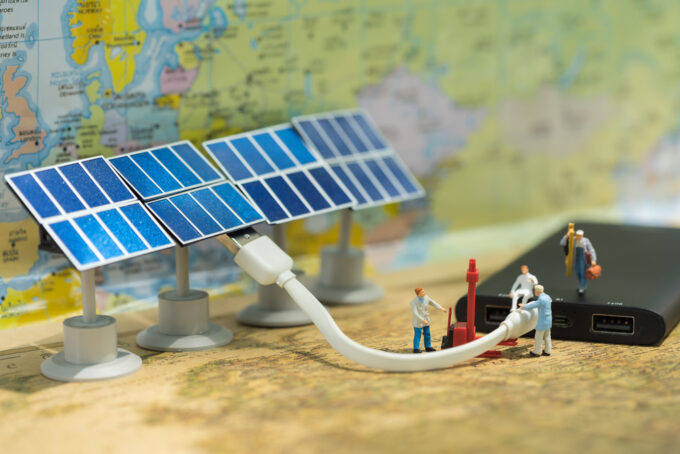
One of the issues, apart from the high upfront cost of installation, is that planning permission may be required for an outside unit. This also caused difficulties in the uptake of solar panel installation. Many British people live in old houses, or conservation areas, where visible changes to the houses that are not in harmony with the surrounding environment cannot be made.
This may also prove to be an issue with the new home batteries that Japanese companies such as Toyota Motor have been introducing. Because they are also used to charge cars, they need to be outside – which is fine for those who have homes with a parking space incorporated. But many city dwellers park their cars on the road in front of their house, and this means that they have to run a cable out of their front door and across a pavement to charge their cars.
No doubt the energy crisis will eventually provide ingenious answers to this, but this winter I think it might have to be candles and paraffin heaters for many of us.


Leave a Reply
You must be logged in to post a comment.