


This post is also available in:
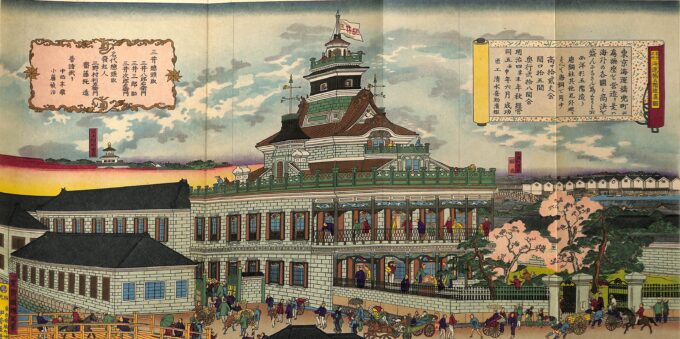
I collect English language publications by Japanese companies dating as far back as 1910 to see how they represented themselves in the past, when they were trying to project a global image. These include books published by Mitsui and Mitsubishi, which feature many photographs of their impressive office buildings, ships, mines and founding families. The message is one of scale, solidity and history.
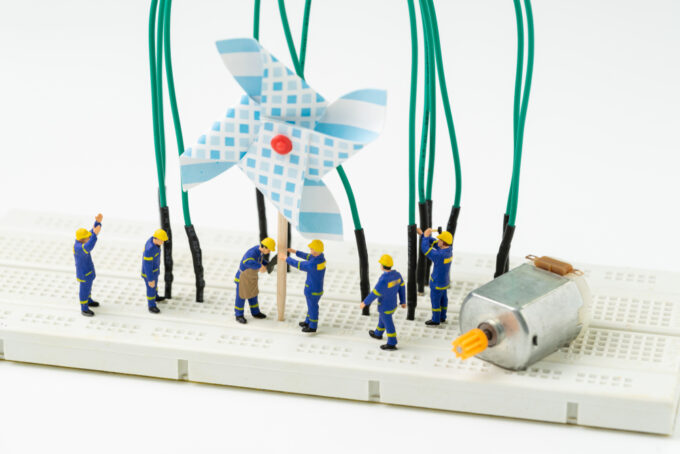
In the 21st century Japanese companies don’t need to impress so much and prefer to put a human face on what they do. But there is a lack of appealing photos that show both Japanese and non-Japanese people working together in a natural way. Many such photos feature models who are impossibly glamorous, or have distracting hairdos or beards. They are also usually doing things which I have never seen people do in an office such as all gathering around one laptop and pointing at it, or writing on glass walls.
Using photos of your own employees is one way around this. I featured in several annual reports and brochures for a Japanese trading company I worked for, as I usefully represented two types of diversity at once – being both female and not Japanese. But even then I did things which I would never do in my normal working life such as pointing at a clipboard and wearing a helmet.
We wanted to use employees in our marketing at a Japanese ICT company I worked for, to communicate our corporate brand value of genuineness. Most employees are not good actors however, so looked very awkward in the photos and videos.
Japanese corporate websites tend to be bland and abstract in design, still focusing on solidity and history and look much like the websites of other multinationals. It seems that if a company tries to be globally appealing, it loses what makes it distinctive.
British brands had similar issues in the past. British Airways tried to drop the “British” and be BA, “the world’s favourite airline”, removing the British flag from the airplane tailfins. Mrs Thatcher, who was Prime Minister at the time, objected strongly to this so the plan was dropped. Similarly, Royal Mail tried to sound more global by rebranding itself Consignia, but reverted to Royal Mail after much criticism.
Arguments also break out over the words used for the brand values and mission statement. British and American native speakers can have very different reactions to words like “ambitious”, and non-native English speakers feel left out of a linguistic battle they cannot win.
Japanese companies should not be afraid to use visuals with a distinctively Japanese appeal to their global stakeholders – customers, employees and communities. Which is why the Osaka Expo mascot Inochi no Kagayaki-kun is very clever – it is clearly Japanese, but also has the quirky personality of a living thing. I hope more Japanese organisations work with designers to come up with such humanised representations of their corporate culture, which do not have to rely on English words or fake-seeming photographs.
This article was originally published in Japanese in the Teikoku Databank News on October 14th 2020


Leave a Reply
You must be logged in to post a comment.