Search results for: “toshiba”

  • The Olympus scandal – has anything changed since then?

    The Olympus scandal – has anything changed since then?

    Unfortunately Michael Woodford did not answer the question in the title of the talk, which he gave to the Japan Society this week.  It was pretty much the same talk I heard 3 years ago, only even more melodramatic and self dramatizing.  But from what he said, I assume his answer would be that nothing has changed, if  loyalty to seniors in Japanese companies continues as an excuse to cover up fraud. And certainly, with the recent frauds and cover ups in Toshiba, Asahi Kasei and Toyo Tire and Rubber, it’s hard not to worry that there is something rotten at the heart of Japanese corporate governance.

    Woodford rather let his (understandably bitter) personal feelings towards former Olympus Chairman Kikukawa get in the way of two key points I felt.  Firstly that Kikukawa was in turn covering up for his predecessor and his predecessor’s predecessor’s mistakes – it was not just about preserving his prestige and his (for a Japanese President surprisingly high) salary.  So many Japanese corporate scandals turn out to have roots in previous generations, making it extremely difficult and perilous for successors to do anything about them, as the Japanese people sitting near me at the dinner afterwards pointed out.  Secondly, that Kikukawa was able to get all the other directors and employees in the know to collude, not just out of their personal loyalty to him, but their fear that if the fraud was exposed, the consequences of the shame upon them and on Olympus would mean the end not only of their careers but of the company and all its 1000s of employees’ livelihoods.

    The fact that Olympus survived is actually a vindication of Woodford’s approach, of public confession and resignations. But he is so insistent on making himself out to be a martyr, abused by “uncle” Kikukawa and threatened by yakuza, who nonetheless loves Japan (he kept insisting), that he rather lost the governance argument in all the embroidery of his story.

    I asked him at the dinner afterwards if, rather than be a lone crusader, he had tried to get any of the Olympus directors that he says he knew as friends for 30 years or his other corporate friends in Japan (he was alerted to the fraud by a Japanese senior executive in another company) to advise him what to do, even work with him to get the problem sorted, but he said they all told him to shut up.  Actually, I felt a sneaking sympathy towards them by the end of the evening.

  • Octopus balls to Tokyo – why it matters where your company is from in Japan

    Octopus balls to Tokyo – why it matters where your company is from in Japan

    Most countries have rival cities – usually the official capital city versus other cities which consider themselves to be the real business, historical or cultural heart of the country – think London versus Manchester or Birmingham, Berlin versus Dusseldorf or Frankfurt, Rome versus Milan, Madrid versus Barcelona.  Japan is no exception and the rivalries go way back into history.

    Kyoto used to be the capital of Japan, before Tokyo (or Edo as it was then) began to usurp it in the 17th century.  If you ask Japanese people today about Kyoto, they joke that Kyotoites still think Kyoto is the real capital of Japan, and the Emperor is just temporarily visiting Tokyo (he moved there in 1868, when Tokyo became the official capital) – and will return one day.

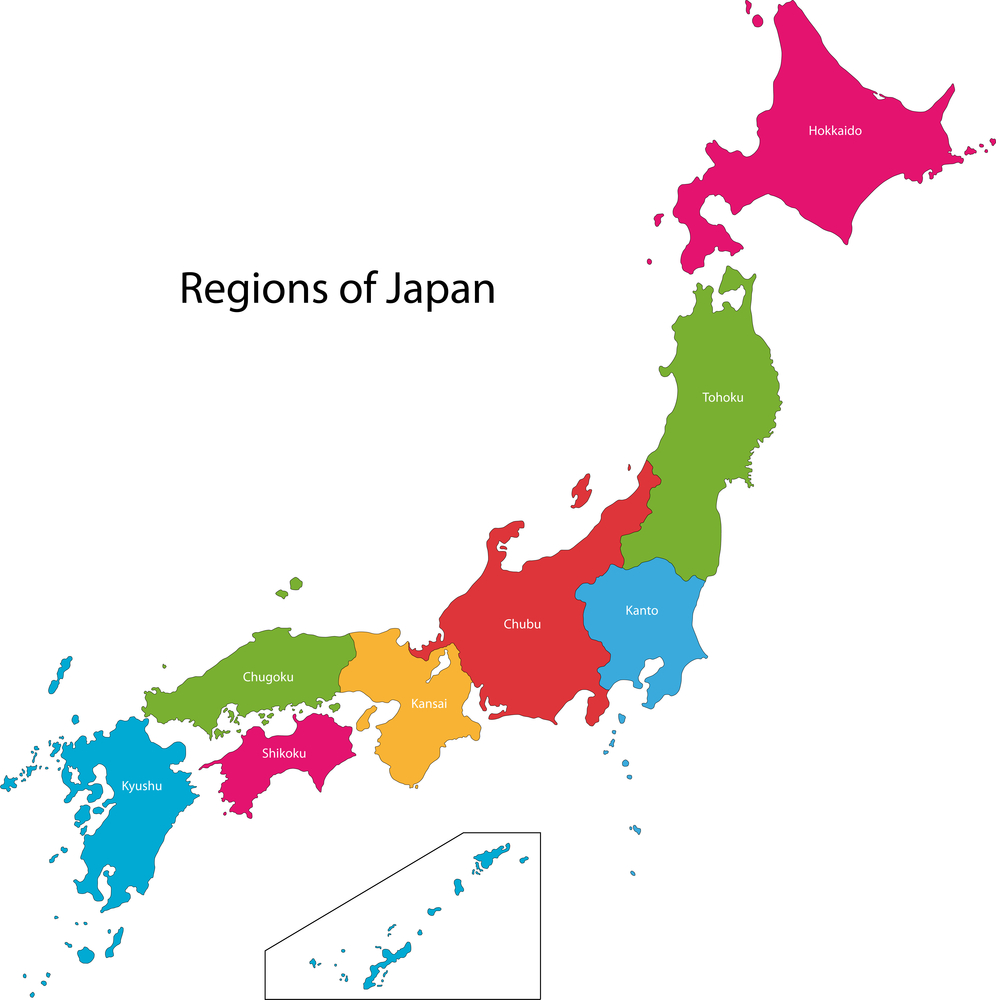
    Tokyo literally means the Eastern Capital and is part of the Kanto region, where the ruling feudal Tokugawa shogunate was based from the 17th century.  Kanto means East of the Barrier (usually considered to be the Hakone checkpoint) and Kansai – the region where Osaka, Kobe and Kyoto are based – means the West of the Barrier (originally the Osaka Tollgate).

    Before Kyoto’s reign as capital for a 1000 years, Nara (also in the Kansai region) was the capital and seat of the Emperor but is now a quiet backwater, more visited by tourists than business people.  Kobe is the other main city in the Kansai region – a port with a strongly cosmopolitan feel and very close to Osaka geographically.  Whilst Kyoto remains aloof and quietly superior (and has some very successful high tech companies of its own such as Kyocera and Nidec), the real battle now in business culture is between Osaka and Tokyo.

    Osakans see Tokyo as standardizing, dull and full of bureaucrats and view Osaka (which historically had very few samurai but plenty of merchants) as the real money maker, with vastly superior food.  Many of Japan’s celebrities, comedians and musicians come from the Kansai region too.

    So what does this mean for corporate cultures?  Osaka companies often have merchant roots – the joke goes, when you meet an Osakan, you don’t ask “how are you” (ogenki desuka) but “how’s business” (moukarimakka).  To which the correct response is “bochi bochi denna” – a wonderfully vague way of giving nothing away, like saying “plodding along nicely thank you”.  Osaka companies are brash, tough negotiators and mean with the money.  “They’d skin the fleece off a gnat” said one British engineer to me, describing his colleagues in the Osaka HQ of a consumer electronics company.

    Tokyo companies are gentlemanly but at the same time highly political.  You need to have a good understanding of their organisation, the factions and the individual relationships to understand how to get things done.  Mitsui and Mitsubishi, both Tokyo based corporate groups, are distinguished by the saying “Mitsui  is people – Mitsubishi is the organisation”.  It’s hard sometimes to understand how exactly this is different, but it seems to boil down to the idea that if an individual is powerful enough at a Mitsui group company, they can get things done, whereas at a Mitsubishi group company, the whole organisation has to support an action.

    The other main corporate groups, Sumitomo and Itochu, are Kansai based companies.  Both have strong “mercantile” roots – Sumitomo in metals trading, hard-nut, conservative and domestically focused and Itochu – strong in fashion and consumer goods, and seen as the more maverick, progressive and international in outlook.  The regional cultural differences don’t seem to have been that strong between Sumitomo and Mitsui as various mergers have taken place between their respective member companies, particularly in financial services.   However regional cultural differences have definitely had an impact on Astellas Pharma, the product of a merger between Yamanouchi (Tokyo) and Fujisawa (Osaka).  Apparently many Fujisawa employees were horrified that Yamanouchi was going to be the dominant partner in the merger.  Fujisawa had a strong tradition of innovation and had regarded Yamanouchi as “Mane-nouchi” (Mane = imitation) – a bunch of play-safe Tokyo bureaucrats.

    Those who know Japan well will have spotted that there is an important region missing from this analysis – Chubu.  Literally and metaphorically this is the midlands of Japan.  Just like the Midlands in the UK it is the historic heart of the car industry.  Nagoya is the main city, and teased just as Birmingham in the UK is for being ugly and soullessly modern.  The area has the last laugh though, as it is the most wealthy in Japan – thanks to the enduring success of Toyota (so mighty their home town was renamed Toyota City) and its corporate group of suppliers such as Denso.

    So, where are the top 30 Japanese companies in Europe from?

    Kanto/Tokyo based companies:

    • Asahi Glass
    • Astellas (but Fujisawa originally Osaka)
    • Canon
    • Daiichi Sankyoshutterstock_36509791
    • Fujifilm
    • Fujitsu
    • Hitachi
    • Honda
    • Kao Corporation
    • Mitsubishi group
    • Mitsui group
    • Nissan
    • Nomura (but was Osaka originally)
    • NTT group
    • NYK group
    • Olympus
    • Ricoh
    • Sony
    • Toshiba

    Kansai based companies:
    • Horiba (Kyoto)
    • Nidec (Kyoto)
    • Nippon Sheet Glass (Sumitomo Group)
    • Omron (Kyoto)
    • Panasonic (Osaka)
    • Sharp (Osaka)
    • Sumitomo group (Osaka)
    • Takeda Pharma (Osaka)

    Chubu based companies:
    • Denso
    • Seiko Epson
    • Toyota

    Chugoku (Hiroshima etc) based companies:

    • Fast Retailing/Uniqlo


    [download_after_email id=”6107″]

  • The Bubble Gang – what became of my cohort in Japan

    The Bubble Gang – what became of my cohort in Japan

    In the UK I would be regarded as part of Generation X but in Japan I am in the Bubble Gang, of people aged 45-49 who joined a major Japanese company straight out of university between 1988 and 1992 – at the very end of Japan’s economic “Bubble Era”. I graduated in 1988 but did not join Mitsubishi Corporation until 1990, spending two years at a US PR company first. And actually, because I transferred to Mitsubishi’s Tokyo headquarters in 1992, my company ID number started with 92, and I was therefore regarded as being a member of the 1992 graduate intake, despite my protests.

    After a period selling building materials in Japan, I transferred to the HR department, where we tried to set up an international HR system which was intended to make the year of joining less relevant and therefore Japanese traditional seniority based promotion less rigid. This was meant to ensure non-Japanese, mid-career hires had more chance of being promoted appropriately, but twenty years on, elements of the old system still persist in Mitsubishi and elsewhere. I was given the title of manager at the time, but didn’t really manage anything in the Western sense of the word – having no team or budget under my control.

    If I had stuck with the company into my late 30s I may well have become a ‘proper’ manager, attaining the kacho (team leader or section chief) grade under the Japanese system, and who knows, ten or so years later maybe even made it to bucho (General Manager – head of a department) as some of my friends from that time have recently done.

    Contemplating that future at the age of 33, when so many of my MBA class were already running businesses, put a chill in my soul and I decided to leave Mitsubishi after 9 enjoyable years.

    It’s not often you get a chance to see how your career might have panned out if a different choice had been made, but thanks to a special feature in the Nikkei Business magazine on the Bubble Gang, I now have more insight, and it has reassured me that I probably took the right path.

    The article sets out the following phases:

    1. Entrance ceremony day 1988-1992

    So many new graduates joined – up to a 1000 in some cases – that the company has to hire the Budokan for the entrance ceremony

    1. 2-3 years on – Japan’s “Loadsamoney”

    A separate envelope full of cash is handed out at bonus time, making a 24 hour working day bearable. Hanakin (Flower Friday – the equivalent of POETS day in the UK) drinking to the small hours, including Y50,000 bottles of champagne and waving Y10,000 notes to flag down taxis

    1. 5 years on – the Bubble bursts

    It’s a slow burst, from the initial bubble burst in 1990, when asset prices started to plummet, through to 1997, with the Asian financial crisis, and the collapse of Hokkaido Bank, the Long Term Credit Bank of Japan and Yamaichi Securities. Friends start to lose their jobs. The wife wants to go back to her family.

    1. 10 years on – no team, but performance based pay introduced

    Companies like Fujitsu and Mitsui introduce performance based and potential based pay systems. You start to worry about what level of bonus others in your cohort are getting. Due to a hiring freeze, you don’t have any juniors working for you, so end up having to do admin work yourself.

    1. 15 years on – the company recovers, but your pay doesn’t

    Thanks to a cheaper yen, exports boom and the company results improve, but your pay level does not. Some of the other high fliers in your cohort make it to kacho, but you don’t. Your daughter, whom you struggled to get into a private high school, seems to have lost her mojo too.

    1. 20 years on – the Lehman Shock

    Every industry suddenly goes into recession. Elpida Memory enters bankruptcy and Panasonic and Sony are in tatters. You start to envy the old guys with their golden goodbyes and full pensions.

    1. 25 years on – what do I do now?

    Sharp seems to be on its last legs, Toshiba is hit by an accounting scandal. Is my company OK? Drinking with old friends, there are more grey hairs and wheezing than before. Even your highflier friend has applied for early retirement. Younger colleagues are looking at you, still only a kacho, coldly. Should I stay or start my own business or change companies?

    The feature then looks at the fate of one man at Sharp. He is called to a seminar by a department called “People Making”, which appears to him to be a firing squad. They show him a chart of the pay offs available to people of his age under the voluntary retirement scheme. He then has a meeting with his General Manager, who tells him to stay. His colleague of the same age is not so lucky, and is told that as there isn’t a job for him, he should contact the employment agencies who are both under contract to Sharp to assist with re-employment, elsewhere.

    It seems to be a repeat of the mid 1990s, when HR departments used similar tactics to get rid of the bulge of post war baby boomers, who joined companies in the late 1970s. Apparently the Bubble Gang are the biggest cohort in most companies, comprising 1/6 of the total employees, but only 1/3 have made it to kacho or bucho level.

    In response to this, over 60% of companies surveyed by the Nikkei have reviewed their seniority based pay system or introduced voluntary early retirement schemes. Conversely, 59% of the Bubble Gang, the highest percentage of all the cohorts, feel their company has betrayed them – either because they were not promoted as expected or their pay level is not as they hoped. However the vast majority want to continue working for their company, at least for the time being. No surprise really, because you have to wonder how easy it is going to be for someone who has worked for the same company for 25 years to find a job elsewhere.

  • Shazai and the art of being a corporate shame magnet

    Shazai and the art of being a corporate shame magnet

    [playht_player width=”100%” height=”175″ voice=”Lily”]I let out a quiet cheer recently when Mitsubishi Materials, a sister company to my old employer Mitsubishi Corporation, started down the road of apologising for using slave labour in WWII. I used to be on the receiving end of campaigns for apologies and compensation from British Prisoners of War (PoWs) when I was in corporate communications at Mitsubishi Corporation and had many debates with my Japanese colleagues on what the right response might be.

    Mitsubishi Corporation is a completely different company now in terms of ownership and structure to the Mitsubishi conglomerate during the war. The founding Iwasaki family was, however, not only pro-British, but also Iwasaki Koyata, the President during the war, was liberal and progressive in inclination, and rather bravely (given that other business leaders were assassinated for not being supportive of the militarist coup) spoke out against the war. The view amongst many Mitsubishi people after the war was – it was the government that forced these actions on Mitsubishi then, and it was the government that rightly said sorry and paid compensation to the PoWs afterwards. If there was a need to punish Mitsubishi as well, then the fact that the Iwasaki family and most of the senior managers were removed from their posts and the conglomerate was broken up under the Allied Occupation is surely sufficient.

    Why apologise when it is not your fault – and wouldn’t such an apology be meaningless, almost insulting anyway? Actually there is a word in Japanese for apologising when it is not your own personal fault, but some kind of collective acknowledgement of responsibility is needed – hansei. It means reflection on what went wrong, an expression of regret for it having happened – “it shouldn’t have happened” and, most importantly, a commitment to take action to make sure it doesn’t happen again. You can see why successive Japanese prime ministers who weren’t personally involved in the wartime government might have thought this word adequate, as it appears to reiterate Japan’s commitment to remain a pacifist nation.

    However equivalent words with the same linguistic roots exist in Chinese and Korean languages and consequently, Chinese and Korean activists do not accept hansei as being strong enough. The problem is it doesn’t contain enough shame. Owabi is a stronger word for “apology”, and contains a character which involves the symbol for “household”. This was the word used by previous Prime Ministers Tomiichi Murayama and Junichiro Koizumi, in addition to “hansei”, when apologising for Japan’s actions during WWII. By saying owabi, you are being remorseful and acknowledging the shame brought upon your group – whether it be your family, company or country.

    Whether current Prime Minister Shintaro Abe will or won’t use “owabi” in his speech marking 70 years since the end of WWII has added poignancy, because not only will he be recognising the shame brought upon Japan (which could argue with some justification that at least it didn’t vote for its fascistic government in the 1930s, unlike Germany) but there is a family angle too. Abe is the grandson of Nobusuke Kishi, a Class A War Crimes suspect who was never tried for his part in the Japanese occupation of Manchuria and the use of Chinese forced labour, and went on to become Prime Minister himself in the 1950s.

    In societies with elements of Shintoism or Buddhism or Confucianism underpinning it, as in Japan, Korea and China, apologizing on behalf of your predecessors or ancestors is hard to do. Not so much out of a sense of unfairness, but because you are visiting shame upon their memory, when they are no longer alive themselves to deal with it, and so the shame will simply be visited upon you and your peers and family. It feels like an unproductive humiliation, to be forced to attack your forebears, whom you were taught to respect.

    The more usual pattern in Japan is for the father or elder to apologise for the sins and errors committed by the junior family members. This was seen most recently when Akio Toyoda apologised following the arrest of Julie Hamp, his personal appointment as Toyota’s global corporate communications chief, for illegally importing opiates into Japan. He even referred to her as one of his own children and then apologised for causing consternation to everyone, rather than any breaking of the law. The words used were yet another way of saying sorry – taihen moushiwake gozaimasen – “there is no reasonable explanation/excuse”. With this he became the shame magnet, taking the hit for Toyota not having somehow prevented her from making a mistake.

    Universalist Westerners found this apology perplexing. Their view is that she was an idiot for not realising what the law was, or a criminal for deliberately breaking it. She should therefore be punished, and then maybe can rebuild her career after redemption. Universalists believe the rules are the rules and apply to all, without exception, in contrast to particularists, who take each case on its own merits, depending on the relationships of the people involved.

    The Judaeo-Christian view as represented in the Old Testament is somewhat confused – both stating that the sins of the fathers will be visited on the third and even the fourth generation, but at the same time making it clear that the person who sinned is the soul that must take responsibility and be punished. Modern Western ethics, while seeing it as unfair that future generations should be punished for past generations’ wrongdoings, also insist that current generations acknowledge the crimes of the past in order not to repeat them.

    In this sense, there is a common thread between East and West. Shame and admission of past guilt are both mechanisms for making sure that the sin is not committed or recommitted – because it is not just you, but your sons and daughters who will suffer the consequences.

    By choosing to apologise in English, in the USA, Mitsubishi Materials avoided an oriental linguistic and ethical minefield, for the time being. The question of whether or not Mitsubishi Materials should accept shame will undoubtedly come up when, as they have promised, they apologise to Chinese and Korean forced labour survivors. I sense they were able to start with the apology in English as a warm up to this, with coaxing from Yukio Okamoto, a retired diplomat and renowned smooth operator who is now an external director at Mitsubishi Materials. He does not have to worry about the shame brought on his predecessors, as he is not an insider, and he also probably made sure the word “remorse” was used in English. I would imagine he also understood well the Western mentality that it is not about a Buddhist sense of collective shame so much as a Christian individualistic need to confess sins, publicly take the punishment and thereby gain redemption, allowing all to move on. Or as popular psychology would have it, giving the victims a sense of closure, which will make everyone feel better as a result.

    Post confession, there is a sense of relief and a way to move on and move forward – and that is why I cheered when I read the coverage of Mitsubishi Materials’ apology – everyone behaved with dignity and sincerity and there was a sense of positivity. The Japanese participants seemed to have overcome the fear that with shame, there is no redemption, it endures, and it affects the whole group.

    The worry is that if the shame magnet-father figure is not strong enough, the wider society will keep pressing until a bigger magnet is found. This is currently being played out with Toshiba’s accounting scandal. Despite the top executives resigning, bowing down for a record breaking 15 seconds of shazai (another word for apology, which contains the character for sin or guilt) and using the word owabi, the pressure keeps on. Hardly a day goes by without someone in the media questioning whether the root causes have really been exposed and whether enough has been done to redress them.

    When the Nikkei announced its acquisition of the Financial Times, many Westerners commented that the Nikkei gave Olympus too easy a ride for its financial misconduct, unlike the Financial Times’ investigative approach. Compared to Toshiba, Olympus is not as iconic a company in Japan, therefore there was less sense of a wider reaching shame. Toshiba, however, was one of the Denden Kousha ‘family’ (suppliers to NTT when it was part of the ministry of telecommunications) and continues to be very tangled up in government industrial policy – most recently in joint ventures with another shame magnet, TEPCO of Fukushima infamy, acquiring a majority share of US nuclear power company Westinghouse in order to promote Japanese nuclear power capabilities overseas. Hisao Tanaka, the President who led the apologies and resignations, is seen as the fall guy. Even though his predecessors also resigned, the worry is that the shame is not just on Toshiba, but the Japanese political-industrial nexus as a whole. As Mitsubishi Materials has shown, the industrial side of Japan is beginning to find their shoulders are broad enough to take the hit and move on, whether the political side is too, Abe is about to demonstrate.

  • “Japanese managers have been brainwashed by the West” and should aim to be ‘virtuous companies’ instead

    “Japanese managers have been brainwashed by the West” and should aim to be ‘virtuous companies’ instead

    An interview with George Hara, currently Chairman of Alliance Forum and former board member of various Silicon Valley start ups as a venture capitalist kicks off Nikkei Business’s attempt at finding a new standard for evaluating Japanese companies, beyond the shareholder capitalism model.

    Instead of “Good/Best company”or “Great Place to Work” and all the other awards you can get, the Nikkei proposes ‘Yoi‘, which can be translated as ‘good’ but is probably better translated as ‘virtuous’.  They even deliberately write the headline ‘Yoi kaisha‘ (‘Virtuous company’) in Japanese brush stroke calligraphy.

    Hara doesn’t think the term ‘stakeholder capitalism’ quite covers what  he and the Nikkei are getting at, even though he says the company should be  measured on the benefit to employees, customers, partners and regional society as well as shareholders.  He prefers ‘shachu‘ (which my dictionary translates as clique or troupe) or public benefit capitalism – meaning that all the concerned parties have a common objective.

    He particularly criticises the way companies in the US – the home of full blooded shareholder capitalism – such as Hewlett Packard or Dupont find that putting shareholder interests first means firing people even when there are record breaking profits, or not being able to invest in long term projects to develop technologies which will benefit society.

    Japanese corporate leaders used to be much more inclined to public benefit capitalism, and the cause is not lost yet, says Hara – citing that when he showed the great and the good of the IMF around Tokyo’s underground system recently they were full of praise for how clean, orderly and busy a city supposedly suffering from a 20 year recession was.  Japan should be setting its own standard for the rest of the world, he feels.

    Following on from this, Nikkei Business have come up with a Yoi company metric, based on profit, changes in employee numbers, corporate tax contribution and share price over the past 10 quarters for 3841 Tokyo stock exchange listed companies and the top 10 are:

    1. Softbank
    2. Fast Retailing* (Uniqlo) (Yanai, the founder and also board member of Softbank is quick to throw this back in the face of those who have termed Fast Retailing a “black company”)
    3. Keyence
    4. Fanuc (the current target of shareholder activist Daniel Loeb)
    5. Yahoo
    6. Aeon Mall
    7. Rakuten
    8. Mani (medical devices)
    9. Japan Tobacco
    10. Takeda Pharma *
    11. Central Japan Railway
    12. KDDI
    13. ABC-MART
    14. Sumitomo Real Estate
    15. USS (car auctions)
    16. Astellas Pharma*
    17. Toyota*
    18. SMC (automatic control equipment)
    19. Nakanishi (motor spindles, micro grinders)
    20. Trend Micro (security solutions, founded in the USA, HQ in Japan)
    21. Sysmex (healthcare)
    22. Hisamitsu Pharma
    23. Komatsu*
    24. Terumo
    25. Canon*
    26. Honda*
    27. Makita
    28. Nitori Holdings (furniture)
    29. Shimano
    30. J Trust

    Other of our Top 30 Japanese companies in Europe* in the top 100

    • Bridgestone #41
    • Denso #46
    • Sumitomo Electric Group #51

    In our Top 30 in Europe but not in the Top 100 Yoi companies:

    Fujitsu, Ricoh, Sony, Asahi Glass, NSG, Toshiba, Hitachi, Panasonic, NTT Data, NYK, Fujifilm, Olympus, Mitsubishi Chemical Holding, Nomura, Nidec, Sharp, Daiichi Sankyo, Kao, Seiko Epson

  • Does having more women managers help Japanese companies globalise?

    Does having more women managers help Japanese companies globalise?

    The question of whether having more women managers would help Japanese companies to globalise was raised, but not discussed in depth due to time constraints, at a dinner I attended, hosted by a delegation to the UK from Japan Women’s Innovative Network – a Japanese non profit organisation.  An impressively large number of younger women (70) had been sponsored by their companies to come to the UK for a week, visiting various UK companies such as British Telecom and AON, to study global leadership and diversity.

    My view is yes, it does help Japanese companies to globalise if they have more (Japanese) women managers, for a couple of reasons.  Firstly, it helps Japanese companies and corporate culture seem less “alien” to Western companies if there are more women in management positions in the headquarters, and secondly, because the adjustments Japanese companies will have to make in order to incorporate a more diverse Japanese workforce (gender or other diversity) will help them be more inclusive of “non-Japanese” diverse groups.  Attitudes to overtime and working from home would be a couple of areas needing adjustment I would suggest.

    On the first point, the question of the role of women in Japanese companies is frequently raised in the cultural awareness sessions we conduct in Europe for Japanese companies.  Japan never does well in surveys of the position of women in society – see the most recent World Economic Forum Gender Gap report, placing Japan 114th out of 144 countries (updated for 2017).  While you can question the methodology of such surveys, then along comes another one, conducted amongst Japanese women, showing that 1/3 of them want to be full time housewives.

    Which leads me to point out in our training (and in the Advancing Gender Diversity day I spoke at for Hitachi’s European group companies – presentation on SlideShare here) that Confucian values remain strong in Japan – it’s not that women are seen as somehow less capable than men, more that there are expectations around the role they should fulfil in society.

    Prime Minister Abe is trying to square a circle with Abenomics, by trying to raise the birthrate but at the same time encourage women to go back to work – aiming to have 30% of senior positions in all parts of society, by 2020, through improving childcare and parental leave.  But with the amount of pressure on women to be good housewives and stalwarts of the Parent Teachers Association, no amount of improved childcare and leave is going to counteract this or compensate for both parents doing overtime until late at night.

    Although the Japanese government can directly change the economy with the first and second arrow of Abenomics, through fiscal and monetary actions, the third arrow of structural reform requires nudging, or even shaming Japanese companies into doing the right thing – legislation alone will be hard to push through and even harder to enforce.  So Abe launched in February the “Nadeshiko” * scheme, recognising firms which are making efforts to improve the working environment for women.

    Firms given the Nadeshiko “brand” in February of this year include Kao, Nissan, Fast Retailing (Uniqlo) and Daikin.  The scheme is not the only initiative taking place – various other surveys have been done of best places for women to work and the Hitachi Gender Diversity Day was partly inspired by the President of Hitachi, Hiroaki Nakanishi, declaring recently that the company aims to more than double the number of women managers by 2020.

    Other recent surveys have named Benesse (no coincidence that the founder of Benesse is also the founder of J-WIN) as the most career friendly for women and companies such as Toshiba, KDDI, Bank of Tokyo-Mitsubishi UFJ and NTT have all announced targets for women managers.  The Nikkei group has also jumped on the bandwagon, with a seminar series aimed at aspiring women managers (and even has a magazine “Nikkei Woman” ) and published its ranking last year of best places for women to work, which put foreign companies at the top (IBM Japan, Procter & Gamble) along with 2 life insurance companies, Takashimaya department store, Daiwa Securities, Sony, Panasonic, Bank of Tokyo Mitsubishi UFJ, Fujitsu and Sharp.

    * Nadeshiko is a type of pink danthius flower associated with women in Japan. It was adopted as a nickname by the women’s soccer team of Japan on its way to becoming the first Asian team to win the World Cup, in 2011.

    The original version of this article was published in Japanese in the Teikoku Databank News in 2014.  An English version of it appears in Pernille Rudlin’s new book  “Shinrai: Japanese Corporate Integrity in a Disintegrating Europe” is available as a paperback and Kindle ebook on  Amazon.

  • The man who turned Hitachi around – boiled frog, donburi and battleships

    The man who turned Hitachi around – boiled frog, donburi and battleships

    The Hitachi group of companies, estimated to be the second biggest company in Japan in terms of employees after Toyota, and 4th in terms of revenue, has turned itself around considerably since 2009, when it chalked up “the largest loss in Japanese manufacturing history” of around $8bn.

    It led to the premature ousting of Kazuo Furukawa as President,  replaced by Takashi Kawamura as CEO and Chairman, who at 69 was 8 years older than Furukawa and must have thought his career was in a graceful curve towards retirement, as chairman of Hitachi Maxell and Hitachi Plant Technology.

    Kawamura handed over the Presidency to Hiroaki Nakanishi in 2010, and continues as Chairman.  A series of articles in the Nikkei Business magazine recently describe how he turned the conglomerate around to profitability in two years.

    He describes how he saw Hitachi in 2009 as a “boiled frog” whereby each division was fooled by the cosy feeling of the slowly heating water, unwilling to make radical changes until it was too late.  Japanese like to stick with things as they are, he comments.

    Corporate governance was not working at Hitachi in 2009 he says.  All the group companies were run by an Old Boys network from the Hitachi main company.  If a younger President had been appointed, and wanted to change things, it would have been difficult to persuade his seniors.  As Kawamura was older than most of the other presidents, he was able to push through reforms.

    He describes Hitachi as having a  “donburi” style of management [donburi is a rice with toppings dish] whereby the loss making  businesses were covered by the profitable ones.  “Bad businesses should be brought out into the open and a judgement made as to whether they can be reformed or scrapped”.  This was forced upon Hitachi by the Lehman Shock but Kawamura was also more able to do it because he had been in a subsidiary of Hitachi.

    Employees used to believe Hitachi was the unsinkable battleship.  It survived 2 oil shocks without much impact on its financials.  Japan’s big three electrical companies – Hitachi, Toshiba and Mitsubishi Electric used to be known as the wandering samurai, the merchant and the feudal lord respectively.  A wandering samurai thrives when times are good, but is not flexible about change when it’s necessary.

    There was also something known as “Hitachi Time” – whereby major decisions had to take account of so many people, including Old Boys and therefore were very slow to be reached.  In 2009, Hitachi was renamed the sinking battleship.  Kawamura uses a story he heard about the British Navy,as a metaphor for what had happened to Hitachi.  British battleships were taking on about an inch of water a year, which will caused the ships to lose speed, so in the end, they are rusted up and useless.  Hitachi had made losses in 2001, 2006 and 2007 as well as in 2009.  Apparently the reason the the battleships took on water is that they had become heavier every year.  This was due to an accumulation of personal possessions by the staff on board. So the British Navy is now very strict about what personal items can be brought on board.

    (to be continued – what Kawamura did to reform governance)