Rudlin Consulting Rudlin Consulting
  • About
  • Services
  • Blog
  • Clients
  • Publications
  • Contact us
  • Privacy
  • English
  • 日本語
  • About
  • Services
  • Blog
  • Clients
  • Publications
  • Contact us
  • Privacy
  • English
  • 日本語
  •  
Lessons from the decline of Japanese electronics manufacturing in the UK for the automotive industry

Although around 10,000 manufacturing jobs in Japanese electronics companies in  the UK were lost in the 1990s-2000s, about the same number have been added, either created by Hitachi Rail or in the automotive or air conditioning sectors. Japanese electronics companies such as Sony, Fujitsu, Panasonic, NEC, Mitsubishi Electric and Hitachi still all employ thousands of people in the UK.

It is a story of how industrial policy cannot ultimately stop product obsolescence, shifts of manufacturing to cheaper locations or the transformation from mass manufacturing of products to supply chain ecosystems providing solutions and services. Recent investment from Japan in the UK is in services and infrastructure, for the domestic UK market, and at least for now, the EU. But this has meant fewer jobs in the areas that voted Brexit.

Bunging £10s of millions at Nissan to compensate for tariffs was not going to stop these shifts. Over 10% of the 7,000 Nissan employ in the UK are working in design centres, not on the factory floor. Being a gateway to the EU now, even in manufacturing, needs regulatory alignment and free movement of people so suppliers can visit and base themselves at client sites and provide services and ship prototypes around the region.

The shift to electric vehicles means the car companies have to cooperate more than ever with ICT and electronics companies. Many of these ICT and electronics companies have joint European HQs spread across the UK, Netherlands or Germany, with senior management and teams scattered across the region, working virtually or at customer and partner sites. They have also integrated back office and technical support into cheaper locations such as Portugal or Poland.

Some examples of the history of Japanese electronics companies in the UK over the past 30 years:

Fujitsu

Fujitsu is the biggest Japanese employer in the UK with over 8,000 employees, 2,000 down on a few years ago, as it grows delivery and support centres in Portugal, South Africa and India and downsizes in the UK. It acquired 80% of UK’s ICL in 1990 (increasing to 100% 1998). ICL had 2,000 UK employees, 26,000 worldwide, with mainframe and PC factories in Letchworth, Manchester and the Midlands.  ICL was born out of 1960s industrial policy – the British government had a 10% stake in it for a while. To this day, Fujitsu provides a lot of  government IT infrastructure and services. Its last computer factory in Europe, in Augsburg in Germany, will shut down in 2019, retaining manufacturing in Japan only.

Hitachi

Hitachi used to employ around 1,000 people in its factory in Aberdare, Wales, making cathode ray TVs, video recorders and microwave ovens. It was shut in 2001, blaming low price competition from Asia. Hitachi has since shifted away from consumer products to infrastructure. In the UK it acquired the now stalled Horizon Nuclear Power projects in Wylfa and Oldbury and set up Hitachi Rail in the UK as the global headquarters with a new factory in Newton Aycliffe, employing nearly 2,000 people.

Hitachi employs another 4,000 people in the UK services sector – for example credit and loans company Hitachi Capital, IT consultants Hitachi Vantara and Hitachi Consulting and Vantec, providing logistics for Nissan.

Sony

Sony came to the UK in 1973, and had 2 plants in Pencoed making cathode ray TVs, employing 1,800 by the 1990s. As these started to shut down, Pencoed transformed itself into an innovation centre, developing and producing broadcast and professional equipment, employing 500-600 people.

Sony has been restructuring across Europe recently, consolidating back office functions into cheaper regions. It was still manufacturing DVDs in Enfield in the UK but this was shifted to Austria in 2017/8, reducing capital in UK by over £250m. It still employs nearly 2,000 in its music, home entertainment and interactive businesses in the UK.

Ricoh

Ricoh still has a factory in Telford (and two other plants in UK), employing the same number of people in 2018 as in 1991 – around 700 – but the product range has shifted from faxes to printers and consumables.

Mitsubishi Electric

Mitsubishi Electric acquired Apricot Computers in 1990, with a plant in Glenrothes and R&D in Birmingham, employing 442 in 1991. Glenrothes was shut in 1999, blaming cheap competition in Asia. It still has manufacturing in the UK, employing nearly 1,000 people (many of whom are non-UK EU citizens) in Livingston, at its airconditioning plant.

Panasonic

Panasonic, formerly known as Matsushita, had many plants in UK from 1970s to 1990s, employing 1,621 in Cardiff (TVs, microwaves), 469 in Gwent (electric typewriters, carphones), 160 in Port Talbot (components for TVs, video recorders, microwaves) and 63 in Reading (fax machines).  Most Matsushita/Panasonic plants in UK shut down in early 2000s, with production shifting to Eastern Europe. 1 plant remains in Wales, employing 400 people, manufacturing microwave ovens but also conducting R&D into fuel cell technology.  Panasonic has acquired Belgian IT company Zetes and Spanish automotive supplier Ficosa recently.

NEC

NEC is also shifting into IT services via European acquisitions. It used to have a semiconductor plant in Livingston (Silicon Glen, remember that?) which employed 1200 by 2001, when it shut down. NEC UK employees now number over 1000 again thanks to the acquisition of Northgate Public Services, in 2018.

Others

Oki Electric were relatively late in shutting down their Cumbernauld printer plant in 2018 – and now all production is in Asia.  JVCKenwood shut down their East Kilbride TV/CD player factory in 2008 and shifted production to Poland. Pioneer closed its CD player/TV factory in Wakefield in 2009. Toshiba had a factory in Plymouth, which used to make TVs, video recorders, but is now owned by a US company and makes air conditioners. Sharp (now owned by a Taiwanese company) still has a factory in Wrexham as does Brother.


For more content like this, subscribe to the free Rudlin Consulting Newsletter. 最新の在欧日系企業の状況については無料の月刊Rudlin Consulting ニューズレターにご登録ください。

Read More
The end of Swindon is also part of the end game for Honda President Hachigo

Shutting down the Swindon UK factory was not the only announcement Honda made in February 2019.  They are ceasing production of Civics in Turkey, merging their motorbike production in Brazil, bringing R&D for motorbikes in-house and also making some unusual appointments at the executive level.
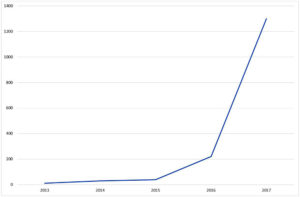
Diamond magazine says this is Honda entering the final “mop up” phase now that Takahiro Hachigo is entering his fifth year as President. Japanese Presidents usually stay in post for six years, so this is Hachigo’s end game for revising the global expansion strategy of his predecessor, Takanobu Ito. In particular he  has been focusing on removing excess production capacity, trying to improve profitability and putting a strategy in place for a “post Hachigo” structure, which will enable Honda to survive in an era of huge change for the car industry.

The uncertain future brought about by Brexit was one factor, Diamond magazine says, but more than that, it was the poor performance of the European business within Honda’s “6 region global structure”.  Honda only has 1% or less of the European market share. The Japan-EU EPA in force from February gave further impetus to the decision.

From 6 to 3

Honda started engine production in the UK in 1985, whole cars from 1992 and then in 2001, designated as the European production base, production capacity was increased to 250,000 vehicles a year.  However production in 2018 was only 160,000 vehicles, of which 55% was for the US market.  The gap between capacity and demand in Europe meant profitability was weakening.

It seems that Honda is looking to change course, to a tripartite structure of manufacturing in North America, China and Japan as it enters the electric vehicle era.  Takanobu Ito had been aiming for sales of 6 million cars globally, but was hit by quality problems, having to recall the Fit model and the Takata airbags issue, leading to a drop in sales and excess production capacity.

Hachigo began a review of the global production structure in October 2017, deciding to close the Seyama factory in Japan by 2021.  Hachigo says that this review will mean that the current global capacity of 5.4 million vehicles, at 97% utilization will by 2021 become 5.1 million vehicle capacity, at over 100% utilization.  It is expected that Honda’s annual results will show an increase in earnings but a decrease in profit. The operating profit for 4 wheel vehicles is stuck at around 4% and recent results have shown that the profitability of motorbike sales are propping up the company.

Motorbikes and personnel changes too

This is why Honda has announced that from April, instead of sales, production, development and purchasing for 2 wheeler business all being independent from each other, they will be brought together. In particular, Honda’s unusual structure, dating back to Honda’s founder, Soichiro Honda, of having R&D as a separate company, will cease for the motorcycle side.

To speed up the return to profitability for the 4 wheel business, COO and EVP Seiji Kuraishi will be appointed as head of 4 wheel vehicles, which will be reorganised from the 6 region global structure to a “Number 1” Sales division (North America, Europe, China) and a “Number 2” sales division (South America, Asia, Australasia, Africa, Middle East).

A new Mobility Service business unit and Connected business unit will be set up, to respond to “MaaS” (Mobility as a Service). Honda’s power products business will look at how to add value in “mobility” and “lifestyle” and be renamed as the “Life Creation” unit. Honda R&D will focus on new technology development to support these new units.

On the personnel front, senior managing director Toshiaki Mikoshiba will become chair of the Japan Automobile Manufacturers’ Association, senior managing director Yoshiyuki Matsumoto will step down as head of Honda R&D, with EVP Toshihiro Mibe expected to take over.   Diamond magazine hints that Mibe’s rise in the “post Hachigo” era is worth noting.

Advice to Honda UK

I’ve been asked to give some advice  by BBC Radio Wiltshire (Wiltshire being where the Honda UK factory is based) this coming Monday morning (25th February 2019) to a delegation from Honda UK who are going to Japan to make their case.  This may be a “grandmother egg sucking” situation, but my advice will be:

1. Communication

If possible, get any documentation you are going to present translated into Japanese.  If not (and in any case) put as much of it in a visual, graphical format as possible. Send material in advance, to give Honda Japan time to read, digest and discuss.  Otherwise you will just be politely received, but no outcome.

2. Know Japan HQ’s interests

Contact as many people as you can in Honda Japan, informally, to get their advice and input, and steer you towards what Honda Japan’s interests might be.  I hope this blog post helps, and there are a couple of other blog posts I have written that might be useful.

Try not to focus too much on guilt-tripping about the jobs being lost, or proving how manufacturing Civics in the UK could be profitable. That ship has already sailed, and with Brexit outcomes no clearer, and trust destroyed in anything British politicians might promise, it won’t be credible.

3. A process might be an outcome

There needs to be a process to rebuild trust in the UK – the best you might be able to get is a timeline and mechanism for reviewing the situation over the coming years, as Brexit unfolds, and Honda itself develops new technology.  Even then, automotive manufacturing for the European market has been moving eastwards, and also to North Africa. UK Honda workers may need to offer to be open to relocating to any new factory.

There might be a story about developing and manufacturing new electric vehicle models for the European market.  Hachigo has said that he sees Europe as the heart of global car culture.  The future for Swindon might be rather like Sony in Pencoed – moving away from mass market production to high end, high value add – it won’t employ as many people, but at least some jobs could be saved.

For more content like this, subscribe to the free Rudlin Consulting Newsletter. 最新の在欧日系企業の状況については無料の月刊Rudlin Consulting ニューズレターにご登録ください。

Read More
Forth Bridge Brexit

The British have a saying for when a job is never finished – “painting the Forth Bridge”. The Forth Bridge is a nineteenth century railway bridge, nearly 2.5km long, near Edinburgh. It has a very distinctive cantilevered design, painted in red. Supposedly when you have finished repainting it, it is time to start again at the other end.

Brexit looks like a Forth Bridge for UK based businesses – just when you think you have made preparations for whatever deal is done, a fresh round of negotiations and possible outcomes appear.

My database of all the Japanese companies in the UK is another Forth Bridge.  Every time I think I have the definitive picture, I find more data to add.  There is a free online government database, Companies House, to which all companies incorporated in the UK must submit their annual reports.  If they are above a certain size, they must also give an account of the risks they face and what they are doing to mitigate them.

By reading these reports, I can cross check other records of employee numbers, turnover and capital. I can therefore say with some confidence that there are over 1000 Japan originated entities in the UK (including branches) and they employ over 160,000 people, with total turnover of around £100bn.  I can also see what steps Japanese companies have taken to prepare for Brexit.

Much of this has been in the news already. Those companies who are physically moving products – whether in the automotive supply chain, or pharmaceuticals or electronics – have stockpiled, expanded their warehousing and reviewed their logistics. Those companies who are in regulated sectors such as finance or pharmaceuticals have strengthened their EU bases and made the necessary applications to EU authorities for approval for their services or products.

There have also been structural changes.  Plenty of the larger Japanese companies were already in a holding company structure across Europe, with holding companies mostly in the UK, Netherlands or Germany. Electronics and trading companies are turning their UK companies into branches of EU holding companies, or turning their UK companies into “commission agents” so that the principal in a sales contract is in the EU.  Some have reduced the capital they have in the UK.

This has not caused an immediate or dramatic negative impact on jobs, but in the long run I worry about the loss of influence and budget that this may have for UK business.

The mood at the Japanese Chamber of Commerce & Industry in the UK’s New Year party was very positive, however. The message of the speeches was that Japan and the UK have so many common interests, they need to stick together. Membership of the Chamber is at a record high as new Japanese companies continue to invest in the UK, largely in domestic oriented businesses such as food, retail or public sector outsourcing, symbolised by the stunning flower arrangement provided by Aoyama Flower Market, who opened their first UK branch in London in 2018.

This article was originally published in Japanese in the Teikoku Databank News. It can also be found in  “Shinrai: Japanese Corporate Integrity in a Disintegrating Europe” available as a paperback and Kindle ebook on  Amazon.

For more content like this, subscribe to the free Rudlin Consulting Newsletter. 最新の在欧日系企業の状況については無料の月刊Rudlin Consulting ニューズレターにご登録ください。

Read More
Service sector dominates Japanese investments in the UK

Although most people think of car manufacturers such as Nissan, Honda and Toyota when they think of Japanese investment in the UK, our Top 30 Japanese employers in the UK very much reflects the way the UK economy itself has shifted from manufacturing to services.

The three car groups are still in the Top 30 – in the Top 10 in fact – employing over 18,000 people – although many hundreds of them are not actually working on the factory floor, and are design engineers or in sales and marketing.

There are over 200 companies in the Top 30 employers (each consolidated group is counted as one employer) and 15-20% are manufacturers. They employ over 33,000 (36%) of the 92,000 or so people employed by the Top 30. This reflects why countries want to retain manufacturing – manufacturers are relatively larger employers, providing decent jobs in often deprived areas, creating a ripple effect of suppliers and further jobs.

Comparing these numbers with Roger Strange’s 1991 figures given in his “Japanese Manufacturing Investment in Europe” shows that while Nissan has grown from 2,500 employees to over 8,000, Honda from 400 to over 7,000 and Toyota from 1,900 to over 3,000, some have shrunk. Sony used to employ 1,800 in Pencoed, making TVs – it is now a technical centre manufacturing high end audio visual products and employing around 500-600 people

Other companies have changed their product mix – Hitachi used to employ around 1,000 people in Aberdare, making TVs, video recorders and microwave ovens and another 500 at Maxell in Telford making audio tapes and floppy disks. Now most of its manufacturing employees are working at Hitachi Rail and there are around 85 employees at Maxell, making plastic moulded products for the food, pharmaceutical and automotive industries and another 100 or so in Horwich making engine control systems.

Some have stayed the same – Ricoh had 650 employees in Telford in 1991 making fax machines and photocopiers, and still has 650 employees there 27 years’ on, making printing devices.

Brother is in the Top 30 not because it grew its manufacturing operations in Wrexham (in fact there are only 164 people there compared to 634 in 1991) but through the other big Japan-UK investment story – acquisition. It now owns Domino Printing Sciences, who develop and manufacture printing systems in Cambridge.

Also growing through acquisition is NEC. A couple of years’ ago it seemed like it was fading out of the UK and focusing on developing markets. It was no longer manufacturing – for obvious reasons – video recorders, car telephones, TVs and faxes in Telford. But in 2018 it acquired Northgate Public Services and through its acquisition of JAE in Japan, their UK operation and now it has over 2000 employees in the UK. Other big acquisitions have been SoftBank acquiring ARM, Dentsu acquiring multiple marketing agencies, Sumitomo Rubber acquiring tyre dealer Micheldever and Outsourcing acquiring various recruitment and debt collection agencies. The reason Fujitsu is still at the top of the ranking – just – dates back to its acquisition of ICL in 1990. All, notably, service sector companies.

A final thought on the current hot Brexit topic of location of regional HQ. It’s becoming increasingly difficult to identify one country location as the sole European headquarters – I’ve left the HQ column in the chart below, largely on the basis of where the historic HQ was and where most of the key regional people are based – but many companies are moving to a more virtual, dispersed structure, with Brexit and Japanese tax haven laws providing added incentive to do so.

Free pdf of Top 30 largest Japanese employers in UK

FREE DOWNLOAD

Send download link to:

I confirm that I have read and agree to the Privacy Policy.

I would like to subscribe to the free monthly Rudlin Consulting newsletter on Japanese companies in Europe. Rudlin Consultingの在欧日系企業についての最新リサーチとレポートを掲載した無料月間ニュースレターに登録したい。

For more content like this, subscribe to the free Rudlin Consulting Newsletter. 最新の在欧日系企業の状況については無料の月刊Rudlin Consulting ニューズレターにご登録ください。

Read More
How will Hitachi weather the storms of Brexit and industry turmoil, not just in nuclear energy but also rail?

The Japanese business media is asking the question I’ve been wondering about too – what might the impact be on Hitachi Rail’s global HQ in the UK, now that Hitachi have shown they can take the tough decision to suspend their Wylfa nuclear power project, amid the continuing uncertainty of how Brexit will play out?

Toyo Keizai’s Naoki Osaka details the history of how Hitachi’s first step into the UK rail market was as a preferred bidder for the UK HS1 in 2004, supplying 174 carriages, which were built in Japan. Hitachi then won the IEP bid in 2012, for 866 carriages and a contract for First Great Western. They then invested £82m in the Newton Aycliffe factory i 2015, which is now making around 40 carriages a month for IEP and Abellio Scotrail. Not all parts are made in the UK. The 700 employees mostly do not have any rail manufacturing experience but are learning fast, according to Osaka. The 25 expatriate Japanese have been reduced to 6. Including the maintenance operations, there are now 7 sites in the UK, expecting to expand to 13 by 2020, employing around 2000 people.

Osaka was told when he visited the factory last December that there were plenty of future projects to bid for, so no worries for the future. However Diamond magazine says their Hitachi contact told them that since Hitachi lost the London deep tube bid last year and also lost their attempt to overturn the decision, they only have an order book through to the end of 2019, and no orders beyond that, as yet. Diamond describes the formerly warm relationship between Hitachi and the UK government as “frosty” as a result of both this and the failure of the government and Hitachi to agree on how to move forward on the finances for the Wylfa nuclear power project.

If there is a no deal Brexit, customs inspections will be significant for carriage manufacturing, says Osaka. 70% of the parts are made within 40 miles of the factory. So although there are fewer logistical concerns, there will be plenty of issues around rules of origin that are likely to cause supply chain problems for suppliers to Hitachi.

Furthermore, the Italian factory which Hitachi acquired in 2015 is improving productivity beyond expectations and will no doubt play an important role in developing Hitachi’s rail business in Continental Europe.

Hitachi is also keeping an eye on the Siemens/Alstom rail business merger. It may well be blocked by the EU, and as Alistair Dormer, CEO of Hitachi Rail predicted, Alstom is offering to sell of some of its businesses to avoid this, for which Hitachi could be a buyer. Hitachi was hoping to become one of the Big Three of the global rail business, with a target of Y1trn turnover – Siemens and Alstom’s merger will produce a Y2trn business. Now it has turned its back on nuclear business, can Hitachi become a global player in the rail business, in the face of storms caused by Brexit and industry restructuring?

For more content like this, subscribe to the free Rudlin Consulting Newsletter. 最新の在欧日系企業の状況については無料の月刊Rudlin Consulting ニューズレターにご登録ください。

Read More
Is “chutzpah” in Israel the same as “not reading the air” in Japan?

Japanese investment in Israel has shot up the past five years.  According to JETRO there are 66 Japanese companies based in Israel as of 2017, 16% up on the previous year.  Nikkei Business estimates the total of investment asY130bn (around $1.1bn) – the main contributor being Mitsubishi Tanabe Pharma’s acquisiton of Neuroderm for $1.1bn in 2017.

PM Abe’s visit to Israel in 2015 brought about many further visits from Japanese business people. The attraction is, unsurprisingly, Israel’s expertise in IoT, AI, cyber security and other technologies.  But the big obstacle, certainly according to many people I have spoken to about this, is the big cultural communication gap.

According to Shintaro Hirado, who has set up a business support company in Israel, it can be seen as a positive, that Israelis are very straight with you, and once you get over the shock of that, then you can build good trusting relationships.

Japanese expatriates in Israel compare “Chutzpah” (cheek, nerve, audacity) to the KY (Kuuki Yomenai) phenomenon in Japan of a few years ago, when younger Japanese were accused of not being able to “read the air” (usually of disapproval).

Israeli owners of companies acquired by Japanese companies such as Rakuten have asked for earn outs before the final agreement was signed, or left due diligence meetings days before they were over, not out of anger, but just “I’ve said all I need to say.”

Japan Intercultural Consulting – whom Rudlin Consulting represents in Europe, Middle East & Africa – has just started a partnership with Charis Intercultural Consulting, who have a presence in Israel, so this communication gap could be a business opportunity for us too.

For more content like this, subscribe to the free Rudlin Consulting Newsletter. 最新の在欧日系企業の状況については無料の月刊Rudlin Consulting ニューズレターにご登録ください。

Read More
The skills shortage in Europe

Seven in ten British employers have been having difficulties in filling vacancies, and 40% say it has become harder over the past year to find the staff they need, according to a  2018 survey of 1000 companies by the Chartered Institute of Personnel Development and Adecco, a staffing company.

The situation has been exacerbated by Brexit. The numbers of workers born abroad in Britain fell by 58,000 year on year, whereas it had increased 263,000 over the previous 12-month period. This was mainly due to a drop in the number of workers coming to the UK from the EU.

It’s not just a UK problem, however. According to a JETRO survey at the end of 2017, “securing human resources” was the number one operational challenge for Japanese companies in Europe. This includes Germany, the Netherlands and even Central and Eastern European countries such as Hungary and the Czech Republic.

So how can Japanese companies compete with local employers chasing the same skilled workforce?

I like to use a model developed by Fons Trompenaars and Charles Hampden-Turner to explain to Japanese companies where they can win as an employee brand.[1] It’s a matrix, based on degree of hierarchy and degree of task versus relationship orientation, resulting in four corporate cultures – the Guided Missile, The Eiffel Tower, the Incubator and the Family.

Guided Missiles are typical American, sales-oriented organisations where the employees are motivated by targets, achievement and reward.

The Eiffel Tower organisation is more hierarchical, focused on structure.  People are motivated by their status in the organisational hierarchy and promises of promotion.

Many people in Europe are used to the Eiffel Tower style of company and when they join a Japanese company, they are concerned by the lack of defined paths to progress their career and also an absence of clear, strategic direction.

Other Europeans, particularly in the R&D, creative, IT, design engineering sectors, are more used to the Incubator type of company.  Here the main motivation is not money or status, but rather developing and using one’s skills to innovate.

Most Japanese companies belong to the Family style company.  Employees want to contribute to the longevity and good reputation of the family, as a respected family member. It is difficult for Family style companies to motivate employees with money or status, as these are dependent on seniority, rather than performance.

Japanese companies in Europe have a reputation for good benefits, but only average pay. There is also a sense that there is a limit to how far you can be promoted if you are not Japanese, in other words, a family member.

Japanese companies are appealing to Europeans because they are “different” and “interesting” and also because they are seen as good corporate citizens.  But Europeans also need to be made to feel it is possible to become a family member, by helping them understand the company’s vision and values – including through secondments to Japan headquarters – if you want to retain them.

[1]Riding the Waves of Culture: Understanding Cultural Diversity in Business, Fons Trompenaars & Charles Hampden Turner, (Nicholas Brearley: 2003), 159

The original version of this article can be found in  “Shinrai: Japanese Corporate Integrity in a Disintegrating Europe” available as a paperback and Kindle ebook on  Amazon.

For more content like this, subscribe to the free Rudlin Consulting Newsletter. 最新の在欧日系企業の状況については無料の月刊Rudlin Consulting ニューズレターにご登録ください。

Read More
What role did Carlos Ghosn’s status as a foreigner have in terms of his downfall?

And what does this mean for any other foreigner leading or looking to reach the top of a Japanese company? Obviously the Nissan story is evolving hour by hour, so what follows is based on my current understanding as of 20th November 2018.

The specific accusations are that Carlos Ghosn received share price-related compensation and the Dutch holding company of which he was a director along with Greg Kelly, as part of the Nissan-Renault alliance, used its funds to acquire and refurbish houses which were his residences. These were not declared, not as an income tax issue, but as a fiduciary/governance issue, in terms of declarations to the Japanese securities and exchange commission.

Is the way this possible misuse of funds was exposed specifically because Ghosn was not Japanese? Actually a lot of Japanese Presidents and Chairmen are allowed to use company funds for personal reasons, and because of the blurring of personal/private and employer in Japanese companies, it is quite common for companies to provide housing and other benefits far beyond the norm in the West, particularly to senior executives, who are not, on paper, paid that well. This is particularly true of companies where the President is also the founder or has a high degree of autonomy.

Terrie Lloyd, a long term resident and entrepreneur in Japan wrote an interesting piece on this recently – https://www.terrielloyd.com/terries-take/tt-970-imploding-one-man-shacho-listed-companies-e-biz-news-from-japan/

You also can’t help wondering what had been going on over the years in terms of internal checks and corporate governance at Nissan if they did not know and challenge what kind of “benefits” and compensation Ghosn was getting – as illustrated by this blog post from a Japanese corporate insider https://bdti.or.jp/en/blog/en/nissanltr/?77

So the next question is, as it often is with Japanese corporate scandals, why is this particular accusation being exposed and why now? The official story is that it was made by a whistleblower, which necessitated an internal investigation, and then this led to a plea bargain which would reduce the penalties to Nissan.* There is only one other instance of this happening – with Mitsubishi Hitachi Power Systems and a Thai bribery case – and it was a Japanese manager who was involved.

But I suspect, as do other analysts, that Nissan chose to pursue this and publicly expose it because they didn’t like the direction Ghosn was taking the company in and couldn’t work out another way to get rid of him. There was undoubtedly a long running worry about the degree of control/interference by Renault and the French government and Ghosn’s intention to make the alliance irreversible by the time he finally stepped down in 2022. I also just read a story in the Nikkei Business magazine that Ghosn was very keen for the alliance to partner with Google, Microsoft and Daimler and Chinese companies to create a CASE (Connected, Autonomous, Shared, Electric) strategy. That degree of “foreignness” and with the US, and China, and Daimler with whom Mitsubishi Motors already had a failed alliance might have elicited an allergic reaction from Japanese executives at Nissan and Mitsubishi Motors.

But also, which accounts for the strong words from current President Saikawa, indulgence of senior executives is tolerated so long as they still seem to be working for the good of the company, and Ghosn not turning up for the public apology after the inspection scandal, and the sense that it was his corporate culture of imposing aggressive targets on employees that might have caused that scandal – and yet he blamed Saikawa, might have tipped Nissan executives further into exposing the issue publicly rather than dealing with it in the usual way.

The usual way (see Fujitsu/President Nozoe resignation in 2009), when other executives decide that a President has to go sooner than the usual carousel of 6 years as President and another 6 years as Chairman because they think he’s gone beyond what is morally acceptable and/or they don’t like his strategy, is that they try to let the executive exit honourably, by getting him to resign due to illness or some similar blamefree excuse.

Maybe this option was offered to Ghosn – who had after all been leading Nissan as President and Chairman for nearly 20 years, so way beyond the norm for Japan. But I can imagine that he refused it – and this could be attributed to him being “foreign” – instead of understanding Japan’s “shame” culture, he would have gone down the Judaeo-Christian and legalistic route of saying he had a contract until 2022 and as far as he was concerned he had done nothing wrong, innocent until proven guilty, so bring it on.

There may also be a political aspect – again nothing specifically to do with Ghosn being foreign – but Nissan may have got the hint from Japanese government agencies that they would be supported in taking Ghosn down because they were not politically in favour of the direction he was taking the alliance in – see what happened to Horiemon/Livedoor.

So in summary, I doubt Ghosn was treated differently because he was foreign per se, but because he was foreign he probably reacted differently, just as Michael Woodford did when asked to resign after uncovering scandals at Olympus, believing his own innocence and not fearing public exposure.

But underlying this there could be a resistance in Nissan and beyond, to any further globalizing, whether it results in French or Chinese or American or German control or influence. If I was a foreign executive, particularly if I was Christophe Weber at Takeda, I would be watching further developments in this case like a hawk and making sure I built as many strong, trusting relationships with my Japanese executives as possible.

*The story has indeed evolved – it now turns out that Nissan itself was not part of the plea bargaining deal, it was the two officials, one non-Japanese SVP who managed the Dutch subsidiary and one Japanese who was Ghosn’s chief of staff, who agreed to cooperate with the investigation under a plea bargain.

I was also quoted in the New York Times on this subject.

For more content like this, subscribe to the free Rudlin Consulting Newsletter. 最新の在欧日系企業の状況については無料の月刊Rudlin Consulting ニューズレターにご登録ください。

Read More
Some Japanese companies in the UK see Brexit as a business opportunity

In an article for the Teikoku Databank News in October 2016, I wrote about how Japanese business people in the UK were surprised that many British people’s reaction to Brexit was to try to be positive and seek out new business opportunities – I particularly pointed to Africa and the Middle East, infrastructure projects in the UK and M&A in the UK.

Now Nikkei Business magazine also has an article on Japanese companies in the UK that have indeed seen there are business opportunities in Brexit.

First up is NTT Data, who expect that clients will be looking to introduce new IT systems as a result of Brexit. For example, to cope with any new tariff and customs checks, goods might need IC tags.  Also, there will be more need to check the work permits of EU citizens in the UK.

NTT Data has added over 200 IT consultants and digital design specialists in the past year, to its existing 700 staff and expects to add another 100 this year.  It also acquired UK software development MagenTys company in May 2018 and opened up a design studio in London aimed at collaboration with start-up companies.

Brexit may also mean that the UK’s distribution system needs to adapt – there will be more need for warehousing and holding zones. The Japanese logistics company Nippon Express is therefore looking at strengthening its warehousing business. “We get a lot of enquiries for warehousing, so we want to be ready for any needs arising from Brexit”, says UK MD Toshinori Sakai.

Japanese security company SECOM is also expecting there to be greater needs for security systems arising from Brexit. Up until now security companies had been able to rely on hiring low wage immigrant security guards but if immigration is cut back then there will be greater need for SECOM’s security cameras and other automation, to replace those guards. SECOM’s UK MD, Minoru Takezawa predicts that the cost of providing security will rise as a consequence of cutting off the supply of cheap labour, so technology-based solutions will become more competitive.

SECOM started a new service in 2017 alerting retail chains when people with criminal records are entering their outlets.  They have increased the staffing of their monitoring centre from 40 to 100 and acquired a Northern Ireland headquartered Scan Alarms & Security Systems in March 2017.

Nikkei Business acknowledges that many of Japan’s manufacturers – particularly in the automotive sector –  are preparing for the worst, in terms of Brexit related disruption. But many multinationals in the IT sector, such as Google and Apple, have invested further in London, Cambridge and Oxford, in pursuit of a high skilled workforce and overall Japanese investment into the UK continues to increase in 2016 and 2017, and not just because of SoftBank acquiring ARM in 2016.

Law firm Ashurst’s Hiroyuki Iwamura points out that the UK is a pivot to global markets, particularly to the US. Theresa May is showing particular consideration for Japanese businesses – If they worry too much about the negative impact of Brexit, they may miss some good business chances, Nikkei Business London bureau chief Takahiro Onishi concludes.

If you would like to purchase a detailed list (address, company size etc) of acquisitions made by Japanese companies in the UK in 2016 (24 companies), 2017 (21 companies), 2018 (8 so far), please contact Pernille Rudlin (pernilledotrudlinatrudlinconsultingdotcom)

For more content like this, subscribe to the free Rudlin Consulting Newsletter. 最新の在欧日系企業の状況については無料の月刊Rudlin Consulting ニューズレターにご登録ください。

Read More
Nissan and Ghosn – the cycle of coups d’état reaches back to the 1960s

I always prefer coincidence or cock-up to conspiracy, and former journalist and PR consultant Masaki Kubota clearly feels the same way, judging by the first few paragraphs of his article on Carlos Ghosn and Nissan in Diamond magazine.

As he says, in his years as a journalist, it was the standard defence of any Japanese executive caught up in a scandal that it was a conspiracy of people out to get him.

With Ghosn, you could easily claim, as many have, that this was a conspiracy, born of some kind of alliance between insiders at Nissan who wanted to get rid of Ghosn, his ex-wife and the Japanese government, and this kind of accusation is handy both for Ghosn and the French government or Renault who might have wanted Ghosn to continue to be influential.

But then Kubota does a classic kishotenketsu twist, pointing out the history of Nissan, going back to Ghosn’s installation and even before, is one of a cycle of coup d’etats.

Starting with the most recent history, of the inspection scandals – the exposure of the problem was a way of resisting the inspection system that Ghosn’s management team had introduced, shortly after Saikawa (identified as one of Ghosn’s team) became the new President of Nissan. It was in effect an abortive coup d’état.

Going further back to 1999 the then President Yoshikazu Hanawa was in negotiations with Daimler Chrysler and Ford but instead installed three Renault executives, without even consulting the previous Presidents who were advisors to the company at the time. “It was a kind of a coup d’état” the Nikkei said at the time.

Purging the Don

Even further back, to the 1980s, when the Chairman and former President for 16 years from 1957 was Katsuji Kawamata, there was a coup which led to the purge of union power at Nissan in Japan. It was well known that Kawamata gained his power through cooperating with the Nissan group labour union leader Ichiro Shioji. But then in 1984, Shioji, who was seen as the main obstacle to Nissan opening its factory in Sunderland UK and before that in the US, was hit by a scandal – photos appeared in the weekly magazine Focus, of Shioji on a yacht with a beautiful young woman.  Criticism of Shioji, as “the Don”, mounted and he resigned on 22nd February 1986. The Nikkei reported on this as “the 2.22 coup d’état” a reference to the 26th February Incident, a failed coup attempt in Japan in 1936. It was said that the power behind the 2.22 coup was Takashi Ishihara who was in favour of global expansion, and was the President at the time.

Ishihara had been involved in an earlier coup, when he was still at managing director level in 1969. Documents were leaked to the media about an incident involving a Nissan microbus.  It became clear that this was done in order to purge the upper ranks of the company.

As Kubota says, when there is a fraud in a company, this is often results in a clear out of those in the upper levels of management who are to blame.  In fact, this kind of incident has been quite rare at Nissan, so when it happens, it is likely that it is part of a major change in strategic direction.  So, Kubota asserts, it is definitely a coup d’état.  In Kubota’s experience, it is hard to change a corporate culture that easily, so if Nissan is used to changing strategies by coup d’état, then it will continue to use this mechanism.

Corporate culture will not change just because foreign executives are put in place

Corporate culture will not change just because foreign executives are put in place. Kubota reminds us that for Saikawa to criticize Ghosn so strongly, when Ghosn has not yet been put on trial, is certainly a change from the usual crisis management of Japanese companies.

Kubota sees this singling out of Ghosn by Saikawa, who worked so closely with Ghosn for many years, as a kind of personal insurance.

So where does Saikawa fit in? Kubota has dug out the fact that Saikawa was executive assistant to the President from 1992, Yoshifumi Tsuji. Tsuji had taken over from Yutaka Kume, who had succeeded Ishihara, the instigator of the coup against union Don Shioji.  Saikawa was therefore part of the team that survived the Renault coup.

So it goes round. As Kubota puts it, even in the midst of this coup d’état, there will be people wondering whether they will be the next to be stabbed.

For more content like this, subscribe to the free Rudlin Consulting Newsletter. 最新の在欧日系企業の状況については無料の月刊Rudlin Consulting ニューズレターにご登録ください。

Read More

Search

Recent Posts

  • Biggest European companies in Japan
  • What’s going on in Japanese HR? – online seminar 24 September 15:00-16:30 BST/10:00-11:30 EST
  • Two swallows make a summer?
  • Biggest foreign companies in Japan
  • Japanese financial services in the UK and EMEA

Categories

  • Africa
  • Brexit
  • China and Japan
  • Corporate brands, values and mission
  • Corporate culture
  • Corporate Governance
  • cross cultural awareness
  • CSR
  • customer service
  • Digital Transformation
  • Diversity & Inclusion
  • European companies in Japan
  • European identity
  • Foreign companies in Japan
  • Foreign Direct Investment
  • Globalization
  • History of Japanese companies in UK
  • Human resources
  • Innovation
  • Internal communications
  • Japanese business etiquette
  • Japanese business in Europe
  • Japanese customers
  • M&A
  • Management and Leadership
  • Marketing
  • Middle East
  • negotiation
  • Presentation skills
  • Reputation
  • Seminars
  • speaker events
  • Sustainability
  • Trade
  • Uncategorized
  • Virtual communication
  • webinars
  • Women in Japanese companies
  • Working for a Japanese company

RSS Rudlin Consulting

  • Biggest European companies in Japan
  • What’s going on in Japanese HR? – online seminar 24 September 15:00-16:30 BST/10:00-11:30 EST
  • Two swallows make a summer?
  • Biggest foreign companies in Japan
  • Japanese financial services in the UK and EMEA
  • The puzzle of Japanese foreign direct investment in the UK
  • What is a Japanese company anyway?
  • Largest Japan owned companies in the UK – 2024
  • Japanese companies in the UK 20 years on
  • Australia overtakes China as second largest host of Japanese nationals living overseas

Search

Affiliates

Japan Intercultural Consulting

Cross cultural awareness training, coaching and consulting. 異文化研修、エグゼクティブ・コーチング と人事コンサルティング。

Subscribe to our newsletter

Recent Blogposts

  • Biggest European companies in Japan
  • What’s going on in Japanese HR? – online seminar 24 September 15:00-16:30 BST/10:00-11:30 EST
  • Two swallows make a summer?
  • Biggest foreign companies in Japan
  • Japanese financial services in the UK and EMEA

Meta

  • Log in
  • Entries feed
  • Comments feed
  • WordPress.org

Posts pagination

« 1 … 30 31 32 … 57 »
Privacy Policy

Privacy Policy

Web Development: counsell.com

We use cookies to personalize content and ads, to provide social media features, and to analyze our traffic. We also share information about your use of our site with our social media, advertising, and analytics partners.