Japanese companies still in Russia
I have just become aware of this “Leave Russia” database, from the Kyiv School of Economics, similar to the Yale project, but with more detail, pointing to 168 Japanese companies who have business connections to Russia – 84 are still continuing operations, 10 are pausing investments, 16 scaling back, 42 suspending, 11 have withdrawn and 5 have completed their exit.
The link is courtesy of Olga Sotnyk, an adviser to the Deputy Prime Minister of Ukraine, in her guest post for Comment is Freed. As she puts it “hundreds of large Western companies continue to operate in Russia, generating profits and paying taxes to the Russian budget, thereby indirectly financing the war in Ukraine. Pragmatic interests are understandable, but the global threat posed by the Russian state today is not just a problem for Ukraine or the region, it is a threat to stability, including economic stability, throughout the world.”
Some of the biggest still operating in Russia in terms of employees are unsurprisingly the trading companies such as Sojitz, Mitsubishi Corporation and Mitsui, involved in energy projects.
Some I had not realised were operating in Russia at such a scale were Kuraray, chemicals and textiles manufacturer with 552 employees, advertising agency Hakuhodo with 455 employees, Kintetsu World Express with 429 employees, A&D – medical instruments, 415 employees and Pioneer (in car audio) 174 employees.
For more content like this, subscribe to the free Rudlin Consulting Newsletter. 最新の在欧日系企業の状況については無料の月刊Rudlin Consulting ニューズレターにご登録ください。
Read More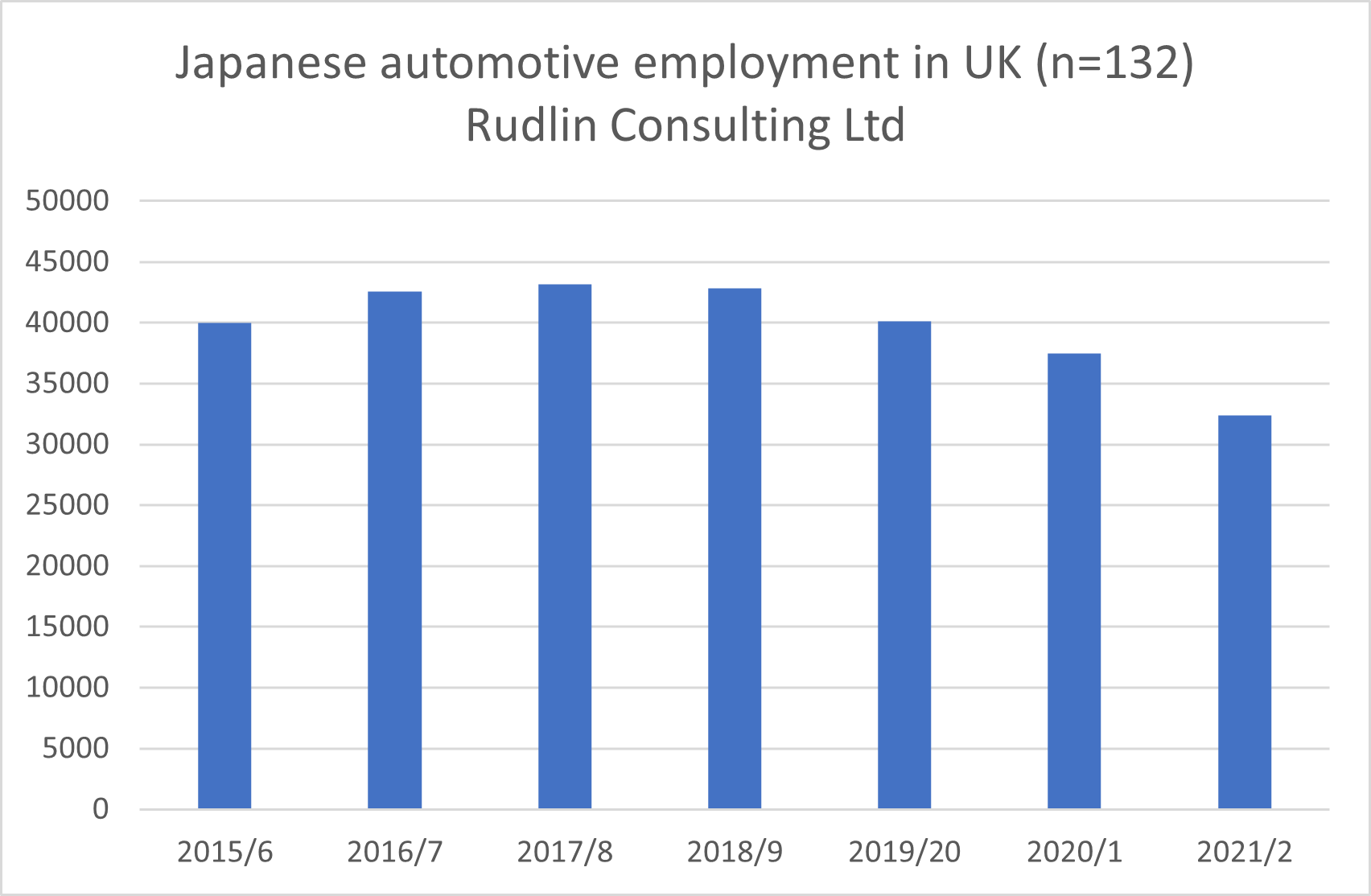 Without longer term plans in place, the danger is that Japanese car companies and their suppliers just dwindle away in the UK. The latest data I have compiled shows that employment in the UK by Japanese automotive companies has fallen 25% from 2017/8 to 2021/2 from 43,000 to 32,000. These figures exclude what could be a further 7,500 employees, working for companies which have not yet submitted their UK annual reports for FY2021/2 – Itochu’s subsidiaries Kwik-Fit, Stapleton’s Tyre Services and European Tyre Enterprises, GS Yuasa battery sales and manufacturing, Hitachi Astemo and Highly Marelli.
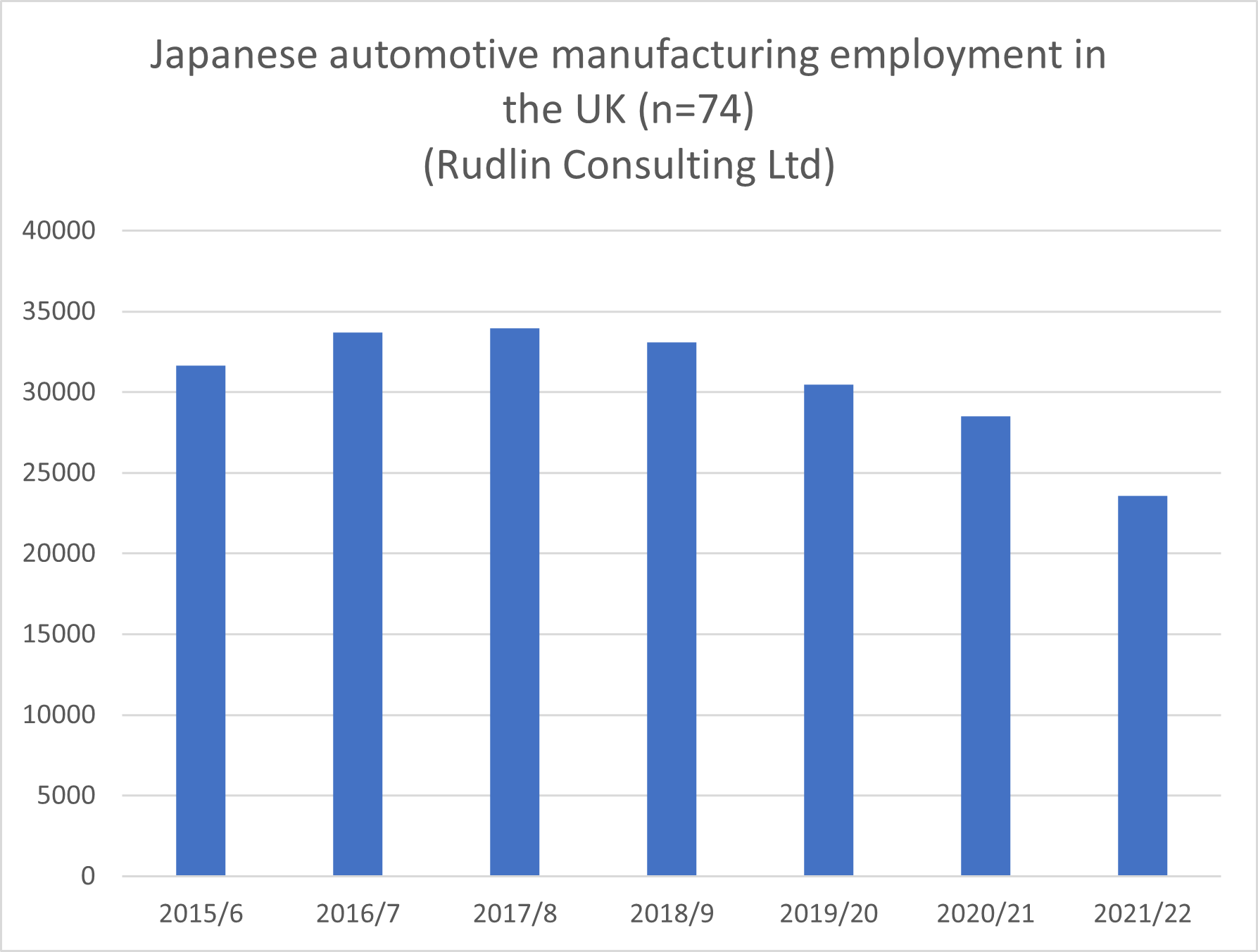 If we just focus on Japanese companies with production in the UK, there was a 26% decline in employment over 2018-2022 – unsurprisingly close to the overall trend – as around 74% of all Japanese automotive employees in the UK are employed in manufacturing operations.
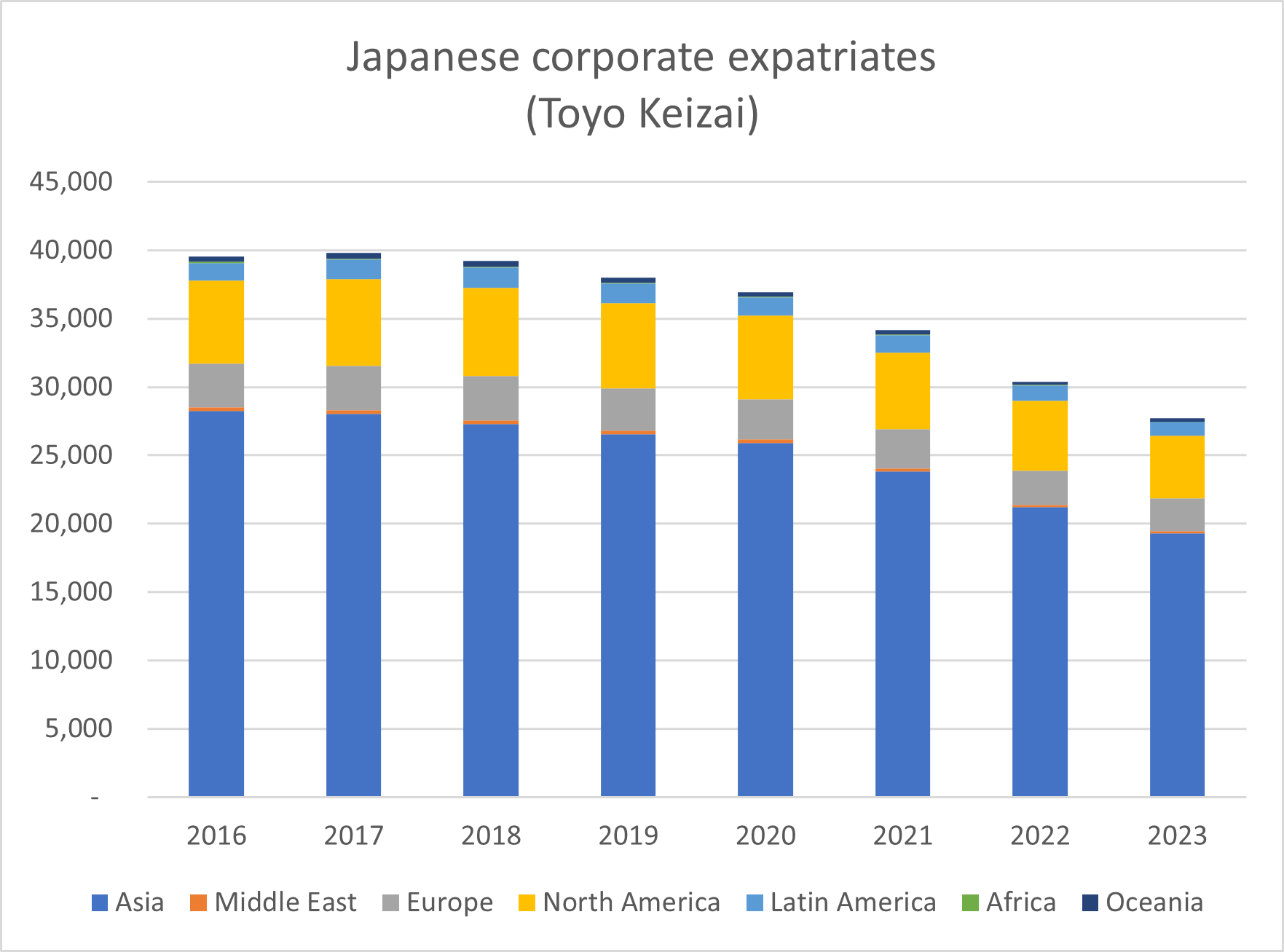 Many other Japanese companies may be adopting similar systems, or just relying more on local managers to run things –
 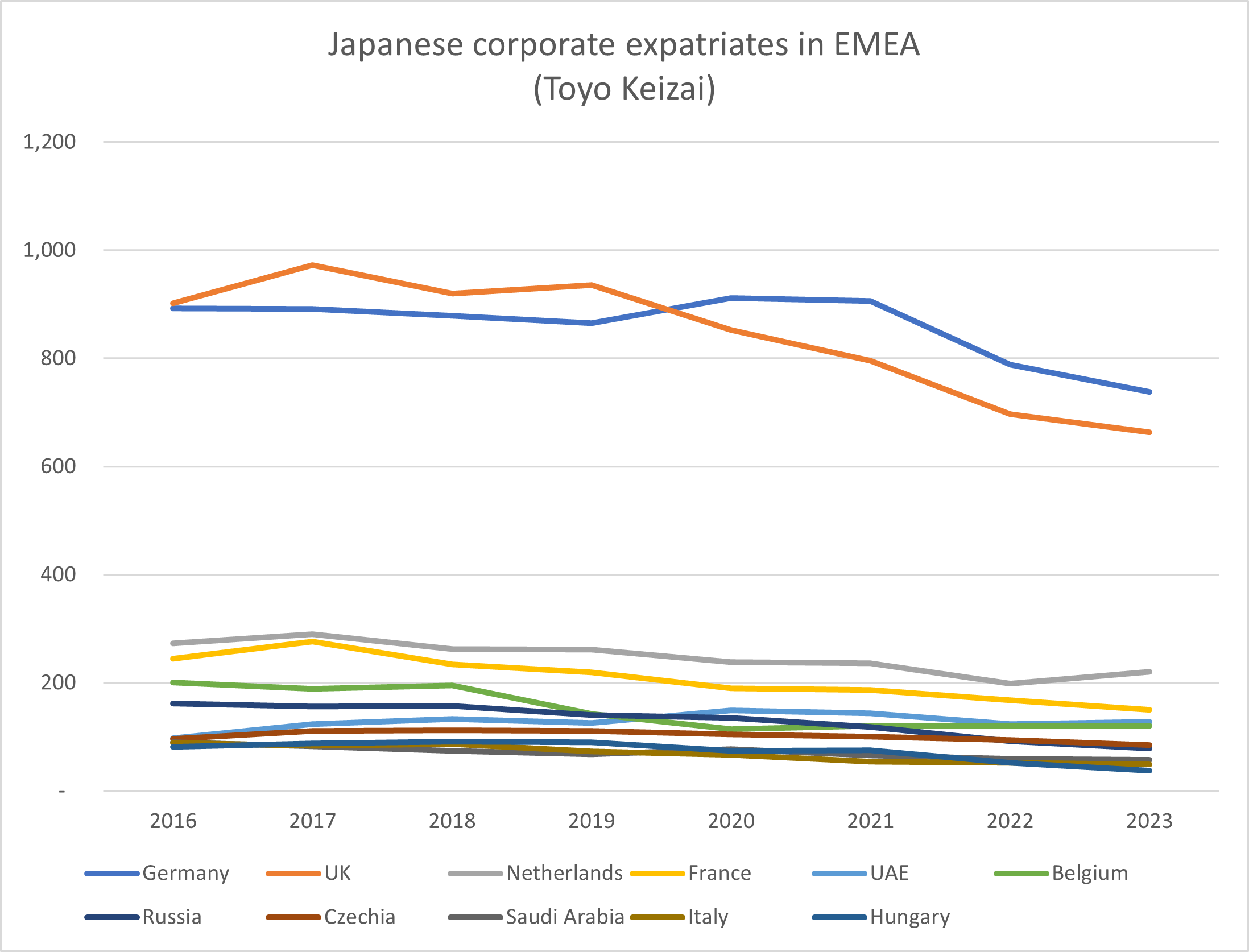 Looking at the Toyo Keizai data for individual countries in Europe and the Middle East shows that the only country to show any positive growth in Japanese corporate expatriate numbers since 2016 is the United Arab Emirates. The fall in Japanese expats in the Netherlands (-19%) was not as steep as elsewhere in EMEA (-27% average, -26% for UK, -40% for Belgium ) and seems to be recovering a bit since the pandemic. The number of expats in Germany also fell by only 17% since 2016, having grown and surpassed the UK in 2019/20, but falling steeply since the pandemic began, with no signs of recovery yet.